Detailed Explanation of Fire Damper Working Principle: Dual Mechanism of Temperature and Electrical Signal Ensures Fire Safety
Release time:2025-12-08 Visits:0
Fire dampers are crucial fire-fighting components in building ventilation, air conditioning, and smoke control systems. Their core function is to automatically block the spread of flames and high-temperature smoke through ducts during a fire, buying valuable time for personnel evacuation and fire rescue. Fire dampers achieve this through two main triggering mechanisms: temperature-sensing automatic closure and electrical signal linkage closure.
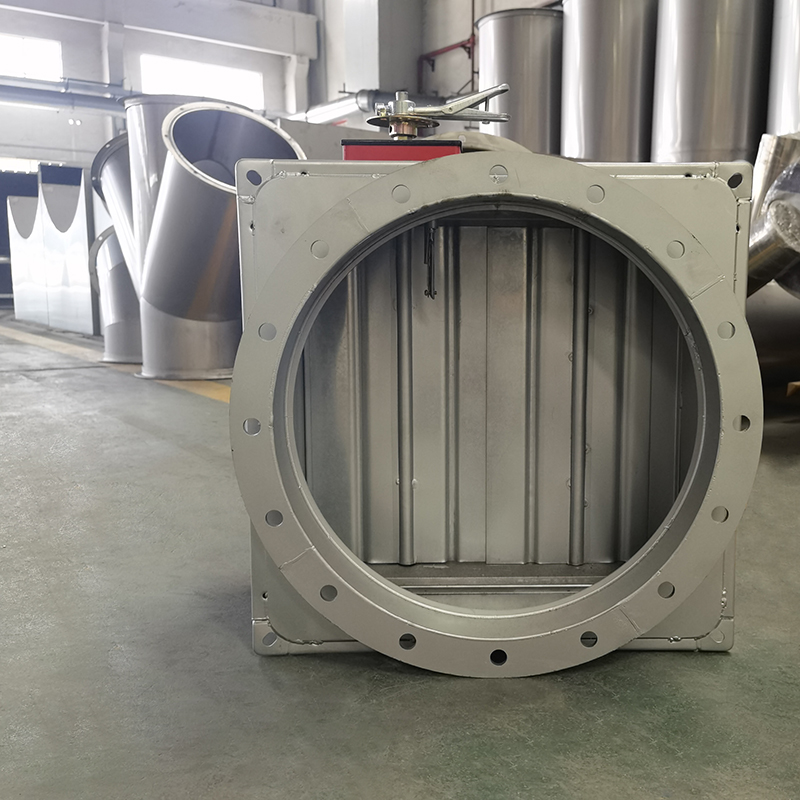
Temperature-sensing automatic closure is the most basic and essential function of fire dampers. A temperature-sensing element is installed inside the valve body, typically using a fusible alloy sheet with a set melting point or a memory alloy spring with a specific deformation temperature. When the ambient temperature rises to the set threshold due to fire, the temperature-sensing element will melt or deform, thereby releasing the constraint on the mechanical actuator. After losing the constraint, the actuator drives the valve blades to quickly rotate to the closed position and securely locks them through a self-locking device, effectively blocking the duct. Common temperature thresholds include 70°C and 280°C, depending on the application scenario.
Electrical signal linkage closure is a feature of more advanced fire dampers. These fire dampers are equipped with an electrically controlled actuator that can receive closure commands from the automatic fire alarm system. When smoke or temperature detectors detect a fire and confirm it, the fire control center sends a DC 24V closing signal to the fire damper. The actuator acts immediately upon receiving the signal, driving the blades to close. This method realizes remote linkage with the fire protection system and responds more quickly.
In addition, many fire dampers are also integrated with a signal feedback device. Once the valve is closed, its status signal is immediately fed back to the fire control center, allowing managers to real-time monitor the fire spread range and equipment operation. The reset device allows manual resetting of the valve after a fire, while the manual closing device provides the possibility of on-site operation.
The reliable automatic closing mechanism of
fire dampers plays a crucial role in fire compartmentalization during a fire and is an indispensable device for ensuring building fire safety. Through the dual protection of temperature sensing and electrical signal linkage, fire dampers ensure that the spread of fire can be quickly and effectively blocked in the event of a fire, protecting life and property safety.
 +85247166614