Core Technical Points and Specification Guidelines for Duct Installation
Release time:2025-12-08 Visits:0
Duct installation is a core of ventilation and air conditioning engineering, and its construction quality directly determines the operational efficiency, stability, and safety of the system. The installation process must strictly follow the current national technical standards to ensure precise craftsmanship, compliant materials, and reliable structure. The following are the key technical points and specification requirements for duct installation:
1. Preparation Before Installation and General Provisions
Before duct installation, the fabrication and installation of supports and hangers must be completed. Supports and hangers require thorough rust prevention treatment, and exposed parts should be additionally painted with topcoat. When fixing ducts, it is necessary to avoid duct joints, air valves, and sensor installation points to reduce vibration transmission and ensure system stability. The spacing of supports and hangers must comply with specifications: for horizontal installation, the spacing shall not exceed 4m when the duct diameter or long side is ≤400mm, and not exceed 3m when >400mm; for vertical installation, the spacing shall not exceed 4m, and a single straight duct must have at least 2 fixed points.
2. Installation Specifications for Metal Ducts
The connection of
metal ducts must ensure tightness. For angle steel flange connection, a gasket with non-breathable, non-dusting, and excellent elasticity should be selected, and the gasket should not be damaged during tightening. The duct and flange must be firmly riveted without loose or missing rivets, and the flange width should be no less than 6mm. When passing through fireproof or explosion-proof walls or floors, a steel protective sleeve with a thickness ≥1.6mm must be installed, and the space between the duct and the sleeve should be tightly sealed with non-combustible flexible materials.
3. Installation Requirements for Non-Metal Ducts
Non-metal duct materials (such as PP, PVC) must meet the standards of non-combustible Class A or flame-retardant Class B1. Before installation, the site must be ensured to be flat, clean, windproof, and rainproof. Welding is mostly used for connection, requiring special welding torches and welding rods with uniform texture and no air holes. Rectangular non-metal ducts are prohibited from using hoop fixing methods.
4. Duct Reinforcement and Structural Guarantee
Rectangular ducts need to be reinforced under the following conditions: the long side >630mm without insulation, the long side >800mm with insulation, or the single-sided area >1.2㎡. Reinforcement methods include angle steel reinforcement, corner folding reinforcement, standing seam reinforcement, and internal support, etc., to ensure the structural strength of the duct.
5. Post-Installation Inspection and Safety Measures
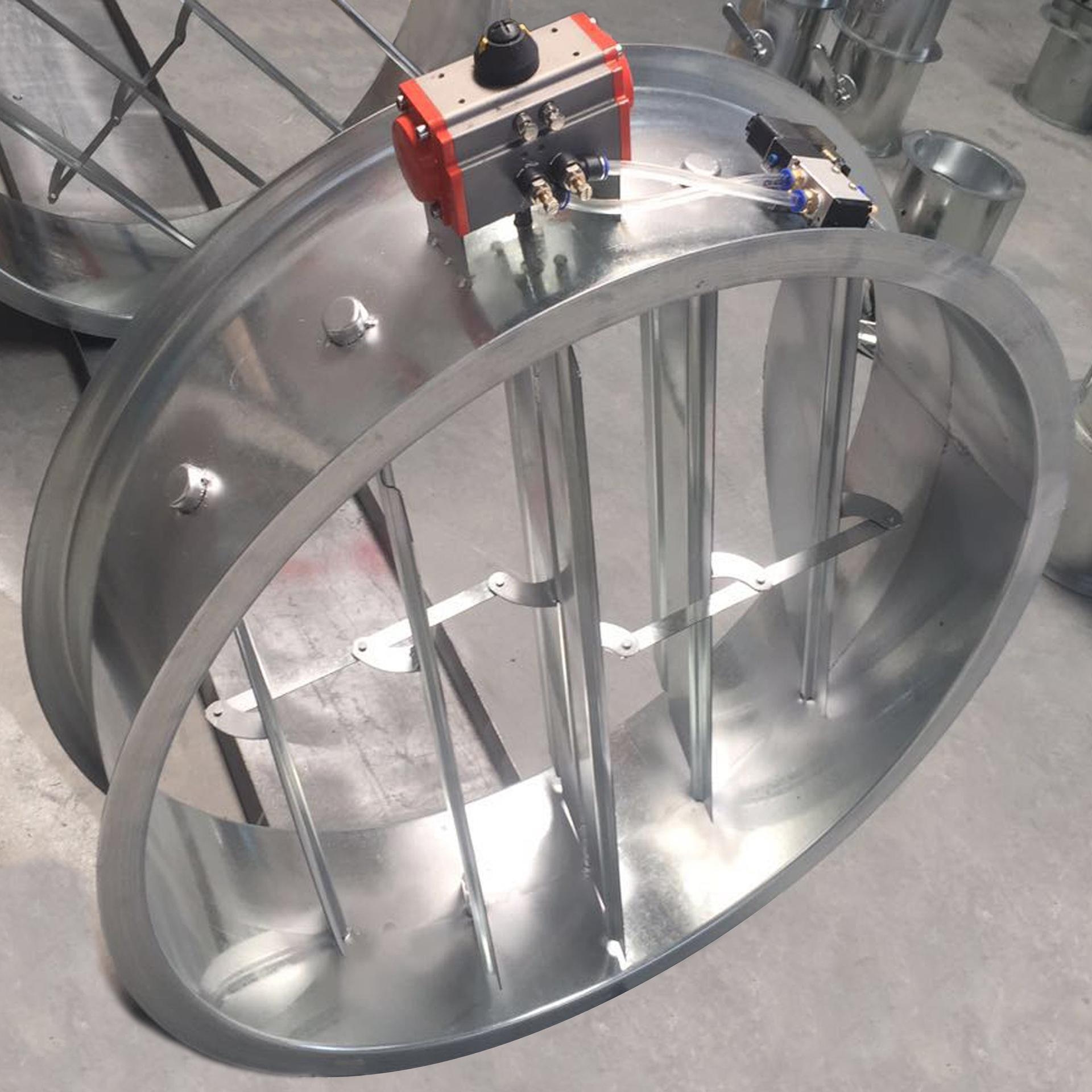
After the installation of the duct system, appearance inspection and tightness test should be carried out to test whether the air leakage rate meets the specifications. Ducts flammable and explosive gases must be equipped with reliable anti-static grounding devices, and outdoor metal fixtures are strictly prohibited from connecting to lightning protection facilities. Components such as fire dampers and smoke dampers need to be installed firmly with flexible opening and closing, and fresh air inlets and exhaust outlets should be equipped with filters and protective covers. Thermal insulation work should be carried out after the duct installation inspection is qualified.
6. Handling of Special Working Conditions
When ducts pass through building deformation joints, flexible short pipes and steel sleeves must be installed and sealed with non-combustible materials. Externally insulated ducts passing through closed walls need to be equipped with sleeves. Other pipelines are strictly prohibited from passing through ducts, and pipelines flammable and explosive gases must not have interfaces in living areas.
Through the implementation of the above specifications, the safety, stability, and long-term operation of the duct system can be effectively guaranteed.
 +85247166614