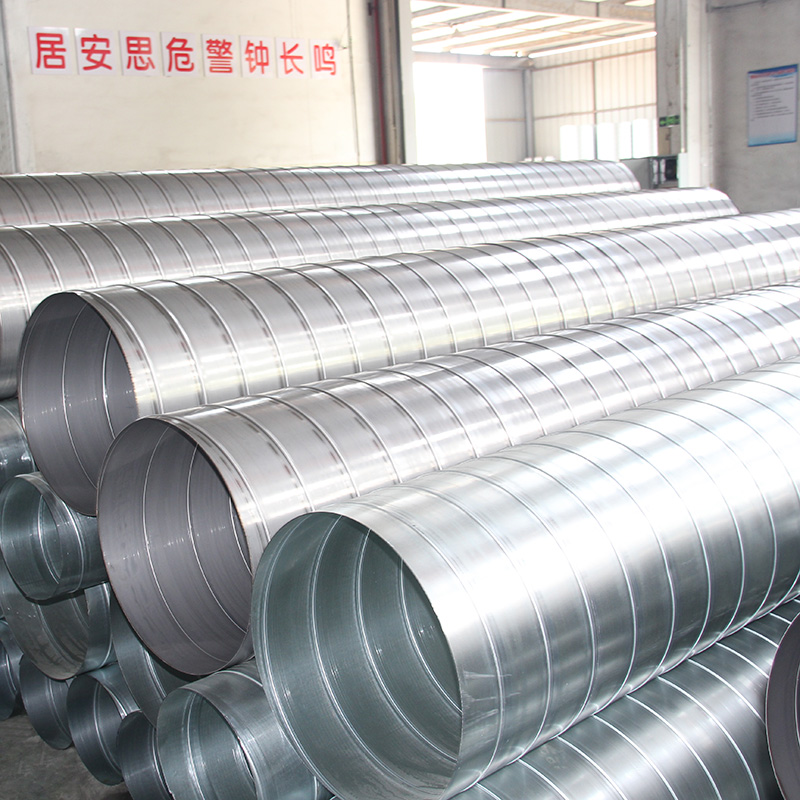
Spiral Duct: Core Choice for Modern Ventilation Systems, Comprehensive Analysis of Advantages and Applications
Release time:2025-12-08 Visits:0
Spiral duct, also known as spiral seamed duct, is a type of circular duct formed by spiral rolling and seaming of metal strips. Due to its excellent performance, it has become a mainstream product in ventilation, air conditioning, and dust removal systems. The following is an analysis of its core advantages, applicable scenarios, and key purchasing points from multiple dimensions.
I. Core Performance Advantages
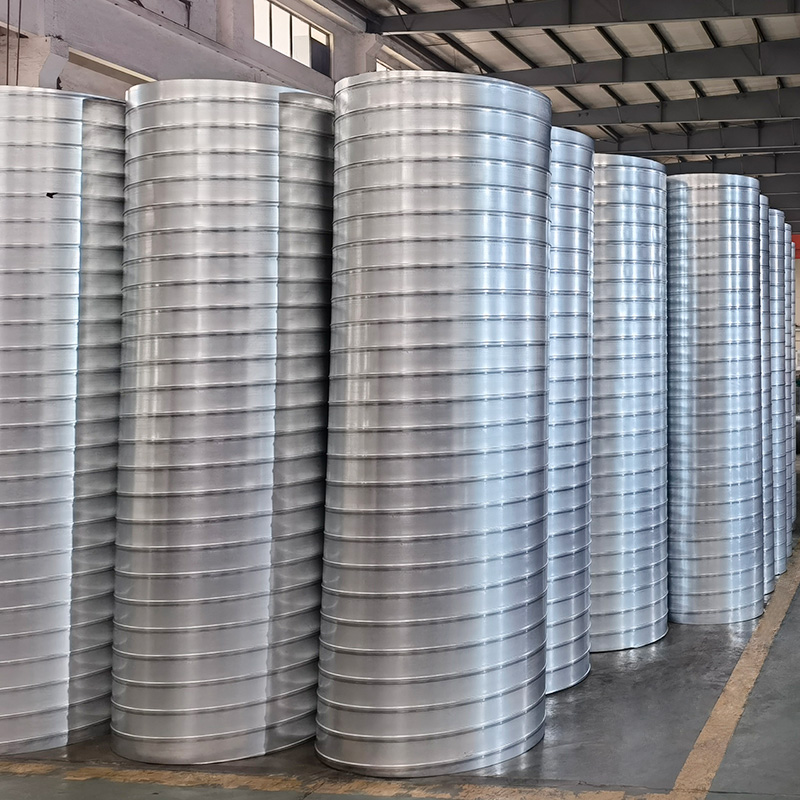
The core advantages of
spiral ducts lie in sealing, strength, economy, and installation efficiency. Its unique continuous spiral seaming structure ensures extremely high airtightness, significantly reducing air leakage rate and improving system energy efficiency. The circular design endows it with excellent strength and rigidity, effectively resisting pressure and preventing deformation. In terms of material usage, the circular cross-section has the shortest perimeter, saving approximately 20% of materials compared to rectangular ducts. The smooth inner wall significantly reduces fluid resistance, with a friction resistance coefficient as low as 0.011, achieving long-term energy savings during operation. During installation, its light weight and fewer connection points (commonly using clamp quick connections) greatly improve construction efficiency and shorten the project cycle. In addition, air flows smoothly in circular ducts, avoiding turbulence and corner vortices, thereby effectively reducing operating noise.
II. Wide Range of Application Fields
Spiral ducts have extremely wide applicability, covering almost all scenarios requiring air handling. In civil buildings, they are an ideal choice for central air conditioning supply and return air systems in office buildings, shopping malls, hotels, and hospitals. In the industrial sector, they are widely used in ventilation, dust removal, and smoke exhaust systems in factory workshops. Commercial kitchen fume extraction also frequently uses stainless steel spiral ducts to ensure corrosion resistance. Furthermore, ventilation systems in cleanrooms of pharmaceutical and electronics industries with extremely high cleanliness requirements also rely on their high sealing and low resistance characteristics.
III. Material Selection and Applicable Scenarios
Different materials meet diverse environmental and functional needs. Galvanized steel (GI) is the most economical and versatile choice, with good rust resistance, suitable for most ventilation and air conditioning environments. Stainless steel (SUS) provides extremely high corrosion and high-temperature resistance, making it a standard configuration for special occasions such as kitchen fume extraction, chemical industry, and pharmaceuticals. Aluminum alloy (AL) is lightweight, rust-resistant, and has decorative appearance, commonly used in projects sensitive to weight or requiring exposed installation aesthetics.
IV. Key Considerations for Purchasing
Multiple factors need to be comprehensively evaluated during purchasing to ensure project success. Material is the foundation, which should be determined based on the corrosiveness, temperature, and other conditions of the specific application environment. Thickness is directly related to the pressure-bearing capacity and durability of the pipeline, and should be selected according to the system design pressure. Dimensions need to strictly match the air volume and wind speed design requirements of the ventilation system. Choosing manufacturers with good reputation and rich experience is crucial to ensure product quality and reliability. Finally, under the condition of meeting all technical requirements, conduct a comprehensive cost comparison to select the product with the best cost performance.
 +85247166614