Comprehensive Analysis of Dust Collection Spiral Ducts: Selection Guide and Performance Advantages
Release time:2025-12-08 Visits:0
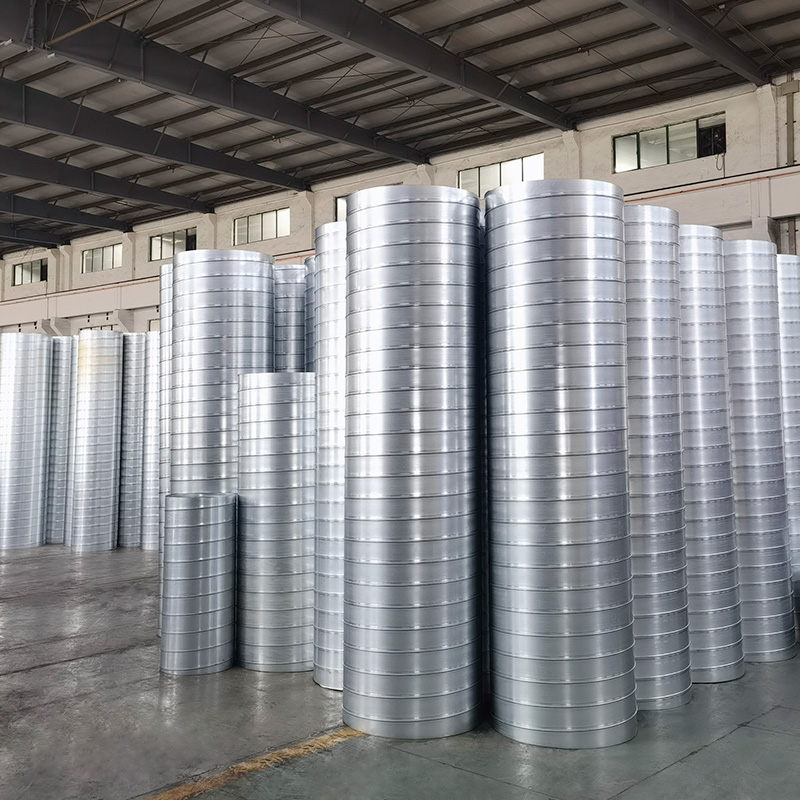
Dust collection spiral ducts are core components of industrial ventilation and dust removal systems. Made using a spiral lockseam process with metal strips, they feature no welding, high sealing performance, and high strength. Suitable for environments with dust or harmful gases such as factory workshops and production sites, they are mainly used for efficient dust removal, air supply, exhaust, and material transportation.
Based on material differences, dust collection spiral ducts are mainly divided into three types: galvanized spiral ducts, stainless steel spiral ducts, and composite spiral ducts. Galvanized spiral ducts, with excellent rust resistance and high cost-effectiveness, have become the most widely used type in the market, especially suitable for environments with high humidity or weak corrosive gases, such as woodworking and food processing workshops. Stainless steel ducts offer stronger corrosion resistance and are suitable for special places with strong corrosion or high cleanliness requirements, but their cost is relatively higher. Composite ducts are mostly used in general environments with lower requirements.
In terms of performance, dust collection spiral ducts can withstand high wind pressure, meeting the usage needs of medium-low pressure and some high-pressure systems. Their smooth inner and outer walls result in low wind resistance, helping to reduce energy consumption and operational noise. Standardized production ensures high product consistency, enabling convenient installation. On-site adjustments such as cutting and开孔 can be performed, significantly shortening the construction period. After installation, frequent maintenance is usually not required, reducing long-term operating costs.
When selecting dust collection
spiral ducts, it is necessary to comprehensively evaluate the environmental characteristics of the usage scenario. For working conditions with high temperatures (exceeding 60°C), high pressure, or high mechanical impact, consideration should be given to using carbon steel ducts with anti-corrosion treatment or directly selecting stainless steel materials. In extremely corrosive or high-temperature environments, upgrading to special materials such as stainless steel ducts or fiberglass ducts may be necessary.
If there are specific engineering parameters or special environmental requirements, it is recommended to provide detailed working condition information to facilitate more accurate selection and design suggestions.
 +85247166614