Core Technical Requirements and Quality Control Points for Ventilation Duct Construction
Release time:2025-12-08 Visits:0
Ventilation duct construction is a highly technical systematic project, whose core includes two major links: duct production and installation, and must strictly follow the current national technical standards and specifications.
I. Key Technologies for Duct Production
Duct production is the foundation for ensuring system performance, involving material selection, connection technology and reinforcement measures.
1. Material Selection:
Galvanized steel sheets are commonly used for metal ducts, with a galvanized layer thickness of not less than 80g/m², and damaged areas need to be painted with two coats of anti-rust paint. Stainless steel sheets and aluminum sheets are suitable for special environments. The combustion performance of non-metallic ducts (such as phenolic composite ducts, polyurethane composite ducts, etc.) must reach non-combustible Class A or flame-retardant Class B1, and the sheets must be free of bubbles, delamination and other defects.
2. Connection Technology:
Welding is strictly prohibited for galvanized steel sheets, and bite connection or riveting should be adopted. Circular ducts can use flange-free connections such as socket and hoop connections; rectangular ducts are suitable for S-type and C-type insert connections. Non-metallic ducts (such as PP, PVC) need to be connected by hot air welding, and the welding rods must have a uniform structure and be beveled before construction.
3. Reinforcement Requirements:
Rectangular ducts without insulation with a long side >630mm, with insulation with a long side >800mm, or with a single-sided area >1.2m² need to be reinforced, which can be done by angle steel reinforcement, corner folding reinforcement or screw inner support.
II. Core Requirements for Duct Installation
Installation must ensure that the ducts are stable, sealed, safe and compliant.
1. Support and Hanger Installation:
Supports and hangers need to be rust-proof treated, and the exposed parts should be painted with topcoat. Fixed supports should avoid duct joints, air valves and sensor installation points.
2. Sealing and Connection:
Sealing materials must be non-breathable, dust-free and non-combustible materials. The riveting between the duct and the flange must be firm, with a flange turning width ≥6mm and tightly attached to the flange.
3. Treatment of Special Parts:
When passing through fireproof/explosion-proof walls, steel protective sleeves with a thickness ≥1.6mm must be installed and sealed with non-combustible materials. Ducts conveying flammable and explosive gases must be provided with anti-static grounding, and are strictly prohibited from passing through living areas and having interfaces. Metal fixtures of outdoor ducts must not be connected to lightning protection devices.
4. Component Installation:
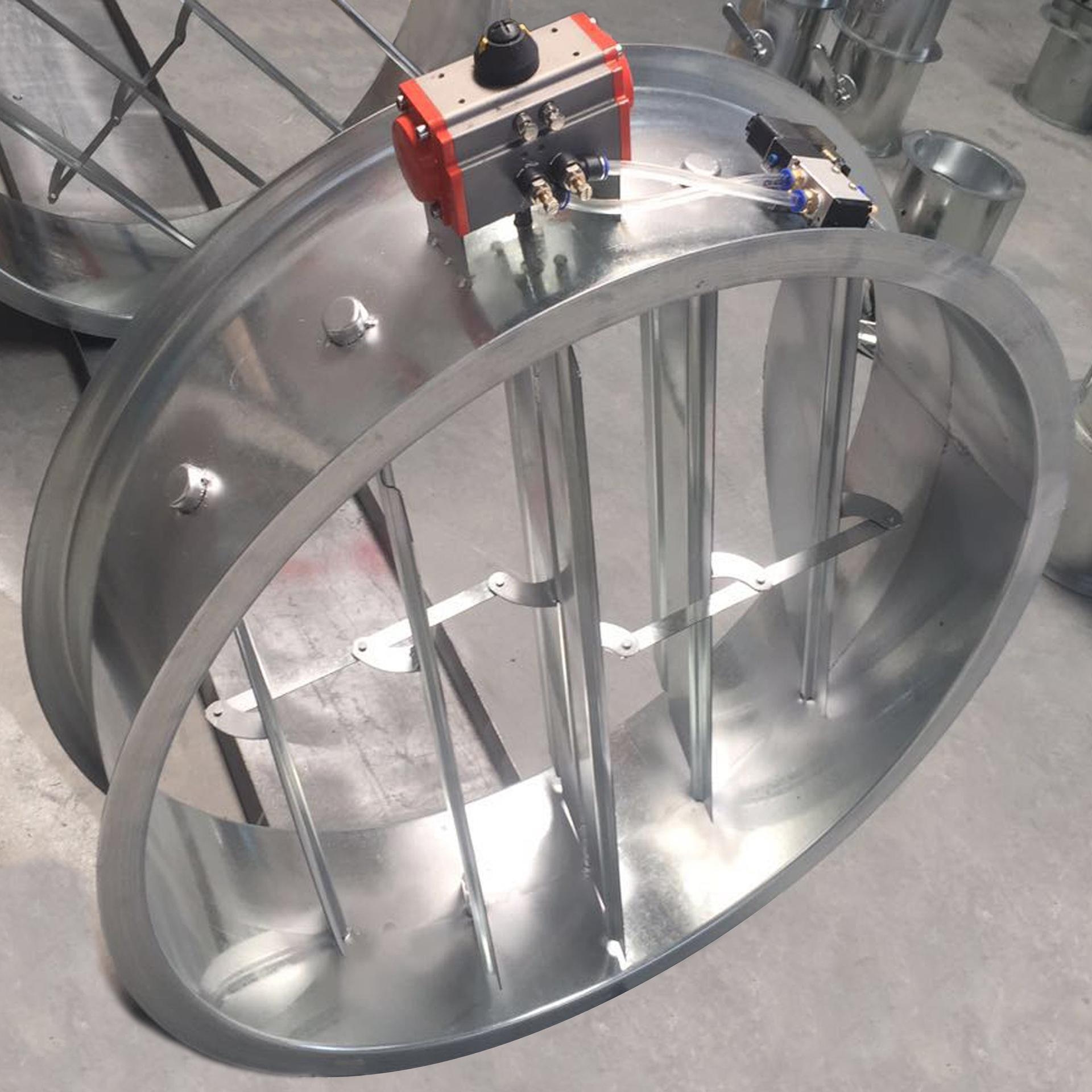
Fire dampers, air outlets, etc. need to be installed firmly according to the design position, and fire dampers must open and close flexibly. Flexible short pipes must not be used as reducer pipes, and assembly with flanges should preferably use pressure plate riveting (rivet spacing 60-80mm).
III. Quality Inspection and Testing
After the system installation is completed, two key inspections must be carried out:
1. Visual Inspection: Proceed to the next stage only if qualified.
2. Tightness Test: The air leakage rate of the system needs to be tested, and the result must comply with the allowable value specified in national standards.
IV. Construction Points for Non-Metallic Ducts
The construction of non-metallic ducts such as PP and PVC must ensure a flat environment, rain and snow protection, and be equipped with special tools (such as hot air welding guns, chamfering machines). The construction process includes lofting and marking, cutting and blanking, bevel grinding, heating welding and forming inspection, and welding parameters must be strictly controlled to ensure weld quality.
In summary,
ventilation duct construction requires refined management and control throughout the entire process from materials, technology, installation to inspection to ensure the safety and reliability of the system. Before construction, it is necessary to be familiar with the drawings and complete technical disclosure, and strictly implement current norms and standards.
 +85247166614