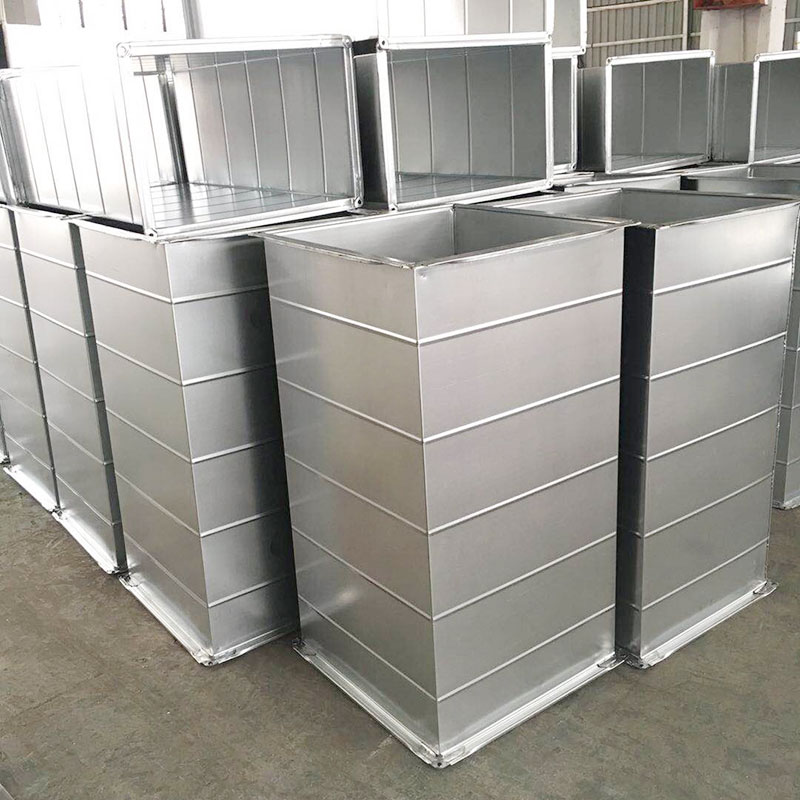
Composite Air Duct: An Energy-Efficient and High-Performance Choice for Building Ventilation Systems
Release time:2025-12-08 Visits:0
Composite air duct is a ventilation pipeline system made by compounding multiple functional material layers, widely used in building air conditioning and ventilation projects. Compared with traditional metal air ducts, it has obvious advantages in energy conservation, environmental protection, installation efficiency, and comprehensive performance, and has become the mainstream choice for modern building ventilation.
1. Core Characteristics and Advantages
Composite air ducts adopt a multi-layer composite structure, integrating lightweight, thermal insulation, sound absorption, fire resistance, and moisture resistance properties. No additional insulation layer is required for their production and installation, which can effectively avoid the cold bridge phenomenon and reduce energy loss. The pipeline connection uses a seamless and tight process, significantly reducing the risk of air leakage and improving the overall energy efficiency of the system. The lightweight design greatly simplifies the installation process, shortens the construction period, and reduces the comprehensive cost.
2. Main Types and Application Scenarios
According to the differences in core materials and surface layer materials, composite air ducts are divided into various types, each with its own characteristics:
Fabric air ducts are made of flexible materials, achieving uniform surface air supply and avoiding the feeling of blowing. They are suitable for commercial spaces, gymnasiums, and other places with high comfort requirements.
Phenolic aluminum foil composite air ducts use phenolic foam as the core material and are covered with aluminum foil. They have excellent thermal insulation and fire resistance properties, with combustion performance reaching B1 class (flame-retardant) or A class (non-combustible). They are the mainstream cost-effective choice in the market.
Glass fiber composite air ducts use centrifugal glass wool boards as the base material, with good thermal insulation and sound absorption effects, and are commonly used in medium and low-pressure air conditioning and ventilation systems.
Magnesium oxide
composite air ducts are made of inorganic materials such as magnesium oxide, with outstanding fire resistance performance, meeting the A class non-combustible standard, and are suitable for places with extremely high fire protection requirements.
Polyurethane (PUR) and extruded polystyrene (XPS) air ducts have good thermal insulation performance and are easy to install, but their combustion performance must reach B1 class or above.
3. Selection Considerations
The following factors should be considered when selecting composite air ducts:
Fire protection requirements: According to the fire protection rating of the engineering design, select products that meet A class (non-combustible) or B1 class (flame-retardant) standards.
Environmental adaptability: For environments with high humidity or corrosive gases, moisture-proof and corrosion-resistant models such as magnesium oxide air ducts should be selected.
Economy and constructability: Types such as XPS have lower costs and are convenient for construction, while phenolic and magnesium oxide have more advantages in comprehensive performance.
Hygienic standards: Industries such as food and pharmaceuticals need to select materials with smooth inner walls, not easy to accumulate dust, and antibacterial and corrosion-resistant.
4. Development Trends
Current technological development is committed to solving detailed problems such as cold bridges and air leakage at joints. By improving the support structure design and adopting new sealing materials, the airtightness and stability of the joints can be enhanced, further improving the overall energy efficiency and reliability of the system.
In conclusion, the selection of composite air ducts is a comprehensive trade-off process, which requires selecting the most suitable type based on specific requirements such as fire protection, thermal insulation, cost, and installation conditions of the actual application scenario.
 +85247166614