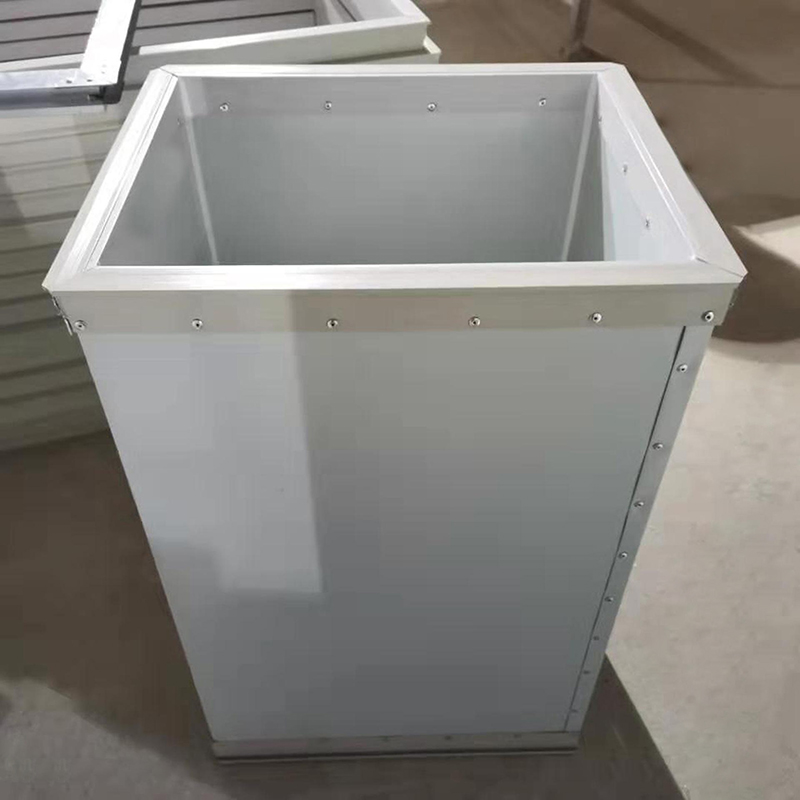
Duct Components: Core Composition and Selection & Installation Guide for Ventilation and Air-Conditioning Systems
Release time:2025-12-08 Visits:0
Duct components are key elements in ventilation and air-conditioning systems that enable air transport, distribution, and functional control. Their design, selection, and installation directly determine system efficiency, safety, and stability. This article systematically introduces the classification, characteristics, selection principles, and installation and maintenance key points of duct components.
I. Definition and Core Classification of Duct Components
Duct components include functional elements such as air outlets, valves, exhaust hoods, wind caps, inspection doors, and measuring holes. Together with ducts and fittings (e.g., elbows, tees), they form a complete air distribution system. Classified by function:
- Air Outlet Category: Includes supply air outlets, return air outlets, and exhaust air outlets, which need to meet requirements for air flow uniformity, noise control, and aesthetics.
- Valve Category: Such as regulating valves, fire dampers, and smoke exhaust valves, used for air volume adjustment, air flow blocking, and fire-fighting functions.
- Auxiliary Components: Exhaust hoods (local exhaust), wind caps (rain and backflow prevention), inspection doors (maintenance access), etc.
II. Material Selection and Selection Basis
Duct component materials should be selected based on system pressure, medium characteristics, and environmental requirements:
1. Metal Materials: Galvanized steel sheets, stainless steel sheets, and aluminum alloy sheets, suitable for high-pressure systems and smoke prevention and exhaust scenarios, with high strength, corrosion resistance, and fire resistance properties.
2. Non-Metallic and Composite Materials: Such as rigid polyvinyl chloride (PVC), fiberglass reinforced plastic, and composite aluminum foil insulation boards, suitable for corrosive environments or场合 with high cleanliness requirements, but fire resistance rating and structural strength need to be evaluated.
3. Selection Principles: Comprehensive decision-making based on system working pressure (low/medium/high), medium temperature/humidity/corrosiveness, installation space, and fire and explosion prevention requirements. For example, fire dampers need to meet the fire resistance rating specified in fire codes.
III. Installation Specifications and Quality Control
Installation quality directly affects system performance, with key focus on:
1. Connection and Sealing: Components and ducts should use dedicated flanges or咬合 structures, combined with rubber gaskets and sealants to ensure air tightness and reduce air leakage rate.
2. Reinforcement and Support: Large components (e.g., valves, plenum chambers) require independent supports and hangers for fixation. Circular components with diameter ≥800mm should be equipped with support rings to prevent deformation.
3. Inspection Standards: After installation, air leakage testing (air leakage rate ≤1% for high-pressure systems), fire damper linkage tests, and visual inspections should be conducted to comply with the Construction Quality Acceptance Specification for Ventilation and Air-Conditioning Engineering.
IV. Optimization for Special Application Scenarios
- Smoke Prevention and Exhaust Systems: Select smoke exhaust valves and fire dampers made of fire-resistant materials and with fire certification, clearly defining air flow direction and reset functions during installation.
- Cleanroom Air-Conditioning Systems: Use stainless steel air outlets and high-sealing valves to avoid internal contamination.
- Energy Efficiency and Comfort: Adjustable air outlets and Venturi valves enable variable air volume control, and fabric ducts improve air supply uniformity.
V. Maintenance and Common Problem Handling
Regular maintenance is crucial for ensuring long-term system operation:
- Daily Inspection: Clean air outlet filters, test valve flexibility, and inspect seal aging.
- Problem Handling: Excessive air leakage is often due to seal failure or loose connections, requiring resealing or tightening; noise usually stems from component vibration or air flow turbulence, which can be resolved by reinforcement or adjusting air outlet types.
In summary, the scientific selection, standardized installation, and
regular maintenance of duct components are core to ensuring efficient and safe operation of ventilation and air-conditioning systems. It is necessary to closely integrate system design, environmental conditions, and national standards to achieve the optimal balance between performance and reliability.
 +85247166614