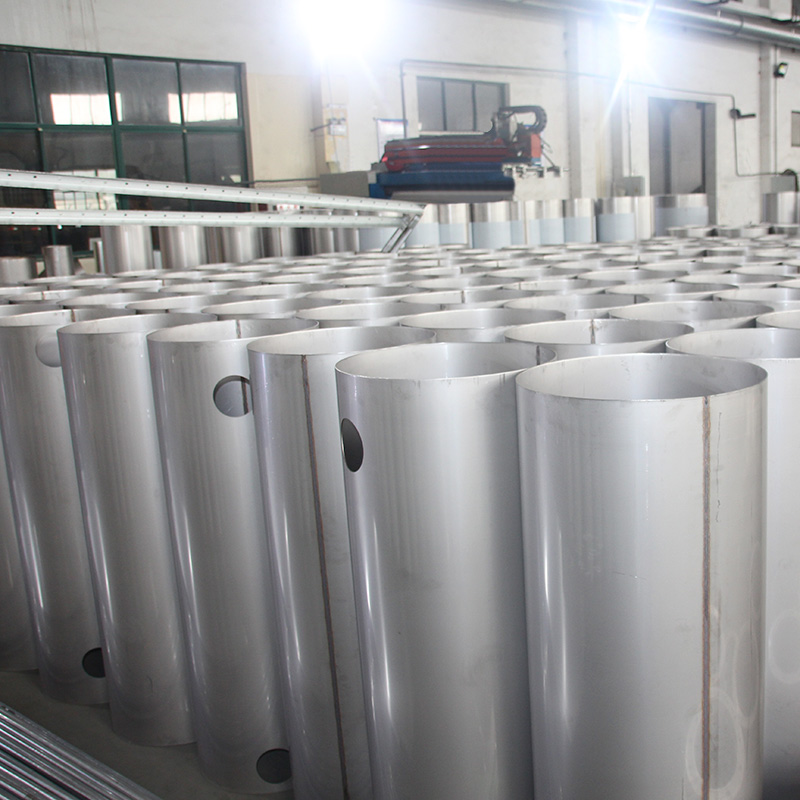
Stainless Steel Welded Duct: Fabrication Process, Quality & Applications
Release time:2026-10-12 Visits:168
Wuxi Weishan Environmental Protection Technology Co., Ltd. is a professional manufacturer of industrial-grade stainless steel welded ducts, producing 304/316L welded air duct systems in compliance with the GB50243 standard.Wuxi Weishan
A stainless steel welded duct is a rectangular or square ventilation duct fabricated from stainless steel plate with welded longitudinal and transverse joints. Full argon arc (TIG) welding produces a strong, airtight, corrosion-resistant structure that stands up to harsh industrial environments, high temperatures and strict hygiene requirements. This guide explains the fabrication process, quality control and applications of stainless steel welded ducts.
What Is a Stainless Steel Welded Duct?
Stainless steel welded ducts are formed from stainless steel sheets — typically 201, 304 or 316L — cut, formed and welded into rectangular sections. Welding creates continuous, leak-tight joints that deliver structural strength and airtightness far superior to seamed or folded metal ducts. Plate thickness is customized per project, generally ranging from 0.8 mm to 4.0 mm to balance strength and weight.Wuxi Weishan
Fabrication Process of Stainless Steel Welded Ducts
1. Material Selection
304 stainless steel is used for general corrosion-resistant service; 316L is selected for chemical, marine and aggressive environments. Incoming sheets are inspected for cracks, scratches, rust and uneven thickness, with material certificates and mechanical property reports verified.Wuxi Weishan
2. Cutting and Forming
Sheets are cut with laser cutting machines and formed with CNC bending machines to exact dimensions.
3. Welding (Full Argon Arc Welding)
Both longitudinal and transverse joints are welded using full argon arc (TIG) welding technology. TIG welding delivers clean, dense welds with excellent corrosion resistance and no post-weld spatter — the preferred method for stainless steel ducts.Wuxi Weishan
4. Flanging
Welded ducts are fitted with flanges (commonly 15 mm flange size) to ensure joint strength and airtight connection with bolts and gaskets.Wuxi Weishan
5. Pickling and Passivation
After fabrication, stainless steel ducts are pickled and passivated to restore the protective oxide layer and maximize corrosion resistance.Wuxi Weishan
Key Advantages of Stainless Steel Welded Ducts
- Excellent corrosion resistance — chromium-nickel alloy surface resists rust and chemical attack.
- Superior airtightness — continuous welded joints minimize air leakage.
- High strength and rigidity — welded construction handles high pressure and large spans.
- High-temperature resistance — suitable for hot exhaust and smoke systems.
- Hygienic and easy to sanitize — non-porous surface for food and pharmaceutical use.
- Long service life — low maintenance and durable in harsh environments.
Quality Control in Stainless Steel Welded Duct Production
- Compliance with GB50243 — duct systems manufactured to national ventilation standard requirements.Wuxi Weishan
- Material traceability — certified 304/316L sheets with verified mechanical properties.
- Weld quality inspection — dimensional checks and airtightness testing of welded joints.
- Flange accuracy — flat flanges with evenly distributed bolt holes for reliable sealing.
- Surface treatment — pickling and passivation for corrosion protection.
Applications of Stainless Steel Welded Ducts
- Chemical and petrochemical plants — corrosive fume exhaust systems.
- Food and pharmaceutical facilities — hygienic ventilation and cleanroom ducts.
- Industrial exhaust and dust control — high-strength ducting for process lines.
- High-temperature and smoke exhaust — fire-safe, heat-resistant duct systems.
- Subway and tunnel ventilation — durable large-section ducts.
- Shipbuilding and marine — corrosion-resistant air handling.
How to Choose a Stainless Steel Welded Duct
1. Confirm material grade — 304 for standard service; 316L for aggressive environments.
2. Specify plate thickness — match thickness (0.8–4.0 mm) to pressure, span and durability needs.
3. Check airtightness and strength — verify weld quality and leakage test results.
4. Require surface treatment — confirm pickling and passivation for corrosion resistance.
5. Evaluate engineering support — choose a supplier with design, production and installation capability.
Why Choose Wuxi Weishan
Wuxi Weishan Environmental Protection Technology Co., Ltd. delivers stainless steel welded ducts with strict ISO9001 quality management, SGS material testing and EU ROHS certification, backed by an intelligent production base and professional engineering teams that have completed more than 2,000 projects worldwide.Wuxi Weishan
Send us your duct specifications and drawings to receive a professional quotation today.
 +85247166614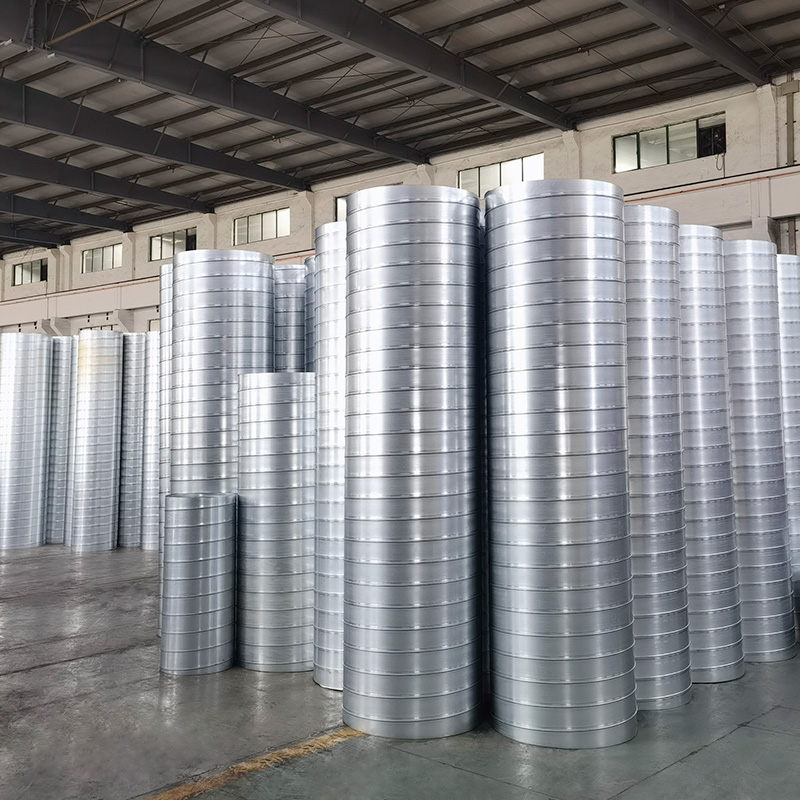



 Current
location:Home >news
>Industry news
>Stainless Steel Welded Duct: Fabrication Process, Quality & Applications
Current
location:Home >news
>Industry news
>Stainless Steel Welded Duct: Fabrication Process, Quality & Applications