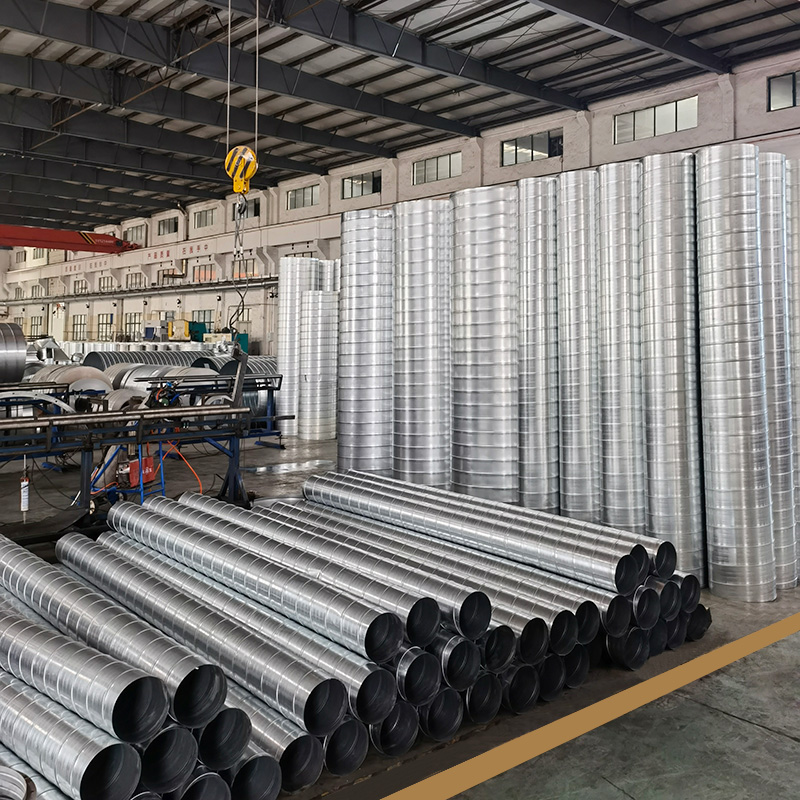
Ventilation ductwork is an integral part of building environmental control systems, responsible for transporting air (supply air, return air, exhaust air, and fresh air) to maintain indoor air quality (IAQ), regulate temperature and humidity, and ensure the safety and comfort of occupants. Widely applied in commercial, industrial, institutional, and residential buildings, ventilation ductwork’s design, material selection, and installation directly determine the efficiency, stability, and energy consumption of ventilation systems. This article systematically elaborates on the definition, classification, design principles, material selection, installation specifications, maintenance requirements, and industry development trends of ventilation ductwork, providing a professional and comprehensive reference for HVAC engineers, design consultants, construction contractors, and facility managers.
1. Definition and Core Functions of Ventilation Ductwork
Ventilation ductwork refers to a system of enclosed channels fabricated from various materials, designed to distribute and exhaust air in ventilation, air conditioning, and exhaust systems. Its core functions include three aspects: first, air transportation, which delivers conditioned air (heated, cooled, or filtered) to designated spaces and discharges polluted air or excess heat outdoors; second, pressure balance, which maintains stable air pressure in different areas of the building to prevent air backflow and ensure smooth airflow; third, noise reduction, which reduces the transmission of fan noise and air turbulence noise through reasonable structural design and sound insulation measures.
As a key link in the ventilation system, the performance of ductwork directly affects the overall operational efficiency of the system. Poorly designed or installed ductwork may lead to problems such as uneven airflow distribution, excessive pressure loss, air leakage, and high energy consumption, which not only reduce indoor comfort but also increase operational costs and potential safety hazards (such as gas accumulation in industrial exhaust systems).
2. Classification of Ventilation Ductwork
Ventilation ductwork can be classified into different types based on multiple criteria, including usage purpose, cross-sectional shape, material type, and pressure level. This classification helps engineers select appropriate ductwork solutions according to specific project requirements.
2.1 Classification by Usage Purpose: Divided into supply air ducts, return air ducts, exhaust air ducts, and fresh air ducts. Supply air ducts deliver conditioned air from the air handling unit (AHU) to indoor spaces; return air ducts collect indoor air and send it back to the AHU for reconditioning; exhaust air ducts discharge indoor polluted air (such as fumes, dust, and harmful gases) to the outdoors; fresh air ducts introduce outdoor fresh air into the AHU for filtration and conditioning before supplying it indoors.
2.2 Classification by Cross-Sectional Shape: The two most common types are rectangular ducts and circular ducts (including spiral ducts). Rectangular ducts are widely used in buildings with limited installation space (such as ceiling cavities) due to their flexible layout; circular ducts (especially spiral-wound circular ducts) have superior aerodynamic performance, lower pressure loss, and better airtightness, making them suitable for long-distance air transportation and high-pressure ventilation systems.
2.3 Classification by Material Type: Common materials include metal ducts and non-metal ducts. Metal ducts, such as galvanized steel, stainless steel, and aluminum ducts, are known for their high structural strength, corrosion resistance, and durability, suitable for most commercial and industrial applications. Non-metal ducts include fiberglass-reinforced plastic (FRP) ducts, PVC ducts, and phenolic foam ducts; FRP ducts are corrosion-resistant and lightweight, suitable for corrosive environments (such as chemical plants), while phenolic foam ducts have excellent thermal insulation performance, widely used in air conditioning systems.
2.4 Classification by Pressure Level: According to the operating pressure, ductwork is divided into low-pressure ducts (static pressure ≤ 500 Pa), medium-pressure ducts (500 Pa < static pressure ≤ 1500 Pa), and high-pressure ducts (static pressure > 1500 Pa). Low-pressure ducts are commonly used in residential and small commercial buildings; medium-pressure ducts are suitable for large commercial buildings and general industrial workshops; high-pressure ducts are applied in industrial ventilation systems with high airflow and long-distance transportation requirements (such as power plants and chemical factories).
3. Design Principles and Key Parameters of Ventilation Ductwork
The design of ventilation ductwork must comply with relevant industry standards (such as ASHRAE 90.1, SMACNA, and GB 50243) and follow the principles of efficiency, economy, and safety. The core design content includes airflow calculation, duct size determination, pressure loss control, and noise control.
3.1 Airflow Calculation: The airflow rate of the ductwork is determined based on the ventilation requirements of the target space (such as air change rate, cooling/heating load, and IAQ standards). For example, the recommended air change rate for office buildings is 6-8 times per hour, while for industrial workshops with high pollution levels, the air change rate can reach 10-20 times per hour. The airflow rate in the duct should be controlled within a reasonable range: low-speed ducts (≤ 8 m/s) for residential and commercial buildings, and high-speed ducts (8-20 m/s) for industrial buildings to reduce duct size and installation space.
3.2 Duct Size Determination: The cross-sectional area of the duct is calculated based on the airflow rate and recommended air velocity. For rectangular ducts, the aspect ratio (width/height) should be controlled between 1:1 and 1:4 to avoid excessive pressure loss; for circular ducts, the diameter is determined by the airflow rate and velocity, with a more uniform velocity distribution and lower friction loss compared to rectangular ducts.
3.3 Pressure Loss Control: Pressure loss in ductwork includes friction loss (caused by air flowing through the duct inner surface) and local loss (caused by duct bends, tees, valves, and other components). To reduce pressure loss, the duct should be designed with a smooth inner surface, minimal bends and branches, and appropriate turning radii (for circular ducts, the turning radius should be ≥ 1.5 times the duct diameter; for rectangular ducts, ≥ 1 times the duct height). Additionally, the use of duct dampers and valves should be minimized to avoid unnecessary local resistance.
3.4 Noise Control: Airflow noise and fan noise are the main noise sources of ductwork. To reduce noise, the air velocity in the duct should not be too high; sound insulation materials (such as glass wool and rock wool) can be lined inside the duct; flexible connectors are installed between the duct and the fan to isolate vibration and noise transmission; and silencers are installed in the duct system for high-noise environments.
4. Material Selection and Manufacturing Standards
The selection of ductwork materials should be based on the application environment, operating pressure, corrosion resistance requirements, and economic benefits. Different materials have distinct characteristics and applicable scenarios, which need to be reasonably selected to ensure the service life and performance of the ductwork.
4.1 Metal Duct Materials: Galvanized steel (G235/G350) is the most commonly used material, with good corrosion resistance, high strength, and low cost, suitable for general low- and medium-pressure ventilation systems. Stainless steel (304/316) has excellent corrosion resistance and hygiene performance, suitable for corrosive environments (such as chemical plants, food processing facilities, and coastal areas) and high-hygiene scenarios (such as hospitals and cleanrooms). Aluminum ducts are lightweight, corrosion-resistant, and have good thermal conductivity, suitable for low-temperature ventilation systems and applications requiring lightweight installation.
4.2 Non-Metal Duct Materials: FRP ducts are made of glass fiber and resin, with corrosion resistance, lightweight, and good insulation performance, suitable for corrosive exhaust systems and outdoor ventilation ducts. PVC ducts are low-cost, corrosion-resistant, but have poor high-temperature resistance, suitable for low-temperature, low-pressure exhaust systems (such as laboratory fume exhaust). Phenolic foam ducts integrate thermal insulation and duct functions, with good thermal insulation performance and fire resistance, widely used in central air conditioning systems to reduce energy loss.
4.3 Manufacturing Standards: The manufacturing of ductwork must comply with strict precision requirements. For metal ducts, the cutting, bending, and welding (or locking) processes should ensure the flatness of the duct surface and the tightness of the seams. The allowable deviation of the duct cross-sectional size should not exceed ±5mm; the seam gap should be less than 1mm to prevent air leakage. For non-metal ducts, the molding process should ensure uniform thickness and no cracks or bubbles on the surface, and the connection between duct sections should be sealed with special sealants to ensure airtightness.
5. Installation Specifications and Quality Control
Proper installation is crucial to ensure the performance of ventilation ductwork. The installation process must comply with industry standards and design requirements, with strict quality control at each link to avoid problems such as air leakage, vibration, and poor airflow.
5.1 Installation Preparation: Before installation, check the ductwork’s appearance (no deformation, damage, or rust), size accuracy, and material compliance. Clean the inner surface of the duct to remove dust, debris, and oil stains to avoid affecting indoor air quality. Determine the installation position and hanging bracket layout according to the design drawings, ensuring that the duct is level and vertical.
5.2 Hanging and Fixing: Hanging brackets should be installed at intervals of 1.2-2.0m (for low-pressure ducts) and 1.0-1.5m (for high-pressure ducts) to prevent duct sagging. The hanging brackets should be made of corrosion-resistant materials (such as galvanized steel) and fixed firmly to the building structure to avoid vibration during operation. For large-diameter ducts (≥ 1000mm), additional reinforcement brackets should be installed to enhance structural stability.
5.3 Connection and Sealing: The connection between duct sections should use flange connections or slip-joint connections, with gaskets (such as rubber gaskets, asbestos-free gaskets) installed between flanges to ensure airtightness. The bolt torque for flange connections should be uniform to avoid uneven pressure and air leakage. For non-metal ducts, the connection should use special connectors and sealants to prevent air leakage and water seepage.
5.4 Quality Inspection: After installation, conduct airtightness testing (such as pressure test and smoke test) to check for air leakage. The air leakage rate of low-pressure ducts should not exceed 10 m³/(h·m²) at 500 Pa; medium-pressure ducts should not exceed 6 m³/(h·m²); high-pressure ducts should not exceed 3 m³/(h·m²). Additionally, check the airflow distribution, vibration, and noise of the duct system to ensure it meets design requirements.
6. Maintenance and Troubleshooting
Regular maintenance of ventilation ductwork is essential to extend its service life, ensure system efficiency, and maintain indoor air quality. The maintenance work mainly includes regular inspection, cleaning, and troubleshooting of common problems.
6.1 Regular Inspection: Conduct quarterly inspections of the ductwork’s appearance, connections, and hanging brackets to check for deformation, rust, loose connections, or sealant aging. For industrial ductwork, check for dust accumulation, corrosion, or blockage regularly (monthly or quarterly) to avoid affecting airflow.
6.2 Duct Cleaning: The inner surface of the duct should be cleaned regularly to remove dust, bacteria, and other pollutants. For commercial and residential buildings, duct cleaning should be conducted at least once a year; for industrial buildings with high pollution levels, cleaning frequency should be increased to once every 3-6 months. Professional cleaning equipment (such as high-pressure air cleaners, brush cleaners) should be used to ensure cleaning effect, and the cleaned dust should be collected and disposed of properly to avoid secondary pollution.
6.3 Troubleshooting: Common problems of ventilation ductwork include air leakage, uneven airflow, excessive noise, and blockage. For air leakage, check the seams and connections, and re-seal with sealant or replace gaskets. For uneven airflow, adjust the dampers in the duct or optimize the duct layout to balance airflow distribution. For excessive noise, check for loose hanging brackets, excessive air velocity, or fan vibration, and take measures such as reinforcing brackets, reducing air velocity, or installing silencers. For blockage, use professional equipment to clear the duct and find the cause of blockage (such as dust accumulation, foreign objects) to prevent recurrence.
7. Industry Development Trends
With the continuous development of the HVAC industry and the increasing emphasis on energy conservation, environmental protection, and indoor air quality, ventilation ductwork is developing towards intelligence, energy conservation, and greenization.
7.1 Intelligent Development: The integration of smart sensors (such as airflow sensors, pressure sensors, and air quality sensors) into ductwork allows real-time monitoring of airflow rate, pressure, and indoor air quality. Through the connection with the building management system (BMS), the ductwork system can be automatically adjusted to optimize airflow distribution and reduce energy consumption.
7.2 Energy-Saving Optimization: The use of high-efficiency insulation materials (such as vacuum insulation panels, aerogel insulation materials) and low-friction duct designs (such as smooth inner surface coatings) reduces heat loss and pressure loss, improving the energy efficiency of the ventilation system. Additionally, the application of variable air volume (VAV) systems combined with optimized duct design further reduces energy consumption by adjusting airflow according to actual needs.
7.3 Green and Environmental Protection: The use of environmentally friendly, recyclable materials (such as recycled metal, low-VOC non-metal materials) reduces environmental pollution. Meanwhile, the optimization of exhaust duct design and the use of efficient air purification equipment help reduce the emission of pollutants, meeting the requirements of green building standards.
8. Conclusion
Ventilation ductwork is a key component of building environmental control systems, with a wide range of applications and important practical significance. Its design, material selection, installation, and maintenance directly affect the efficiency, stability, and energy consumption of ventilation systems, as well as indoor air quality and occupant comfort. By following scientific design principles, selecting appropriate materials, complying with installation specifications, and conducting regular maintenance, ventilation ductwork can fully exert its functions, providing a safe, comfortable, and energy-efficient indoor environment for various types of buildings. With the development of intelligence, energy conservation, and greenization, ventilation ductwork will continue to innovate and improve, adapting to the changing needs of the HVAC industry and sustainable building development.
 +85247166614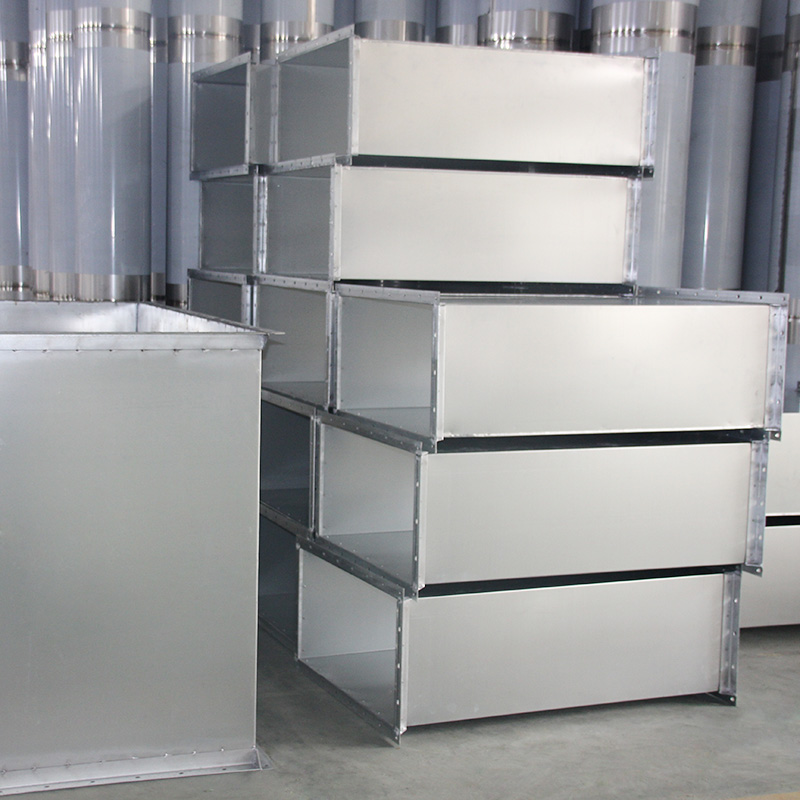



 Current
location:Home >news
>Industry news
>Ventilation Ductwork: Design Standards, Classification, And Practical Application Guidelines
Current
location:Home >news
>Industry news
>Ventilation Ductwork: Design Standards, Classification, And Practical Application Guidelines