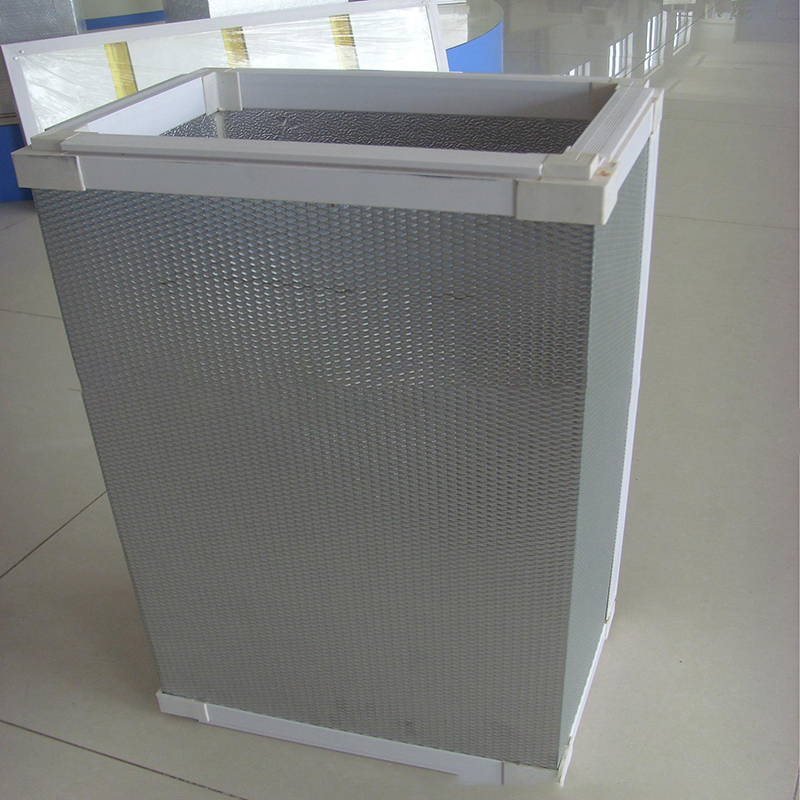
1. Introduction
In the context of global energy conservation and emission reduction, modern buildings are undergoing a transformation towards high efficiency, intelligence, and sustainability. The ventilation system, as a key component affecting indoor air quality, energy consumption, and occupant comfort, has increasingly stringent requirements for duct materials. Traditional metal ducts, while widely used in the past, have inherent limitations such as poor thermal insulation, high corrosion susceptibility, heavy weight, and high energy loss, which are difficult to meet the needs of modern green buildings and efficient ventilation systems.
Fiberglass ducts, developed based on advanced composite material technology, integrate the advantages of glass fiber and polymer matrix materials, demonstrating excellent thermal insulation, corrosion resistance, lightweight, and acoustic insulation performance. Unlike metal ducts, fiberglass ducts can effectively reduce heat loss during air transportation, improve ventilation efficiency, and avoid corrosion caused by humid environments, chemical gases, or harsh industrial conditions. Moreover, their lightweight nature simplifies transportation and installation, reducing construction costs and construction period. With the continuous advancement of composite material technology, fiberglass ducts have been continuously optimized in terms of material formula, manufacturing process, and structural design, and are now widely used in various modern building types, becoming a comprehensive solution for efficient ventilation systems.
However, in practical engineering applications, there are still problems such as improper material selection, non-standard installation, and insufficient maintenance, which affect the performance of fiberglass ducts and the efficiency of ventilation systems. Therefore, it is particularly important to comprehensively analyze the characteristics, advantages, and application scenarios of fiberglass ducts, and formulate scientific design, installation, and maintenance guidelines. This paper takes fiberglass ducts as the research object, systematically sorts out their core performance and application value, and provides a reference for the popularization and application of fiberglass ducts in modern building ventilation systems.
2. Core Composition and Manufacturing Process of Fiberglass Ducts
Fiberglass ducts are composite structures composed of glass fiber reinforcement and polymer matrix, and their performance is directly determined by the selection of raw materials and the rationality of the manufacturing process. Understanding their composition and manufacturing process is the basis for grasping their performance characteristics and application scope.
2.1 Core Composition
Fiberglass ducts are mainly composed of three parts: glass fiber reinforcement, polymer matrix, and auxiliary materials, each of which plays a key role in the performance of the duct:
- Glass Fiber Reinforcement: As the skeleton of the duct, glass fiber provides mechanical strength, rigidity, and dimensional stability. Common glass fiber types include E-glass fiber, C-glass fiber, and S-glass fiber. E-glass fiber is the most widely used due to its excellent chemical stability, high tensile strength, and low cost, suitable for general ventilation scenarios; C-glass fiber has better corrosion resistance, suitable for harsh environments with chemical gases; S-glass fiber has higher mechanical strength, suitable for high-pressure ventilation systems.
- Polymer Matrix: The matrix material wraps the glass fiber, binds the reinforcement together, and provides corrosion resistance, water resistance, and surface protection. Common matrix materials include unsaturated polyester resin, epoxy resin, and vinyl ester resin. Unsaturated polyester resin is widely used in general fiberglass ducts due to its low cost, easy processing, and good comprehensive performance; epoxy resin has high adhesion and mechanical strength, suitable for high-demand scenarios; vinyl ester resin has excellent corrosion resistance, suitable for industrial environments with strong corrosive gases.
- Auxiliary Materials: Including curing agents, accelerators, flame retardants, anti-aging agents, and fillers. Curing agents and accelerators promote the curing of the matrix resin, ensuring the structural stability of the duct; flame retardants improve the fire resistance of the duct, meeting the fire protection requirements of buildings; anti-aging agents extend the service life of the duct, especially in outdoor or harsh environments; fillers (such as calcium carbonate, talcum powder) reduce costs and improve the rigidity and wear resistance of the duct.
2.2 Manufacturing Process
The manufacturing process of fiberglass ducts is closely related to their performance and quality. Common manufacturing processes include hand lay-up, spray-up, pultrusion, and filament winding. Different processes are suitable for different specifications and application scenarios:
- Hand Lay-Up Process: The simplest and most widely used process, suitable for small-batch, non-standard, and special-shaped ducts. The process involves manually laying glass fiber cloth or mat on a mold, brushing resin, and curing at room temperature. The advantages are low equipment investment, strong adaptability, and easy production of special-shaped products; the disadvantage is low production efficiency, high labor intensity, and large differences in product quality.
- Spray-Up Process: Using a spray gun to spray glass fiber roving and resin mixture onto the mold, and then compacting and curing. This process is suitable for large-scale production of medium and large-diameter ducts, with high production efficiency and uniform product thickness. The key is to control the ratio of glass fiber to resin to ensure the mechanical performance of the duct.
- Pultrusion Process: Pulling glass fiber roving through a resin bath and a mold with a fixed cross-section, and curing at high temperature to form a continuous duct. This process is suitable for producing straight ducts with fixed cross-sections (circular, rectangular), with high production efficiency, uniform product quality, and high mechanical strength. The disadvantage is that it is not suitable for producing special-shaped ducts.
- Filament Winding Process: Winding glass fiber roving soaked in resin around a rotating mold according to a certain angle and density, and curing to form a duct. This process is suitable for large-diameter circular ducts, with high pressure resistance and corrosion resistance, and is widely used in industrial ventilation and exhaust systems. The key is to control the winding angle and tension to ensure the structural stability of the duct.
3. Core Performance Characteristics of Fiberglass Ducts
Fiberglass ducts have excellent comprehensive performance, which is the core reason for their wide application in modern building ventilation systems. Their performance characteristics are mainly reflected in thermal insulation, corrosion resistance, lightweight, mechanical strength, acoustic performance, and fire resistance, which are significantly superior to traditional metal ducts.
3.1 Thermal Insulation Performance
Thermal insulation is one of the most prominent advantages of fiberglass ducts. The thermal conductivity of fiberglass material is only 0.03~0.05W/(m·K), which is much lower than that of metal ducts (galvanized steel: 45W/(m·K), stainless steel: 16W/(m·K)). This means that fiberglass ducts can effectively reduce heat loss during the transportation of hot or cold air, improving the energy efficiency of the ventilation system. In air conditioning ventilation systems, fiberglass ducts can avoid condensation on the surface of the duct due to temperature differences, reducing the risk of mold growth and indoor air pollution. The thermal insulation performance of fiberglass ducts is stable, and there is no significant attenuation during long-term use, ensuring long-term energy-saving effects.
3.2 Corrosion Resistance
Fiberglass ducts have excellent corrosion resistance, which is another key advantage over metal ducts. The glass fiber and resin matrix are inert to most acids, bases, salts, and organic solvents, and can resist the corrosion of humid air, chemical gases (such as acid mist, alkali mist, volatile organic compounds), and industrial wastewater. Unlike metal ducts, which are prone to rust and corrosion in harsh environments, fiberglass ducts can maintain structural integrity and performance stability for a long time, reducing maintenance costs and extending service life. This makes fiberglass ducts particularly suitable for industrial buildings, chemical plants, and coastal areas with high humidity and strong corrosive environments.
3.3 Lightweight and Easy Installation
The density of fiberglass ducts is 1.8~2.0g/cm³, which is only 1/4~1/5 of that of steel ducts. The lightweight nature of fiberglass ducts greatly simplifies transportation and installation: it does not require heavy lifting equipment, reduces the load on building structures, and shortens the construction period. For example, a fiberglass duct with a diameter of 800mm and a length of 6m weighs only about 40kg, while the weight of a galvanized steel duct of the same specification is more than 180kg. In addition, fiberglass ducts can be prefabricated into various specifications and shapes in the factory, which can be directly installed on-site, reducing on-site processing work and improving construction efficiency.
3.4 Mechanical Strength and Dimensional Stability
Although fiberglass ducts are lightweight, they have good mechanical strength and dimensional stability. The tensile strength of fiberglass ducts is 150~300MPa, which is equivalent to that of ordinary carbon steel, and the bending strength and impact strength can meet the requirements of general ventilation systems. The dimensional stability of fiberglass ducts is excellent, with a linear expansion coefficient of 2.0~3.0×10⁻⁵/℃, which is much lower than that of plastic ducts (PVC: 6.0×10⁻⁵/℃), and there is no significant deformation due to temperature changes or external forces. For large-diameter fiberglass ducts, reinforcement measures such as ribs can be added to further improve their load-bearing capacity and rigidity.
3.5 Acoustic Insulation Performance
Fiberglass material has good acoustic insulation performance, which can effectively reduce the noise generated by air flow in the duct and the noise transmitted through the duct. The porous structure of glass fiber can absorb sound waves, reducing the noise level in the duct by 10~20dB compared with metal ducts. This is particularly important for buildings with high noise requirements, such as hospitals, hotels, offices, and residential buildings, which can improve indoor acoustic comfort and reduce the impact of ventilation system noise on occupants.
3.6 Fire Resistance
Fiberglass ducts have good fire resistance, and their fire performance can be adjusted according to the addition of flame retardants. The oxygen index of flame-retardant fiberglass ducts is ≥32, which belongs to non-combustible or difficult-to-combustible materials, meeting the fire protection requirements of modern buildings. When exposed to fire, fiberglass ducts do not produce toxic and harmful gases, and will not melt or drip, which can effectively prevent the spread of fire and ensure the safety of personnel and property. In addition, the fire resistance limit of fiberglass ducts can reach 0.5~2.0h, which can meet the fire protection requirements of different types of buildings.
3.7 Comparison with Traditional Duct Materials
To further highlight the advantages of fiberglass ducts, the following is a comparative analysis of fiberglass ducts with traditional metal ducts (galvanized steel, stainless steel) and plastic ducts (PVC, PP):
- Compared with Galvanized Steel Ducts: Fiberglass ducts have better thermal insulation, corrosion resistance, and acoustic insulation performance, and are lighter in weight, easier to install, and lower in long-term maintenance costs. The disadvantage is that the initial investment cost is slightly higher, but the energy-saving and maintenance-saving benefits in the later period can offset the initial investment.
- Compared with Stainless Steel Ducts: Fiberglass ducts have similar corrosion resistance, but are lighter in weight, lower in cost, and better in thermal insulation and acoustic insulation performance. Stainless steel ducts are only suitable for special scenarios with extremely high corrosion resistance requirements.
- Compared with Plastic Ducts (PVC, PP): Fiberglass ducts have higher mechanical strength, better high-temperature resistance (long-term service temperature up to 120℃), and better dimensional stability. Plastic ducts are only suitable for low-temperature, low-pressure ventilation scenarios, while fiberglass ducts can be used in more complex environments.
4. Application of Fiberglass Ducts in Modern Building Ventilation Systems
Due to their excellent comprehensive performance, fiberglass ducts are widely used in various modern building types, including commercial complexes, industrial facilities, healthcare facilities, high-rise residential buildings, and public buildings. Different building types have different requirements for ventilation systems, and fiberglass ducts can be flexibly adapted to meet these requirements.
4.1 Commercial Complexes
Commercial complexes (such as shopping malls, supermarkets, and office buildings) have large floor areas, high personnel density, and high requirements for indoor air quality and energy efficiency. The ventilation system of commercial complexes needs to have good thermal insulation, acoustic insulation, and corrosion resistance, and fiberglass ducts are perfectly suited for these requirements:
- In shopping malls and supermarkets, fiberglass ducts are used for central air conditioning ventilation and fresh air supply systems. Their excellent thermal insulation performance can reduce the energy consumption of air conditioning, and their acoustic insulation performance can reduce the noise of air flow, improving the shopping experience of customers.
- In office buildings, fiberglass ducts are used for fresh air ventilation and exhaust systems. Their lightweight nature is conducive to installation in narrow spaces (such as ceiling interlayers), and their corrosion resistance can avoid damage caused by humid air, ensuring long-term stable operation of the ventilation system.
4.2 Industrial Facilities
Industrial facilities (such as chemical plants, electroplating factories, and power plants) have harsh working environments, with a large amount of corrosive gases, high temperature, and high humidity, which have strict requirements for the corrosion resistance and high-temperature resistance of ducts. Fiberglass ducts are the preferred choice for industrial ventilation systems:
- In chemical plants, fiberglass ducts are used for the ventilation and exhaust of corrosive gases (such as acid mist, alkali mist, and chemical vapor). Their excellent corrosion resistance can avoid pipeline leakage and ensure the safety of production and workers.
- In power plants and smelting plants, fiberglass ducts are used for high-temperature flue gas exhaust systems. The high-temperature resistant fiberglass ducts (long-term service temperature up to 150℃) can withstand the erosion of high-temperature flue gas, reducing maintenance costs and extending service life.
4.3 Healthcare Facilities
Healthcare facilities (such as hospitals, clinics, and pharmaceutical factories) have extremely high requirements for indoor air quality, sterility, and noise control. Fiberglass ducts have the advantages of non-toxic, corrosion-resistant, easy to clean, and good acoustic insulation, which are suitable for healthcare ventilation systems:
- In hospitals, fiberglass ducts are used for clean room ventilation (such as operating rooms, intensive care units) and medical waste gas exhaust systems. Their smooth surface is not easy to accumulate dust and bacteria, which is conducive to maintaining the sterility of the clean room, and their acoustic insulation performance can reduce the impact of ventilation noise on patients.
- In pharmaceutical factories, fiberglass ducts are used for the ventilation of production workshops and the conveying of clean air. Their corrosion resistance can avoid the pollution of drugs by pipeline corrosion, ensuring the quality of drugs.
4.4 High-Rise Residential Buildings
High-rise residential buildings have high requirements for the load-bearing capacity of building structures, energy efficiency, and indoor comfort. Fiberglass ducts, with their lightweight, good thermal insulation, and easy installation characteristics, are widely used in the ventilation systems of high-rise residential buildings:
- In high-rise residential buildings, fiberglass ducts are used for kitchen and bathroom ventilation, fresh air supply, and air conditioning ventilation systems. Their lightweight nature reduces the load on the building structure, and their thermal insulation performance can reduce energy consumption, improving the indoor comfort of residents.
- Fiberglass ducts can be prefabricated into various shapes and specifications, which is suitable for the narrow installation space of high-rise residential buildings (such as ceiling interlayers and wall ducts), reducing the impact on the indoor space layout.
4.5 Other Public Buildings
In addition to the above building types, fiberglass ducts are also widely used in other public buildings, such as schools, stadiums, airports, and railway stations:
- In schools and stadiums, fiberglass ducts are used for ventilation and air conditioning systems, with good acoustic insulation performance to reduce noise and ensure a quiet environment for teaching and sports activities.
- In airports and railway stations, which have large space and high ventilation demand, fiberglass ducts are used for large-air-volume ventilation systems, with high mechanical strength and good air tightness, ensuring efficient ventilation and air exchange.
5. Design, Installation and Maintenance Guidelines for Fiberglass Ducts
To ensure the performance of fiberglass ducts and the efficiency of the ventilation system, scientific design, standardized installation, and regular maintenance are essential. This section puts forward practical guidelines for each link, providing a reference for engineering practice.
5.1 Design Guidelines
The design of fiberglass ducts should follow the principles of ""performance matching, energy saving, safety, and economy"", and fully consider the working environment, ventilation requirements, and building structure. The key design points are as follows:
- Material Selection: According to the working environment (temperature, humidity, corrosion degree) and ventilation requirements, select the appropriate glass fiber type and matrix resin. For general ventilation scenarios, E-glass fiber and unsaturated polyester resin are recommended; for corrosive environments, C-glass fiber and vinyl ester resin are recommended; for high-temperature environments, high-temperature resistant resin and glass fiber are recommended.
- Specification and Size Design: The cross-sectional size (diameter or rectangular size) of the duct should be calculated according to the ventilation volume and flow velocity. The flow velocity of fiberglass ducts is usually controlled at 3~10m/s: for fresh air and air conditioning ventilation, the flow velocity is 3~6m/s; for exhaust systems, the flow velocity is 6~10m/s. The wall thickness of the duct should be determined according to the working pressure and cross-sectional size: for working pressure ≤0.1MPa, the wall thickness is 4~6mm; for working pressure 0.1~0.3MPa, the wall thickness is 6~10mm; for working pressure 0.3~0.6MPa, the wall thickness is 10~15mm.
- Structural Design: For large-diameter ducts (diameter >1000mm), reinforcement ribs should be added to improve rigidity and load-bearing capacity. The spacing of reinforcement ribs is usually 500~1000mm. The bending radius of the duct should not be less than 1.5 times the diameter of the circular duct or the side length of the rectangular duct to reduce air resistance. The connection between the duct and the fan, valve, and other components should be designed with flexible joints to reduce vibration.
- Fire Protection Design: The fire resistance grade of fiberglass ducts should meet the requirements of the building fire protection code. Flame-retardant resin and flame retardants should be used to ensure that the oxygen index is ≥32. Fire dampers should be installed at the penetration of the fire compartment partition to prevent the spread of fire.
5.2 Installation Guidelines
The installation of fiberglass ducts should be carried out in strict accordance with the design drawings and relevant standards, focusing on ensuring installation accuracy, connection tightness, and structural stability. The key installation points are as follows:
- Pre-Installation Preparation: Before installation, check the quality of the duct (surface flatness, thickness, dimensional accuracy) and clean the duct to remove dust and debris. Check the installation site to ensure that the support and hanger are installed in place and meet the load-bearing requirements.
- Support and Hanger Installation: The support and hanger of fiberglass ducts should be made of anti-corrosion materials (such as galvanized steel, fiberglass). The spacing of the support and hanger is determined according to the duct size and weight: for circular ducts with diameter ≤1000mm, the spacing is 3~4m; for circular ducts with diameter >1000mm, the spacing is 2~3m; for rectangular ducts, the spacing is 2.5~3.5m. The support and hanger should be installed firmly, and there should be a buffer pad between the support and the duct to avoid damage to the duct.
- Duct Connection: The connection of fiberglass ducts can be achieved by flange connection, adhesive connection, or hot melt connection. Flange connection is suitable for high-pressure systems and scenarios that need to be disassembled frequently; adhesive connection is suitable for low-pressure systems and small-diameter ducts, with good sealing performance; hot melt connection is suitable for thermoplastic fiberglass ducts. The connection should be tight, and sealant should be applied to avoid air leakage.
- Sealing Treatment: The connection of the duct, the penetration of the wall and ceiling, and the connection with other components should be sealed with fire-resistant sealant. The sealant should be non-combustible, high-temperature resistant, and have good adhesion to ensure no air leakage and meet the fire protection requirements.
5.3 Maintenance Guidelines
Regular maintenance of fiberglass ducts can extend their service life and ensure the normal operation of the ventilation system. The key maintenance points are as follows:
- Regular Inspection: Conduct a visual inspection of the duct every 6~12 months, check for damage, deformation, leakage, and corrosion of the duct surface, and check the tightness of the connection and the integrity of the sealant. For industrial environments with harsh conditions, the inspection frequency should be increased.
- Cleaning and Maintenance: Clean the inside of the duct regularly to remove dust, dirt, and medium residues, especially in ventilation systems with high air quality requirements (such as hospitals, food processing plants). The cleaning can be carried out by mechanical cleaning or chemical cleaning, and the cleaning agent should be compatible with the duct material to avoid corrosion.
- Repair and Replacement: If the duct is found to be damaged, cracked, or leaking, it should be repaired in time. Small cracks can be repaired with resin and glass fiber cloth; if the damage is serious, the damaged section should be replaced. For ducts that have been used for more than 15 years and have serious aging and performance degradation, they should be replaced in time.
- Anti-Aging Maintenance: For fiberglass ducts used outdoors, anti-ultraviolet treatment should be carried out regularly (such as coating anti-ultraviolet paint) to prevent aging and brittle fracture. For ducts used in humid environments, moisture-proof measures should be taken to avoid mold growth.
6. Practical Engineering Cases and Effect Analysis
To verify the application effect and economic benefits of fiberglass ducts in modern building ventilation systems, this section selects two typical engineering cases (a commercial complex and a chemical plant) for analysis.
6.1 Case 1: Fiberglass Duct Application in a Commercial Complex
A large commercial complex with a total floor area of 150,000㎡, including a shopping mall, office building, and hotel, requires a central air conditioning ventilation system with high energy efficiency, low noise, and good indoor air quality. The original design adopted galvanized steel ducts, but due to high energy consumption and poor acoustic insulation, it was replaced with fiberglass ducts.
Design and Installation of Fiberglass Ducts: ① Material selection: E-glass fiber and unsaturated polyester resin, flame-retardant grade, oxygen index ≥32; ② Specification size: Circular ducts with diameter 500mm~1200mm, wall thickness 6~10mm, rectangular ducts with cross-sectional size 600mm×400mm~1000mm×800mm; ③ Connection mode: Flange connection for main ducts, adhesive connection for branch ducts; ④ Support and hanger: Galvanized steel support and hanger, spacing 3~4m, with buffer pads.
Application Effect: After the replacement of fiberglass ducts, the energy consumption of the air conditioning system was reduced by 25% due to the excellent thermal insulation performance; the indoor noise level was reduced by 15dB, improving the comfort of shopping and office; the air leakage rate of the duct was reduced to ≤5%, which is lower than the national standard (≤10%); the maintenance cost was reduced by 60% compared with galvanized steel ducts, and the service life is expected to reach 20 years. The project has achieved good energy-saving and economic benefits, and has been recognized as a green building demonstration project.
6.2 Case 2: Fiberglass Duct Application in a Chemical Plant
A chemical plant produces organic chemicals, and the waste gas generated in the production process contains dilute sulfuric acid mist, alkali mist, and volatile organic compounds, with a working temperature of 50~80℃ and working pressure of 0.2MPa. The original metal ducts were seriously corroded after 3 years of use, resulting in frequent leakage and high maintenance costs. Fiberglass ducts were adopted for replacement.
Design and Installation of Fiberglass Ducts: ① Material selection: C-glass fiber and vinyl ester resin, corrosion-resistant grade, long-term service temperature up to 100℃; ② Specification size: Circular ducts with diameter 800mm~1500mm, wall thickness 8~12mm, with reinforcement ribs every 800mm; ③ Connection mode: Flange connection, sealed with corrosion-resistant sealant; ④ Installation: The ducts are installed indoors, with anti-corrosion treatment for support and hanger.
Application Effect: After the replacement of fiberglass ducts, no waste gas leakage occurred, ensuring the safety of production and workers; the service life of the ducts is expected to reach 15 years, which is 5 times that of metal ducts; the maintenance cost is reduced by 70%, and the energy consumption of the ventilation system is reduced by 20% due to the smooth surface and low air resistance. The project has solved the problem of pipeline corrosion, improved the operation efficiency of the waste gas treatment system, and met the national environmental protection standards.
7. Future Development Trends of Fiberglass Ducts
With the continuous development of composite material technology, building energy conservation standards, and intelligent building technology, fiberglass ducts will develop towards high performance, functionalization, intelligence, and greenization, further expanding their application scope and improving their application value.
- High Performance Modification: Through material modification technology, improve the high-temperature resistance, low-temperature toughness, and mechanical strength of fiberglass ducts. For example, develop high-temperature resistant fiberglass ducts with long-term service temperature up to 200℃, and low-temperature resistant fiberglass ducts suitable for cold regions, expanding the application scope of fiberglass ducts.
- Functional Integration: Develop fiberglass ducts with integrated functions, such as ventilation, thermal insulation, noise reduction, anti-bacteria, and air purification. For example, integrate air purification filters into the duct to improve indoor air quality; add sound-absorbing layers to enhance acoustic insulation performance, meeting the multi-functional requirements of modern buildings.
- Intelligent Development: Integrate intelligent technologies (such as sensors, IoT, and big data) into fiberglass ducts, install sensors on the duct body to monitor air flow, temperature, humidity, and air quality in real time. Through IoT technology, transmit monitoring data to the control center, realize intelligent adjustment of the ventilation system, fault early warning, and remote maintenance, improving the operation efficiency and management level of the ventilation system.
- Green and Low-Carbon Manufacturing: Adopt environmentally friendly raw materials and energy-saving manufacturing processes, reduce energy consumption and environmental pollution during the production process. Develop recyclable fiberglass ducts, realize the recycling of materials, and meet the requirements of green and low-carbon development. At the same time, optimize the material formula to reduce the content of harmful substances and improve the environmental performance of the duct.
- Prefabrication and Modularization: Promote the prefabrication and modularization of fiberglass ducts, realize standardized production in the factory, and modular installation on-site. This can improve production efficiency, ensure product quality, reduce on-site construction time and labor intensity, and adapt to the needs of rapid construction of modern buildings.
8. Conclusion
Fiberglass ducts, as a new type of composite duct material, have excellent comprehensive performance, including good thermal insulation, corrosion resistance, lightweight, mechanical strength, acoustic insulation, and fire resistance, which perfectly meet the requirements of modern building efficient ventilation systems. Compared with traditional metal ducts and plastic ducts, fiberglass ducts have obvious advantages in energy saving, environmental protection, long service life, and low maintenance cost, and have become a comprehensive solution for modern building ventilation systems.
Fiberglass ducts are widely used in various modern building types, including commercial complexes, industrial facilities, healthcare facilities, high-rise residential buildings, and public buildings, and have achieved good application effects in practical engineering. The scientific design, standardized installation, and regular maintenance of fiberglass ducts are the key to ensuring their performance and extending their service life. By following the design, installation, and maintenance guidelines, the efficiency of the ventilation system can be improved, energy consumption can be reduced, and the goals of energy conservation, environmental protection, and sustainable development can be realized.
In the future, with the continuous advancement of composite material technology and intelligent building technology, fiberglass ducts will develop towards high performance, functionalization, intelligence, and greenization, playing a more important role in modern building ventilation systems. It is believed that with the continuous popularization and application of fiberglass ducts, the ventilation efficiency and energy-saving level of modern buildings will be further improved, making greater contributions to the development of green buildings and sustainable cities.
 +85247166614



 Current
location:Home >news
>Industry news
>Fiberglass Ducts: A Comprehensive Solution For Efficient Ventilation Systems In Modern Buildings
Current
location:Home >news
>Industry news
>Fiberglass Ducts: A Comprehensive Solution For Efficient Ventilation Systems In Modern Buildings