In industrial production processes such as manufacturing, mining, metallurgy, and building materials, the generation of dust is inevitable. Uncontrolled dust not only endangers the health of workers but also affects production efficiency, damages equipment, and even poses potential safety hazards such as dust explosions. As a core component of industrial dust control systems, dust collection spiral ducts play a crucial role in collecting, transporting, and discharging dust, ensuring a clean, safe, and compliant production environment.
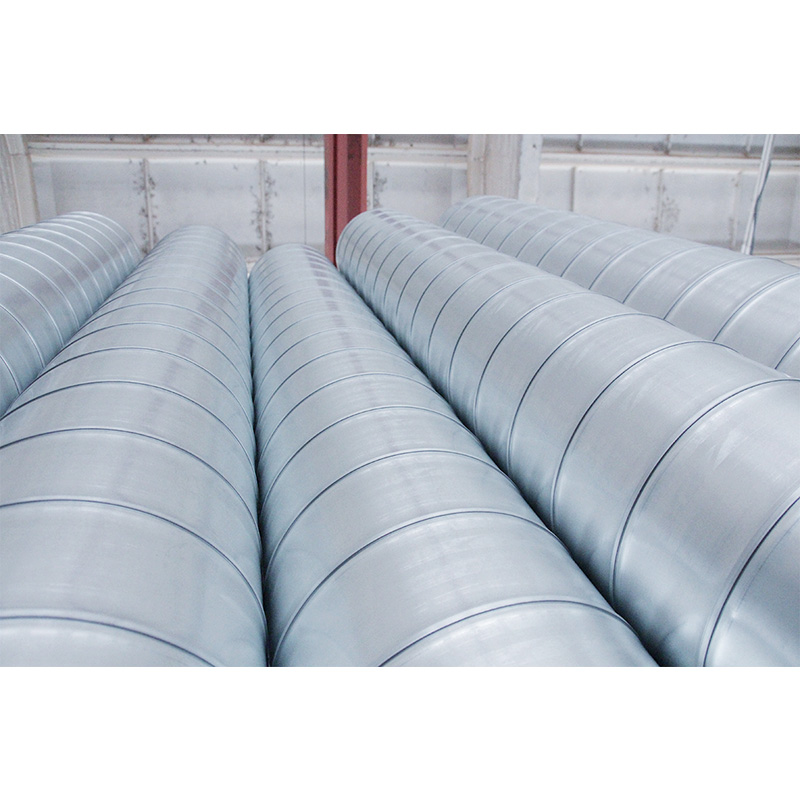
Dust collection
spiral ducts are specialized ventilation ducts designed specifically for industrial dust control scenarios, distinguished by their spiral-shaped structure and optimized design for dust transportation. Unlike ordinary HVAC ducts that focus on air supply and temperature regulation, dust collection spiral ducts are engineered to handle air containing dust particles of varying sizes, with a focus on high airtightness, strong structural rigidity, and low airflow resistance—key factors that determine the efficiency and reliability of dust collection systems.
The unique spiral structure of these ducts is the core of their superior performance. Made by continuously rolling and forming metal sheets into a spiral shape, dust collection spiral ducts have a seamless or tightly locked joint design, which minimizes air leakage and ensures that dust-laden air is fully transported to the dust collection equipment without escaping into the workshop. The smooth inner wall of the spiral duct reduces friction between the airflow and the duct surface, lowering airflow resistance and energy consumption of the dust collection fan, while also preventing dust accumulation that could lead to blockages.
Material selection for dust collection spiral ducts is closely related to the characteristics of the dust and the working environment. Galvanized steel is the most commonly used material, offering excellent corrosion resistance, high strength, and cost-effectiveness, suitable for most general industrial dust scenarios such as wood processing, grain processing, and machinery manufacturing. For environments with corrosive dust (such as chemical industry, electroplating, and metallurgy), stainless steel spiral ducts are preferred, as they can resist the erosion of acidic and alkaline dust, ensuring a longer service life.
In high-temperature dust control scenarios (such as cement production, steel smelting), high-temperature resistant materials such as aluminized steel or heat-resistant stainless steel are used to prevent duct deformation or damage caused by high-temperature dust-laden air. Additionally, some special dust collection systems may adopt anti-static spiral ducts, which can effectively eliminate static electricity generated by dust friction, reducing the risk of dust explosions in flammable and explosive dust environments.
The fabrication process of dust collection spiral ducts requires strict precision to ensure their performance in dust transportation. The process starts with material cutting, where CNC cutting machines cut metal sheets into precise sizes according to the designed duct diameter and length, ensuring consistent dimensions and clean edges. Next, the sheet is fed into a spiral forming machine, which rolls the sheet into a continuous spiral shape and locks the edges tightly to form a seamless or semi-seamless duct body.
After forming, the ducts are equipped with necessary fittings such as elbows, tees, reducers, and flanges, all of which are also fabricated with spiral structures to maintain consistent airflow and prevent dust accumulation at joints. The joints between ducts and fittings are sealed with high-temperature and corrosion-resistant sealants to ensure airtightness, as even slight air leakage can reduce dust collection efficiency and cause secondary pollution. Finally, the finished ducts undergo strict inspection, including airtightness testing, structural strength testing, and surface quality inspection, to ensure they meet industrial dust control standards.
Compared with traditional rectangular or ordinary round ducts, dust collection spiral ducts have obvious advantages in industrial dust control applications. First, superior airtightness: the spiral locking structure ensures minimal air leakage, improving dust collection efficiency and reducing energy waste. Second, low airflow resistance: the smooth inner wall and reasonable cross-sectional design reduce wind resistance, allowing the dust collection fan to operate more efficiently and save energy.
Third, strong structural rigidity: the spiral structure distributes stress evenly, making the duct more resistant to pressure and deformation, even under the impact of high-speed dust-laden airflow. Fourth, easy installation and maintenance: the lightweight design and standardized fittings make on-site installation faster and more convenient, while the smooth inner wall is easy to clean, reducing the frequency of maintenance and blockage. Fifth, space-saving: the round cross-section of spiral ducts has a smaller occupied space compared to rectangular ducts, making them suitable for industrial workshops with limited space.
Dust collection spiral ducts are widely applied in various industrial fields that generate dust. In the wood processing industry, they are used to collect sawdust and wood chips generated during cutting, sanding, and polishing processes, preventing dust from polluting the workshop and protecting workers from respiratory diseases. In the mining industry, they transport dust generated during mining, crushing, and screening operations to dust collection equipment, reducing environmental pollution and equipment wear.
In the metallurgical and steel industry, dust collection spiral ducts handle high-temperature dust generated during smelting, rolling, and forging, ensuring the normal operation of equipment and complying with environmental protection standards. In the building materials industry (such as cement, glass, and ceramic production), they collect dust from raw material processing, firing, and packaging processes, reducing air pollution and improving production safety. Additionally, they are used in the food processing industry to collect dust from grain grinding, packaging, and conveying, ensuring food hygiene and safety.
With the increasing emphasis on environmental protection and workplace safety worldwide, the demand for efficient dust control systems is growing, and dust collection spiral ducts are constantly evolving to meet higher requirements. Technological advancements have led to the development of intelligent spiral duct fabrication lines, which improve processing precision and efficiency, ensuring consistent product quality. The integration of anti-static, corrosion-resistant, and high-temperature resistant technologies has expanded the application scope of dust collection spiral ducts, making them suitable for more complex industrial environments.
Moreover, the trend of green and energy-saving development has promoted the optimization of dust collection spiral duct design. By improving the duct structure and material performance, the airflow resistance is further reduced, and energy consumption of the dust collection system is minimized. At the same time, the use of environmentally friendly materials and coatings reduces the environmental impact of duct fabrication and use.
In conclusion, dust collection spiral ducts are essential equipment for industrial dust control, combining unique spiral structure, high-quality materials, and precise fabrication to provide efficient, reliable, and energy-saving solutions for dust transportation. Their superior performance and wide application make them an indispensable part of modern industrial production, helping enterprises achieve environmental compliance, protect worker health, and improve production efficiency. As industrial technology continues to advance, dust collection spiral ducts will play an even more critical role in the field of industrial dust control.
 +85247166614



 Current
location:Home >news
>Industry news
>Dust Collection Spiral Ducts: High-Efficiency Solutions For Industrial Dust Control
Current
location:Home >news
>Industry news
>Dust Collection Spiral Ducts: High-Efficiency Solutions For Industrial Dust Control