What Is Spiral Duct?
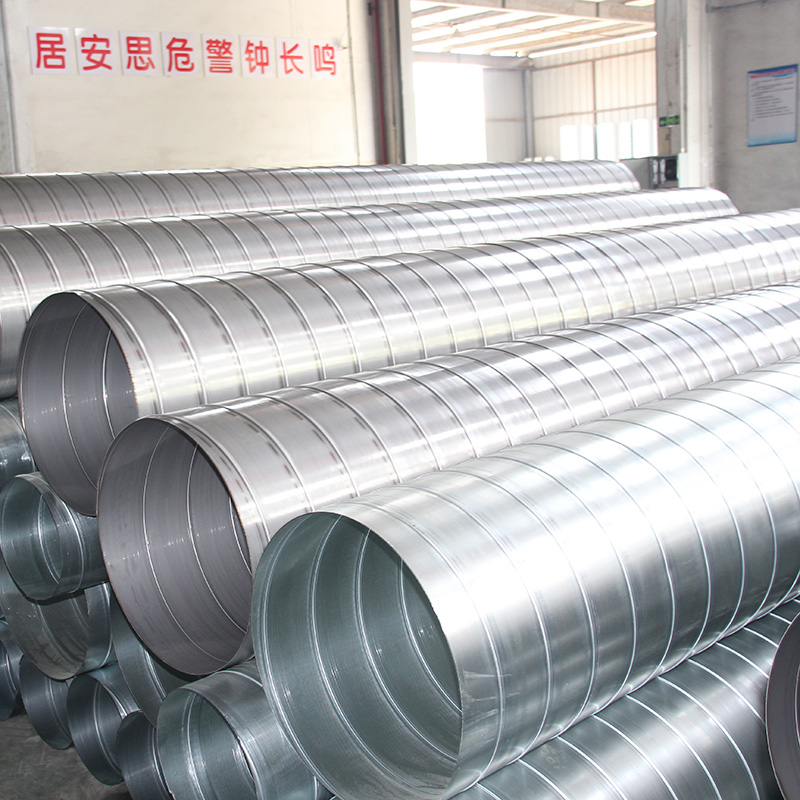
Spiral duct is round duct made by helically winding a galvanized or stainless steel strip and lock-seaming the edges. The result is a continuous helical seam along the length of the duct. Standard diameters range from 80 mm to 1,500 mm or more; standard length is typically 3–6 m per section.
Properties of spiral duct:
Round cross-section: structurally rigid; resists deformation and collapse.
Helical seam: continuous lock-seam that is strong and leak-tight.
Smooth interior: low friction loss; lower pressure drop than equivalent rectangular duct at the same air volume.
Faster installation: longer lengths per joint (typically 3–6 m vs 1.2 m for rectangular); fewer joints to seal.
Lower leakage: helical seam and fewer joints result in lower total leakage.
The Wuxi Weishan spiral duct product line covers galvanized and stainless variants, including galvanized spiral air duct and stainless steel spiral air duct.
What Is Rectangular Duct?
Rectangular duct is fabricated from flat sheet, formed into a rectangular cross-section, and joined at the corners (typically Pittsburgh lock or welded). Standard dimensions range from 100 mm to 2,500 mm or more on the long side; standard length is typically 1.2 m per section.
Properties of rectangular duct:
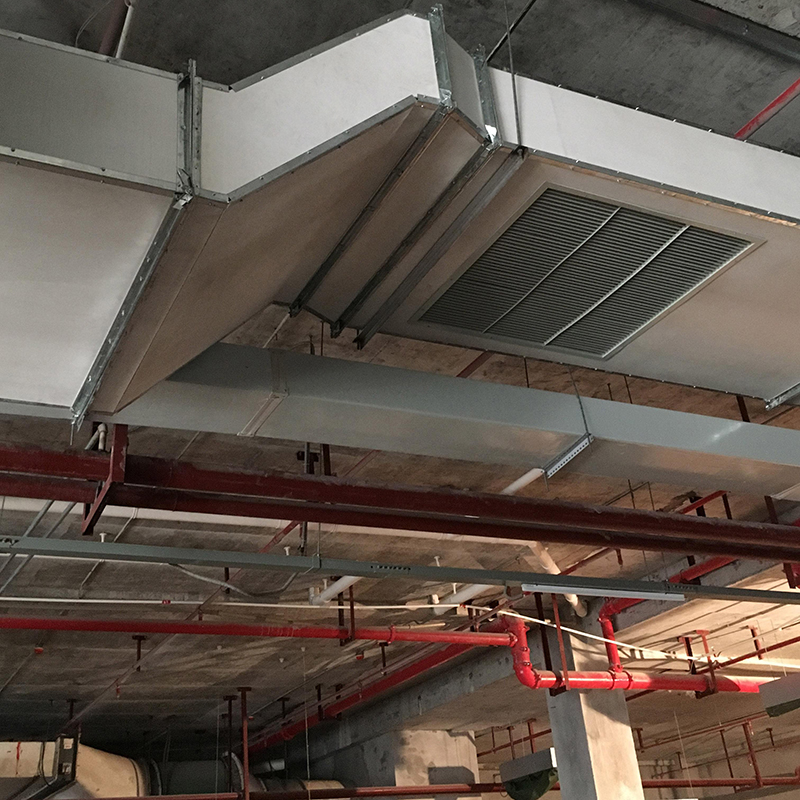
Rectangular cross-section: lower profile than round for the same air volume; fits in tight ceiling cavities.
Jointed construction: many joints (one every 1.2 m) that must be sealed.
Pressure-sensitive geometry: flat sides can deflect at higher pressure; stiffeners or lower pressure class are required for larger sizes.
Sealing required: each joint must be sealed with mastic, gasket, or welded seam.
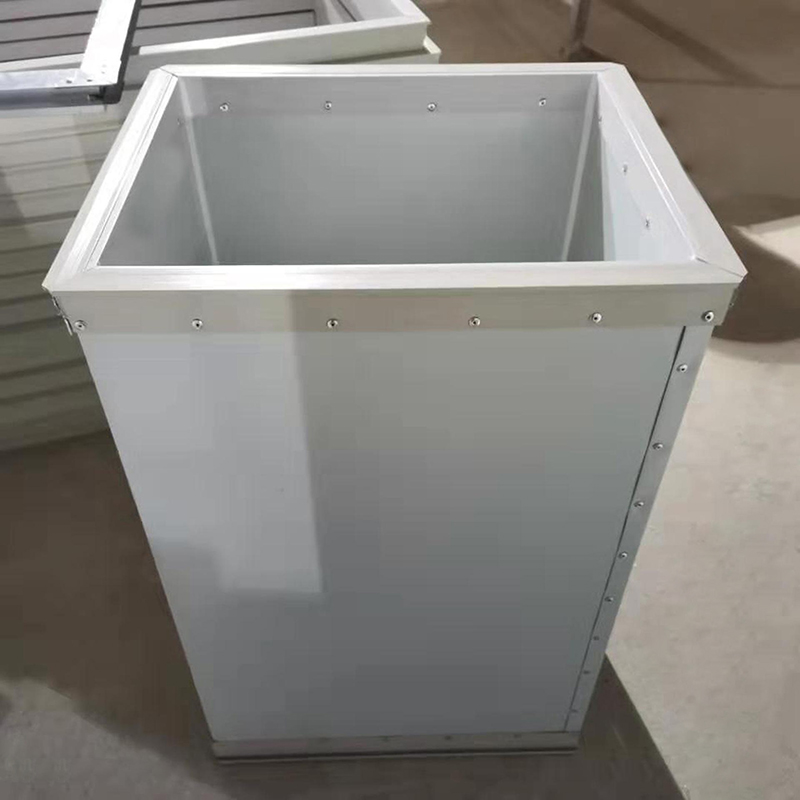
The Wuxi Weishan rectangular duct product line includes common rectangular, welded rectangular, and composite variants.
What Are the Engineering Differences?
|
Property |
Spiral Duct |
Rectangular Duct |
|
Equivalent diameter for same airflow |
Smaller |
Larger |
|
Pressure drop per meter |
~30–50% lower |
Higher |
|
Friction factor (C-factor) |
0.0015–0.0020 |
0.0025–0.0035 |
|
Air leakage (typical) |
1–3% |
5–15% |
|
Joints per 10 m |
2–4 |
8–10 |
|
Installation labor |
Lower |
Higher |
|
Space requirement (headroom) |
Larger |
Smaller |
|
Acoustic performance |
Better (round geometry) |
Worse (flat sides) |
|
Material cost per meter |
Slightly higher |
Slightly lower |
|
Suitable for high pressure |
Better |
Limited
|
Round duct has a clear aerodynamic advantage: lower pressure drop, lower leakage, better acoustics, and faster installation. Rectangular duct has a clear spatial advantage: lower profile for tight ceiling cavities.
What Is the Equivalent Diameter?
The equivalent diameter (De) is the round duct diameter that has the same hydraulic diameter as the rectangular duct:
De = 1.30 × (a × b)^0.625 / (a + b)^0.25
Where a and b are the rectangular duct dimensions (mm).
Example: a 600 × 300 mm rectangular duct has De ≈ 410 mm, equivalent to a 410 mm round duct. The round duct at the same airflow has lower pressure drop because of its higher hydraulic diameter.
In practice, designers use the equal friction method or the static regain method to size rectangular and round ducts for the same pressure drop per unit length. The round duct can be smaller for the same airflow and pressure drop.
What Are the Pressure Drop Implications?
For the same airflow and pressure drop per unit length, round duct is typically 1–2 sizes smaller than rectangular duct. The size reduction translates to:
Lower material cost (smaller duct uses less material).
Lower installation cost (smaller duct is easier to handle).
Lower air leakage (smaller leakage path).
For high-pressure systems (e.g., industrial dust collection, process exhaust), the lower leakage of spiral duct is a major advantage.
What Are the Acoustic Implications?
Round duct has better acoustic performance than rectangular duct because:
The round geometry has no flat parallel surfaces that can radiate sound.
The smooth interior and lower air velocity reduce airflow-generated noise.
The lower pressure drop reduces fan noise.
For noise-sensitive applications (offices, hospitals, schools, residential), round duct or lined rectangular duct is preferred.
What Are the Space Implications?
Round duct requires more headroom than rectangular duct for the same airflow. For example, a 500 mm round duct requires 500 mm of headroom, while a 600 × 300 mm rectangular duct requires only 300 mm of headroom.
In tight ceiling cavities (e.g., commercial buildings, apartments), rectangular duct is often the only practical option. In industrial plants with open ceilings or exposed duct, round duct is preferred.
What Are the Leakage Implications?
Leakage is a major source of energy waste in HVAC systems. SMACNA classifies duct by leakage class:
|
Class |
Leakage Rate (cfm / 100 ft² @ 1 in. w.c.) |
Best For |
|
Seal Class A |
4 |
Low-pressure residential |
|
Seal Class B |
8 |
Low-pressure commercial |
|
Seal Class C |
12 |
Medium-pressure commercial |
|
Seal Class D |
24 |
High-pressure industrial |
|
Seal Class E |
48 |
Very high-pressure industrial |
Spiral duct typically achieves Seal Class B or C out of the box because of the lock-seam and fewer joints. Rectangular duct typically requires additional sealing (mastic, gasket) to achieve the same class.
For high-pressure or high-temperature service, welded rectangular duct is required to achieve low leakage.
When Is Spiral Duct the Right Choice?
Spiral duct is the right choice when:
The system is medium to high pressure: lower pressure drop and lower leakage.
Acoustic performance is important: offices, hospitals, schools.
Open ceiling or exposed duct: round duct has a clean industrial appearance.
Fast installation is required: longer lengths, fewer joints.
Corrosive media: stainless steel spiral duct is widely available.
Standard diameters suffice: typical sizes 80 mm to 1,500 mm.
Common applications: industrial plant ventilation, commercial HVAC mains and branches, dust collection mains, kitchen exhaust, fume exhaust.
When Is Rectangular Duct the Right Choice?
Rectangular duct is the right choice when:
Headroom is limited: tight ceiling cavities.
Non-standard dimensions: very wide or very tall ducts (over 1,500 mm) are easier in rectangular.
Architectural finish: visible rectangular duct can be finished to match interior design.
Connection to rectangular equipment: AHUs, fan coil units, air handling units with rectangular discharge.
Custom fittings: rectangular taps, transitions, and offsets are easier to fabricate.
Common applications: commercial ceiling cavities, large AHUs, cleanroom returns, custom architectural ductwork.
How Are the Two Combined?
Most large industrial and commercial HVAC systems combine both geometries:
Spiral (round) for mains and long runs: open ceiling, exposed duct, plant space.
Rectangular for branches and connections: ceiling cavities, equipment connections.
Transitions: fabricated transitions between round and rectangular sections.
The Wuxi Weishan duct fittings and integrative product lines include round-to-rectangular transitions, elbows, reducers, and offsets.
What Are the Friction Loss Coefficients?
Friction loss coefficients (C-factor) for clean galvanized duct at typical air velocities (500–2,500 fpm):
|
Duct Type |
C-factor |
Notes |
|
Spiral round |
0.0015–0.0020 |
Smooth interior |
|
Welded round |
0.0015 |
Very smooth, welded seam |
|
Rectangular (Pittsburgh lock) |
0.0025–0.0035 |
Slightly rough at corners |
|
Rectangular (welded) |
0.0020–0.0025 |
Smoother than lock seam |
|
Flexible (extended) |
0.0050–0.0060 |
Very rough; only for short runs |
|
Flex (compressed) |
0.0080–0.0100 |
Very rough; avoid compression |
The C-factor is used in the Darcy-Weisbach equation to calculate pressure drop. For the same air velocity, round duct has lower pressure drop than rectangular.
How Are Duct Sizes Selected?
Duct sizes are selected using one of three methods:
Equal friction method: duct is sized so that the friction loss per unit length is constant (typically 0.1 in. w.c. per 100 ft or 0.8 Pa/m). This is the most common method.
Static regain method: duct is sized so that the static pressure regain at each branch offsets the friction loss in the next section. This is more complex but gives better results for large systems.
Velocity method: duct is sized to limit the air velocity to a target (e.g., 1,500 fpm in mains, 700 fpm in branches). This is the simplest but least precise method.
For most industrial ventilation systems, the equal friction method is used.
What Are the Common Defects?
Common defects in spiral and rectangular duct:
|
Defect |
Spiral Duct |
Rectangular Duct |
Prevention |
|
Seam opening |
Lock-seam failure |
Pittsburgh lock failure |
Use proper seaming equipment, inspect seams |
|
Leakage at joints |
Coupling failure |
Flange gasket failure |
Use proper gaskets, torque bolts correctly |
|
Vibration |
Insufficient support |
Insufficient support |
Add supports per SMACNA |
|
Noise |
Excessive velocity |
Excessive velocity |
Limit velocity, use silencers |
|
Condensation |
Inadequate insulation |
Inadequate insulation |
Insulate per ASHRAE |
|
Corrosion at seams |
Galvanic reaction |
Galvanic reaction |
Use compatible metals, isolate dissimilar metals |
|
Flat-side deflection |
N/A |
Overpressure |
Limit pressure class, add stiffeners |
Each defect is preventable with discipline. Wuxi Weishan's workshop documents the production capability.
What Standards Govern Duct Construction?
Major standards for duct construction:
SMACNA HVAC Duct Construction Standards (North America): metal and flexible duct standards.
DW143 / DW144 (UK): ductwork construction standards.
EN 12237 / EN 1507 (Europe): ductwork cleanliness and strength.
ASHRAE Handbook: duct design and installation.
NFPA 90A / 90B: installation of air conditioning and ventilating systems.
NFPA 96: kitchen exhaust (grease duct).
For European projects, DW143 / DW144 and EN 1507 are typical. For North American projects, SMACNA and ASHRAE are typical.
What Is the Future of Duct Geometry?
Trends in duct geometry:
Larger spiral diameters: up to 1,500 mm or more for large industrial systems.
Oval duct: oval (flat oval) duct combines the lower pressure drop of round duct with the lower profile of rectangular duct.
Pre-insulated duct: factory-insulated spiral and rectangular duct for faster installation.
Modular duct systems: standardized duct sections with quick-connect joints for fast installation.
Composite duct: pre-insulated composite panels for cleanroom and architectural applications.
For a duct manufacturer, the trend toward larger diameters and oval geometry reflects the demand for lower pressure drop and tighter ceiling cavities.
Conclusion
Spiral (round) duct and rectangular duct are the two principal HVAC duct geometries. Spiral duct offers lower pressure drop, lower leakage, faster installation, and better acoustics. Rectangular duct offers lower profile for tight ceiling cavities and easier rectangular connections. Most large systems combine both. Wuxi Weishan produces spiral duct, galvanized spiral air duct, stainless steel spiral air duct, rectangular duct, and the duct fittings and integrative product lines for complete HVAC systems.
Frequently Asked Questions
What is the main advantage of spiral duct over rectangular duct?
The main advantage is lower pressure drop (30–50% lower for the same airflow), lower leakage (fewer joints), faster installation (longer sections), and better acoustic performance.
What is the main advantage of rectangular duct over spiral duct?
The main advantage is lower profile for tight ceiling cavities. Rectangular duct fits in shallow ceiling spaces where round duct would not fit.
Can spiral and rectangular duct be combined in the same system?
Yes, most large systems combine both. Spiral duct is used for mains and long runs in open ceiling; rectangular duct is used for branches and connections in ceiling cavities.
What is the maximum diameter of spiral duct?
Spiral duct is available in diameters up to 1,500 mm or more. For diameters above 1,500 mm, rectangular or flat oval duct is often used.
What is flat oval duct?
Flat oval duct combines the lower pressure drop of round duct with the lower profile of rectangular duct. It is used where round duct is too tall and rectangular duct is too wide.
What is the typical leakage rate for spiral duct?
Spiral duct typically has 1–3% leakage, which is lower than rectangular duct at 5–15%. Welded rectangular duct can achieve similar low leakage.
How are spiral duct sections joined?
Spiral duct sections are joined by inserted couplings (slip joints), flanges, or clamps. The joint is sealed with butyl rubber sealant or mastic.
How are rectangular duct sections joined?
Rectangular duct sections are joined by flanges (angle steel or flat steel), gaskets, and bolts. The joint is sealed with butyl rubber sealant, mastic, or gasket.
What is the typical length of a spiral duct section?
The typical length is 3–6 m, longer than rectangular duct at 1.2 m. The longer length means fewer joints.
What is the typical length of a rectangular duct section?
The typical length is 1.2 m, which is the standard SMACNA length. Longer lengths are possible but harder to handle.
What is the equivalent diameter formula?
De = 1.30 × (a × b)^0.625 / (a + b)^0.25, where a and b are the rectangular dimensions in mm.
What is the future of duct geometry?
The future is toward larger diameters, flat oval geometry, pre-insulated duct, modular duct systems, and composite duct panels.
 +85247166614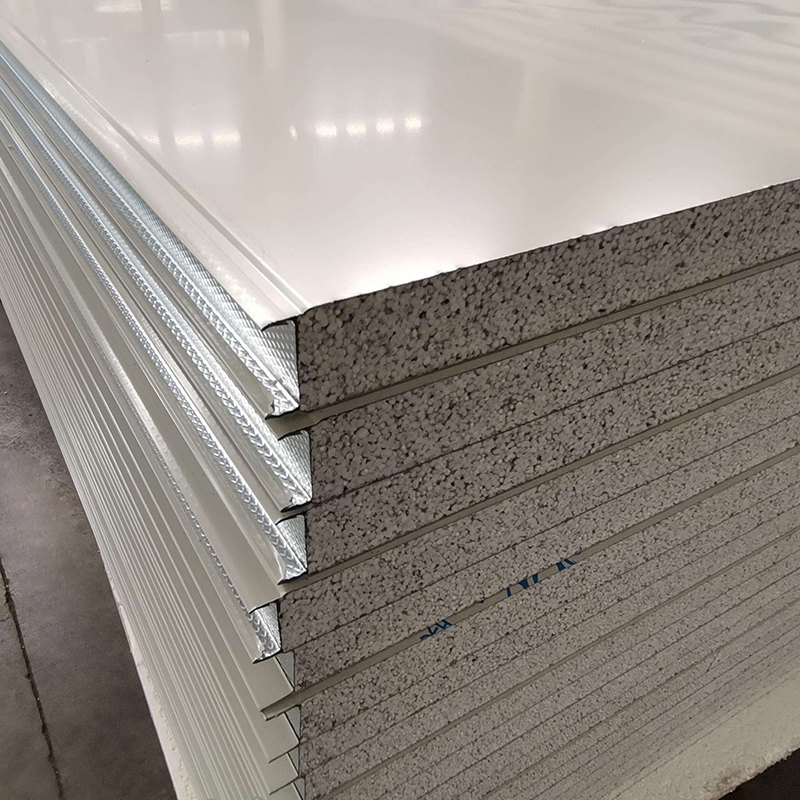



 Current
location:Home >news
>Industry news
>Spiral Duct Vs Rectangular Duct: Engineering Comparison For HVAC Systems
Current
location:Home >news
>Industry news
>Spiral Duct Vs Rectangular Duct: Engineering Comparison For HVAC Systems