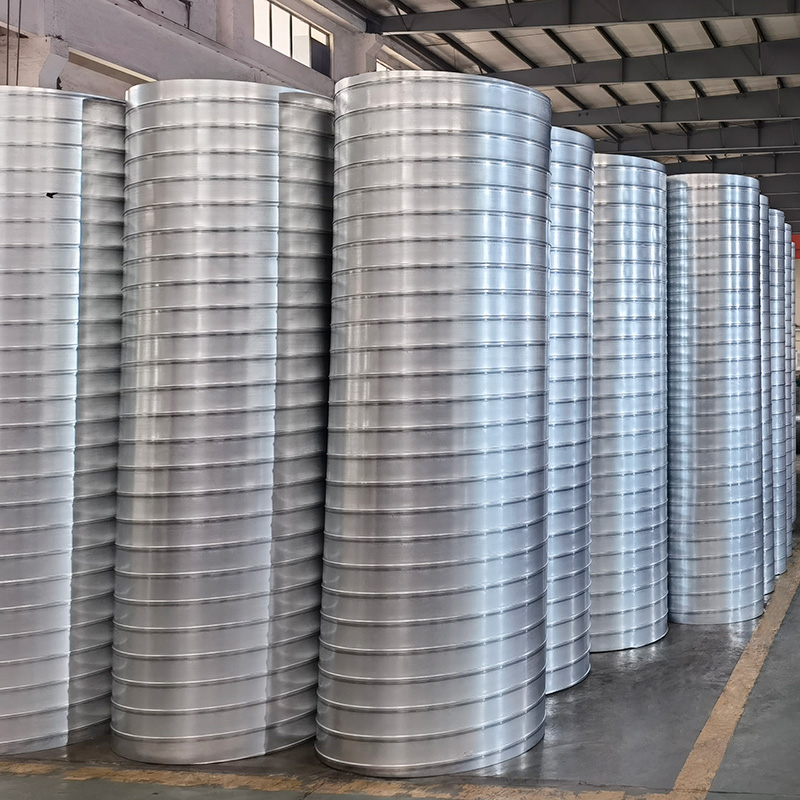
Fiberglass Ducts: Key Features, Applications And Installation Essentials
Release time:2026-07-06 Visits:477
Fiberglass ducts, also known as glass fiber reinforced plastic (FRP) ducts, are non-metallic ventilation components widely used in HVAC systems and industrial ventilation. Composed of glass fiber as reinforcement and resin or inorganic cement as matrix, they offer unique advantages that make them suitable for harsh and special environments where traditional metal ducts are easily corroded or damaged. This article briefly elaborates on their core characteristics, classification, typical applications, and key installation requirements, providing a concise professional guide.
1. Core Characteristics and Classification
Fiberglass ducts stand out for their non-metallic properties, with four key advantages: excellent corrosion resistance to acids, alkalis, salts, and humid environments, avoiding rust and electrochemical corrosion; lightweight (30%-50% lighter than metal ducts), reducing building load and installation labor; inherent thermal insulation, minimizing energy loss and condensation; and good sound absorption, reducing airflow and fan noise transmission.
They are mainly classified into two types: organic fiberglass ducts (resin-based), with polyester or vinyl ester resin as matrix, suitable for industrial corrosive environments; and inorganic fiberglass ducts (cement-based), with magnesium oxychloride cement as matrix, cost-effective and fire-resistant, applicable to civil building ventilation.
2. Design and Fabrication Key Points
Fiberglass ducts are designed for low to medium-pressure systems (static pressure ≤1500 Pa), with cross-sectional shapes including rectangular and circular. The wall thickness (3-10mm) is determined by duct size and operating pressure, and the inner surface must be smooth to reduce airflow resistance and avoid dust accumulation.
Fabrication relies on molding processes (hand lay-up, spray-up, or pultrusion). The glass fiber content and resin ratio must meet industry standards to ensure structural strength. The finished duct should be free of cracks, bubbles, or delamination, with a uniform surface and tight joints.
3. Typical Applications
Due to their unique properties, fiberglass ducts are widely used in scenarios where metal ducts are not suitable: industrial facilities (chemical plants, food processing plants) for corrosive gas exhaust; coastal buildings and humid areas to resist salt spray corrosion; hospitals and cleanrooms for easy cleaning and hygiene; and commercial buildings for energy-saving thermal insulation ventilation.
4. Installation and Maintenance Notes
Installation requires lightweight hanging brackets (spaced 1.5-2.5m) to avoid duct deformation. Connections use flange joints with special gaskets and sealants to ensure airtightness. Ducts passing through firewalls must be equipped with fireproof sleeves and sealed with non-combustible materials.
Maintenance is simple: regular inspection for surface damage or sealant aging; periodic cleaning of the inner surface to remove dust; and timely repair of cracks or delamination to extend service life. Avoid mechanical impact to prevent structural damage.
Conclusion
As a high-performance non-metallic duct solution, fiberglass ducts offer corrosion resistance, lightweight, and thermal insulation advantages. Proper design, fabrication, and installation ensure their stable operation in various special environments, making them an important choice for modern ventilation systems.
 +85247166614



 Current
location:Home >news
>Industry news
>Fiberglass Ducts: Key Features, Applications And Installation Essentials
Current
location:Home >news
>Industry news
>Fiberglass Ducts: Key Features, Applications And Installation Essentials