1. Introduction
With the rapid development of urbanization and the increasing complexity of building structures (such as high-rise buildings, large-span public buildings, and underground spaces), the risk of building fires and the difficulty of fire rescue have been significantly increased. Smoke is one of the main causes of casualties in building fires—it not only blocks the line of sight, hinders personnel evacuation and fire rescue, but also contains toxic and harmful gases (such as carbon monoxide, hydrogen cyanide) that can cause poisoning and suffocation. Therefore, a scientific and effective fire smoke exhaust system is an indispensable part of building fire protection, and the fire smoke exhaust duct, as the core carrier of smoke transmission, its design and construction quality directly affect the smoke exhaust effect and the overall fire safety of the building.
At present, there are still prominent problems in the design and construction of building fire smoke exhaust ducts in practical projects, such as unreasonable system selection, improper material selection, non-compliant structural design, substandard installation quality, and poor sealing performance. These problems often lead to insufficient smoke exhaust capacity, smoke leakage, duct deformation or collapse during fires, and even failure of the entire smoke exhaust system, which seriously endangers the safety of personnel and property. In addition, with the continuous improvement of fire protection codes and standards in various countries, higher requirements have been put forward for the design and construction of fire smoke exhaust ducts, emphasizing the integration of safety, rationality, and standardization.
This paper takes building fire smoke exhaust ducts as the research object, combines relevant fire protection codes and practical engineering experience, systematically sorts out the key points of design and construction, formulates scientific and standardized guidelines, and analyzes typical application cases to provide a reference for relevant practitioners. The research results are of great significance for promoting the standardization of fire smoke exhaust duct design and construction, improving the effectiveness of smoke exhaust systems, and reducing fire hazards.
2. Key Design Points of Building Fire Smoke Exhaust Ducts
The design of building fire smoke exhaust ducts should follow the principles of ""safety, efficiency, economy, and practicality"", fully consider the building structure, fire risk, smoke generation amount, and evacuation requirements, and strictly comply with relevant fire protection codes and standards. The key design points mainly include smoke exhaust system classification and selection, material selection, structural design, layout design, and fire resistance design.
2.1 Classification and Selection of Smoke Exhaust Systems
Building fire smoke exhaust systems are mainly divided into natural smoke exhaust systems and mechanical smoke exhaust systems. The selection of the system should be based on the building type, floor height, use function, and fire risk level, and the following principles should be followed:
2.1.1 Natural Smoke Exhaust System
The natural smoke exhaust system relies on the pressure difference between indoor and outdoor and the buoyancy of hot smoke to discharge smoke through smoke exhaust windows, skylights, or other openings. It is suitable for low-rise buildings, single-story large-span buildings, and rooms with good natural ventilation conditions (such as warehouses, workshops, and small public buildings). The key design points are:
- The area of smoke exhaust openings should not be less than 2% of the floor area of the room, and the minimum area should not be less than 0.5㎡. For rooms with a floor area greater than 1000㎡, the smoke exhaust opening area should be appropriately increased.
- Smoke exhaust openings should be set on the upper part of the room (such as the top of the wall, skylight), and should be facing the outdoor open space to avoid smoke backflow. The distance between the smoke exhaust opening and the nearest external obstacle should not be less than 2m.
- For multi-story buildings, smoke exhaust openings should be set separately for each floor to prevent smoke from spreading to other floors through the natural smoke exhaust system.
2.1.2 Mechanical Smoke Exhaust System
The mechanical smoke exhaust system relies on smoke exhaust fans to provide power to discharge smoke actively. It is suitable for high-rise buildings, underground spaces, large-scale public buildings, and rooms with poor natural ventilation conditions (such as shopping malls, hotels, and underground garages). The key design points are:
- The smoke exhaust volume should be calculated according to the smoke generation amount of the fire scene, the volume of the room, and the smoke exhaust efficiency. The minimum smoke exhaust volume per unit area should not be less than 60m³/(h·㎡), and for underground spaces, it should not be less than 120m³/(h·㎡).
- Smoke exhaust fans should adopt fire-resistant and high-temperature resistant types (continuous operation at 280℃ for not less than 30 minutes), and should be equipped with backup fans to ensure that the system can work normally in case of fan failure.
- The mechanical smoke exhaust system should be divided into independent smoke exhaust zones. Each smoke exhaust zone should not cross fire compartments, and the area of a single smoke exhaust zone should not exceed 2000㎡ (for underground spaces, it should not exceed 1000㎡).
2.2 Material Selection for Smoke Exhaust Ducts
The material of fire smoke exhaust ducts should have good fire resistance, high-temperature resistance, corrosion resistance, and mechanical strength, and should not produce toxic and harmful gases when heated. The selection of materials should comply with relevant codes and standards, and the following materials are commonly used:
- Galvanized Steel Sheet: It is the most commonly used material for smoke exhaust ducts, with the advantages of high mechanical strength, good corrosion resistance, and easy processing. The thickness of the galvanized steel sheet should be determined according to the duct size and pressure level: for ducts with a cross-sectional side length ≤630mm, the thickness should not be less than 0.8mm; for ducts with a cross-sectional side length >630mm and ≤1250mm, the thickness should not be less than 1.0mm; for ducts with a cross-sectional side length >1250mm, the thickness should not be less than 1.2mm.
- Stainless Steel Sheet: Suitable for corrosive environments (such as kitchens, chemical workshops) and high-temperature smoke exhaust scenarios. 304 or 316L stainless steel sheets are preferred, with a thickness not less than 1.0mm, which has excellent corrosion resistance and high-temperature resistance.
- Fire-Resistant Composite Panels: Including glass fiber reinforced cement composite panels, rock wool composite panels, etc., with good fire resistance (fire resistance limit not less than 1.0h) and thermal insulation performance. Suitable for large-scale smoke exhaust ducts and scenarios with high fire resistance requirements, but the cost is relatively high.
- Cast Iron Ducts: Suitable for underground spaces and heavy-load scenarios, with high mechanical strength and good durability, but the weight is large, the processing and installation are difficult, and the application is relatively limited.
It should be noted that non-fire-resistant materials (such as plastic, wood) are strictly prohibited for fire smoke exhaust ducts, and the materials should be tested and qualified by relevant institutions to ensure that they meet the fire protection requirements.
2.3 Structural Design of Smoke Exhaust Ducts
The structural design of smoke exhaust ducts directly affects their mechanical strength, smoke exhaust efficiency, and fire resistance. The key design points include cross-sectional shape, size determination, and reinforcement design.
2.3.1 Cross-Sectional Shape Design
The cross-sectional shape of smoke exhaust ducts is usually rectangular or circular. The selection should be based on the installation space, smoke exhaust volume, and processing difficulty:
- Circular Cross-Section: Has the advantages of uniform air flow, small resistance, and high mechanical strength, suitable for large smoke exhaust volume and high-pressure smoke exhaust systems (such as mechanical smoke exhaust systems in high-rise buildings). The diameter of the circular duct should be determined according to the smoke exhaust volume and flow rate, and the flow rate should be controlled between 10~20m/s.
- Rectangular Cross-Section: Easy to install in narrow spaces (such as between floors, walls), suitable for small and medium smoke exhaust volume scenarios. The aspect ratio of the rectangular duct should not be greater than 4:1 to avoid excessive air resistance. For rectangular ducts with a large aspect ratio, reinforcement measures should be taken to prevent deformation.
2.3.2 Size Determination
The size of the smoke exhaust duct should be calculated according to the smoke exhaust volume and flow rate. The key calculation formula is: Q = A × v × 3600, where Q is the smoke exhaust volume (m³/h), A is the cross-sectional area of the duct (㎡), and v is the smoke flow rate (m/s). The flow rate of the smoke exhaust duct should be controlled within a reasonable range: for mechanical smoke exhaust ducts, the flow rate is 10~20m/s; for natural smoke exhaust ducts, the flow rate is 3~5m/s. Too high a flow rate will increase air resistance and energy consumption; too low a flow rate will lead to insufficient smoke exhaust efficiency and smoke accumulation.
2.3.3 Reinforcement Design
For large-size smoke exhaust ducts (cross-sectional side length >1250mm) and ducts under high pressure, reinforcement measures should be taken to prevent deformation and collapse during operation and fire. Common reinforcement methods include:
- Setting reinforcement ribs on the outer wall of the duct, with a spacing of 500~800mm. The cross-sectional size of the reinforcement ribs should be determined according to the duct size and pressure level.
- Using angle steel to reinforce the duct joints and corners to improve the overall rigidity of the duct.
- For circular ducts with a diameter >1000mm, setting internal support rings with a spacing of 1000~1500mm to prevent the duct from collapsing under internal pressure.
2.4 Layout Design of Smoke Exhaust Ducts
The layout of smoke exhaust ducts should be reasonable, avoiding crossing fire compartments, reducing the length of the duct, and ensuring smooth smoke flow. The key design points are:
- Smoke exhaust ducts should be arranged in the non-combustible area of the building (such as the shaft, equipment room), and should not pass through the fire compartment partition. If it is necessary to pass through, fire-resistant sealing measures should be taken at the penetration position, and the fire resistance limit should not be less than the fire resistance limit of the partition.
- The length of the smoke exhaust duct should be minimized, and the number of bends should be reduced (the number of bends should not exceed 3 in a single duct section). The radius of the bend should not be less than 1.5 times the diameter of the circular duct or the side length of the rectangular duct to avoid excessive air resistance.
- Smoke exhaust outlets should be set in the area where smoke is most likely to accumulate (such as the top of the room, the upper part of the fire source), and should be evenly distributed to ensure that the smoke in the room can be discharged in a timely manner. The distance between the smoke exhaust outlet and the fire source should not be less than 1.5m.
- The smoke exhaust duct should be arranged independently, and should not share the duct with the ventilation and air conditioning system to avoid smoke spreading to other areas through the ventilation system during a fire. If it is necessary to share, a fire damper (closing temperature 70℃) should be installed at the connection to cut off the connection in case of fire.
2.5 Fire Resistance Design of Smoke Exhaust Ducts
The fire resistance of smoke exhaust ducts is crucial to ensure that the duct can work normally during a fire. The fire resistance limit of the duct should not be less than 1.0h, and for high-rise buildings and important public buildings, it should not be less than 1.5h. The key fire resistance design measures include:
- Selecting fire-resistant materials for the duct, and the thickness of the material should meet the fire resistance limit requirements.
- Coating fire-resistant paint on the outer surface of the duct. The thickness of the fire-resistant paint should be determined according to the fire resistance limit requirements, and the paint should be tested and qualified by relevant institutions.
- Setting fire dampers at the inlet and outlet of the smoke exhaust duct, the penetration of the fire compartment partition, and the connection with the smoke exhaust fan. The fire damper should close automatically when the temperature reaches 280℃ to prevent smoke from spreading to other areas.
- The smoke exhaust duct passing through the ceiling and wall should be sealed with fire-resistant sealant at the penetration position to prevent smoke leakage. The fire resistance limit of the sealant should be consistent with the fire resistance limit of the partition.
3. Specification Guidelines for Construction of Building Fire Smoke Exhaust Ducts
The construction of building fire smoke exhaust ducts should strictly follow the design drawings and relevant fire protection codes, and focus on controlling the quality of key links such as duct production, installation, connection, sealing, and acceptance testing to ensure that the duct meets the design requirements and fire safety standards. The specific specification guidelines are as follows:
3.1 Duct Production Specifications
The production of smoke exhaust ducts should be carried out in a professional workshop, and the processing accuracy and quality should be strictly controlled. The key specifications are:
- The cutting and folding of the duct material should be accurate, and the error of the cross-sectional size should not exceed ±5mm. The fold line should be straight, and the angle should be accurate (90° for rectangular ducts).
- The joint of the duct should be tight, and the lap width of the galvanized steel sheet duct should be 10~15mm. The lap joint should be sealed with fire-resistant sealant, and the sealant should be evenly applied without gaps.
- The welding of the duct (for stainless steel ducts and cast iron ducts) should be firm, and the weld seam should be smooth and free of defects such as cracks, pores, and slag inclusions. The weld seam should be sealed with fire-resistant sealant after welding.
- The reinforcement ribs and support rings of the duct should be installed firmly, and the connection between the reinforcement ribs and the duct should be welded or bolted. The spacing of the reinforcement ribs should be consistent with the design requirements, and the error should not exceed ±10mm.
3.2 Duct Installation Specifications
The installation of smoke exhaust ducts should be carried out after the completion of the building structure construction, and the installation sequence should be from bottom to top. The key specifications are:
- The installation of the duct should be level and vertical, and the error of the horizontal deviation should not exceed 3mm/m, and the total error should not exceed 20mm; the error of the vertical deviation should not exceed 2mm/m, and the total error should not exceed 15mm.
- The duct should be supported by brackets or hangers. The spacing of the brackets or hangers should be determined according to the duct size and weight: for circular ducts with a diameter ≤1000mm, the spacing is 3~4m; for circular ducts with a diameter >1000mm, the spacing is 2~3m; for rectangular ducts with a cross-sectional side length ≤630mm, the spacing is 3~4m; for rectangular ducts with a cross-sectional side length >630mm, the spacing is 2~3m. The brackets or hangers should be installed firmly, and should not be installed on the fire compartment partition or weak structural parts.
- The smoke exhaust outlet should be installed firmly, and the position and height should be consistent with the design requirements. The error of the installation position should not exceed ±10mm, and the height error should not exceed ±5mm. The smoke exhaust outlet should be flat and free of deformation, and the connection with the duct should be sealed tightly.
- The smoke exhaust fan should be installed horizontally and vertically, and the connection between the fan and the duct should be equipped with a flexible joint (such as a fire-resistant flexible canvas) to reduce vibration. The flexible joint should be fire-resistant, and the length should be 150~200mm. The connection between the flexible joint and the duct and the fan should be sealed tightly.
3.3 Duct Connection and Sealing Specifications
The connection and sealing of smoke exhaust ducts are crucial to prevent smoke leakage. The key specifications are:
- The connection between duct sections should be tight, and the lap joint should be sealed with fire-resistant sealant. The sealant should be non-combustible, high-temperature resistant, and have good adhesion. The thickness of the sealant should be 3~5mm, and it should be evenly applied without gaps or bubbles.
- The connection between the duct and the smoke exhaust outlet, fire damper, and smoke exhaust fan should be sealed with fire-resistant sealant. The sealant should cover the entire connection surface to ensure that there is no smoke leakage.
- For the duct passing through the ceiling, wall, and floor, the gap between the duct and the penetration hole should be sealed with fire-resistant sealant or fire-resistant filling material (such as rock wool). The filling material should be dense, and the fire resistance limit should be consistent with the fire resistance limit of the partition.
- The threaded connection of the duct should be tight, and the thread should be wrapped with fire-resistant tape to enhance the sealing performance. The bolt connection should be evenly stressed, and the nut should be tightened to prevent loosening.
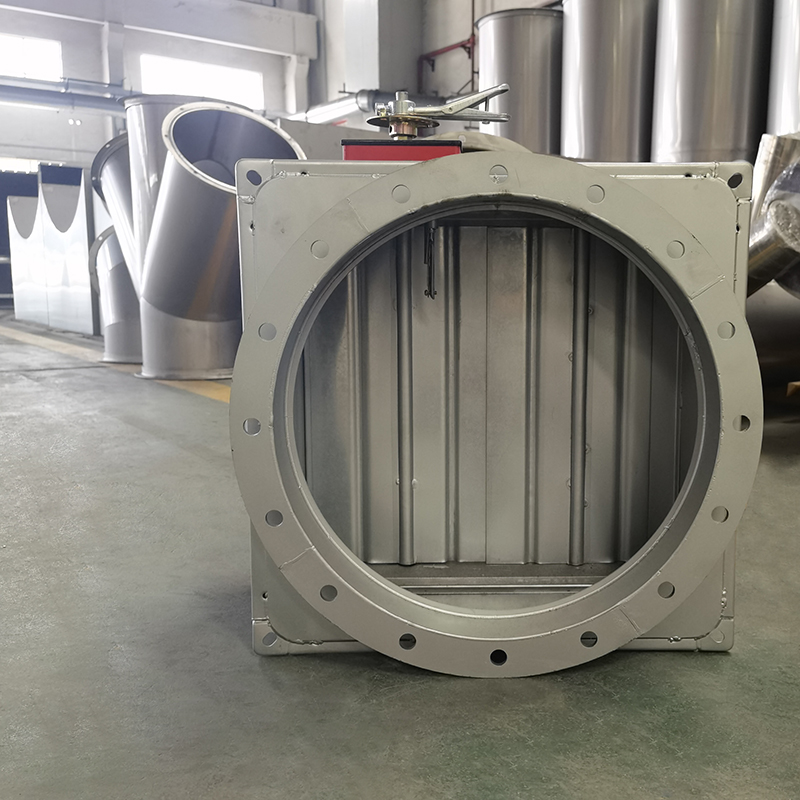
3.4 Fire Damper Installation Specifications
Fire dampers are important components of the smoke exhaust system, and their installation quality directly affects the fire resistance effect of the duct. The key specifications are:
- Fire dampers should be installed at the inlet and outlet of the smoke exhaust duct, the penetration of the fire compartment partition, and the connection with the ventilation and air conditioning system. The installation position should be consistent with the design requirements, and the error should not exceed ±10mm.
- Fire dampers should be installed horizontally, and the direction of the damper blade should be consistent with the direction of smoke flow. The connection between the fire damper and the duct should be tight, and the sealant should be applied around the connection to prevent smoke leakage.
- The fire damper should be equipped with a temperature-sensing element (such as a fusible link) that can automatically close when the temperature reaches 280℃. The fusible link should be installed in the middle of the damper blade, and the installation should be firm and easy to replace.
- After the installation of the fire damper, a manual opening and closing test should be carried out to ensure that the damper can be opened and closed flexibly, and the closing is tight without gaps.
3.5 Acceptance Testing Specifications
After the completion of the smoke exhaust duct construction, acceptance testing should be carried out in accordance with relevant standards to ensure that the duct meets the design requirements and fire safety standards. The key acceptance items and specifications are:
- Visual Inspection: Check the appearance of the duct, including the flatness of the duct surface, the firmness of the connection, the tightness of the sealant, and the installation of reinforcement ribs and support rings. The duct should be free of deformation, damage, and rust, and the connection should be tight.
- Size Inspection: Check the cross-sectional size, length, and installation position of the duct. The error should be within the allowable range specified in the design and standards.
- Smoke Leakage Test: Conduct a smoke leakage test on the duct. The test pressure should be 500Pa, and the smoke leakage rate should not exceed 20m³/(㎡·h). If the smoke leakage rate exceeds the standard, the sealing part should be reprocessed until it meets the requirements.
- System Operation Test: Start the smoke exhaust fan, check the operation status of the fan, the air volume of the smoke exhaust system, and the opening and closing of the fire damper. The fan should operate stably without abnormal noise, the air volume should meet the design requirements, and the fire damper should close automatically when the temperature reaches 280℃.
- Fire Resistance Test: For important buildings and high-rise buildings, a fire resistance test should be carried out on the duct. The fire resistance limit should meet the design requirements (not less than 1.0h or 1.5h). The duct should not collapse, deform, or leak smoke during the test.
4. Practical Application Cases and Effect Analysis
To verify the rationality and feasibility of the design and construction specifications of building fire smoke exhaust ducts, this section selects two typical application cases (a high-rise residential building and a large-scale shopping mall) to analyze the design and construction process and application effect.
4.1 Case 1: High-Rise Residential Building
A high-rise residential building has 33 floors, a building height of 105m, and a total floor area of 25,000㎡. The building adopts a mechanical smoke exhaust system, and the smoke exhaust ducts are made of galvanized steel sheets. The design and construction key points are as follows:
- Design: The smoke exhaust system is divided into 3 smoke exhaust zones, each zone covers 11 floors, and the area of each zone is 800㎡. The smoke exhaust volume of each zone is 48,000m³/h, the cross-sectional size of the duct is 800mm×600mm (rectangular), the flow rate is 15m/s, and the fire resistance limit of the duct is 1.5h. Fire dampers are installed at the penetration of each floor's fire compartment partition.
- Construction: The galvanized steel sheet with a thickness of 1.2mm is selected for the duct, and reinforcement ribs are set every 600mm. The connection between duct sections is sealed with fire-resistant sealant, and the gap between the duct and the wall is filled with rock wool and sealed with fire-resistant sealant. The smoke exhaust fan adopts a high-temperature resistant type (continuous operation at 280℃ for 30 minutes), and a flexible joint is installed between the fan and the duct.
Acceptance test results: The smoke leakage rate of the duct is 15m³/(㎡·h), which meets the standard requirement (≤20m³/(㎡·h)); the fire resistance limit of the duct is 1.8h, which exceeds the design requirement (1.5h); the operation of the smoke exhaust system is stable, and the air volume meets the design requirement. In the fire drill, the smoke exhaust system can discharge the smoke in the fire scene in a timely manner, ensuring the smooth evacuation of personnel.
4.2 Case 2: Large-Scale Shopping Mall
A large-scale shopping mall has 5 floors (including 1 underground floor), a total floor area of 40,000㎡, and a large number of personnel. The building adopts a combination of natural smoke exhaust and mechanical smoke exhaust systems: the first to fourth floors adopt natural smoke exhaust (smoke exhaust windows), and the underground floor adopts mechanical smoke exhaust. The design and construction key points are as follows:
- Design: The natural smoke exhaust windows on the first to fourth floors have a total area of 800㎡, accounting for 2% of the floor area. The smoke exhaust volume of the underground mechanical smoke exhaust system is 120,000m³/h, the cross-sectional size of the duct is 1200mm×800mm (rectangular), the flow rate is 18m/s, and the duct is made of fire-resistant composite panels with a fire resistance limit of 1.5h.
- Construction: The smoke exhaust windows are installed on the upper part of the outer wall, with a distance of 3m from the external obstacle. The fire-resistant composite panels are used for the underground duct, and the connection is sealed with fire-resistant sealant. The smoke exhaust fan is equipped with a backup fan, and the fire damper is installed at the connection between the duct and the fan.
Acceptance test results: The natural smoke exhaust windows open flexibly, and the smoke exhaust efficiency meets the design requirement; the smoke leakage rate of the underground duct is 18m³/(㎡·h), which meets the standard requirement; the fire resistance limit of the duct is 1.6h, which meets the design requirement. In the fire drill, the smoke in the underground floor is discharged in a timely manner, and the visibility in the fire scene is significantly improved, which provides a guarantee for personnel evacuation and fire rescue.
5. Common Quality Hazards and Prevention Measures
In the design and construction of building fire smoke exhaust ducts, there are many common quality hazards that affect the smoke exhaust effect and fire safety. This section summarizes the common quality hazards and puts forward corresponding prevention measures.
5.1 Common Quality Hazards in Design
- Unreasonable System Selection: Selecting a natural smoke exhaust system for high-rise buildings or underground spaces with poor natural ventilation, resulting in insufficient smoke exhaust capacity. Prevention measures: Strictly follow the fire protection codes, select the smoke exhaust system according to the building type, floor height, and use function, and conduct smoke exhaust volume calculation to ensure the system is reasonable.
- Improper Material Selection: Using non-fire-resistant materials or materials with insufficient thickness, resulting in duct deformation or collapse during fires. Prevention measures: Select materials that meet the fire protection requirements, and strictly check the material quality and thickness to ensure they meet the design standards.
- Non-Compliant Structural Design: The cross-sectional size is too small, the flow rate is too high or too low, or the number of bends is too many, resulting in excessive air resistance and insufficient smoke exhaust efficiency. Prevention measures: Calculate the cross-sectional size and flow rate according to the smoke exhaust volume, optimize the duct layout, and reduce the number of bends.
5.2 Common Quality Hazards in Construction
- Poor Sealing Performance: The connection between duct sections, the connection between the duct and other components, and the penetration position are not sealed tightly, resulting in smoke leakage. Prevention measures: Strengthen the quality control of the sealing process, use qualified fire-resistant sealant, and ensure that the sealant is evenly applied without gaps.
- Unstable Installation: The brackets or hangers are installed loosely or the spacing is too large, resulting in duct deformation during operation. Prevention measures: Install the brackets or hangers according to the design requirements, ensure they are firm, and check the installation quality regularly.
- Unqualified Fire Damper Installation: The fire damper is installed in the wrong position, the direction is incorrect, or the fusible link is damaged, resulting in failure to close automatically during a fire. Prevention measures: Install the fire damper according to the design requirements, check the direction and installation position, and test the manual and automatic opening and closing functions.
6. Conclusion
Building
fire smoke exhaust ducts are an important part of the building fire protection system, and their design and construction quality directly relate to the fire safety of the building and the safety of personnel and property. This paper systematically elaborates on the key design points of building fire smoke exhaust ducts, including the classification and selection of smoke exhaust systems, material selection, structural design, layout design, and fire resistance design, and clarifies the specification guidelines for each link of construction, including duct production, installation, connection, sealing, and acceptance testing.
Practical application cases verify that the scientific design and standardized construction of fire smoke exhaust ducts can effectively improve the smoke exhaust effect, ensure the normal operation of the smoke exhaust system during a fire, and provide a guarantee for personnel evacuation and fire rescue. At the same time, this paper summarizes the common quality hazards in design and construction and puts forward corresponding prevention measures, which can help relevant practitioners avoid common mistakes and improve the quality of design and construction.
In the future, with the continuous improvement of fire protection codes and the development of new materials and new technologies, the design and construction of building fire smoke exhaust ducts will move towards a more intelligent, efficient, and safe direction. Relevant practitioners should continuously learn new knowledge and new technologies, strictly abide by relevant codes and standards, and continuously improve the design and construction level of fire smoke exhaust ducts, so as to further improve the fire safety level of buildings and protect the safety of personnel and property.
 +85247166614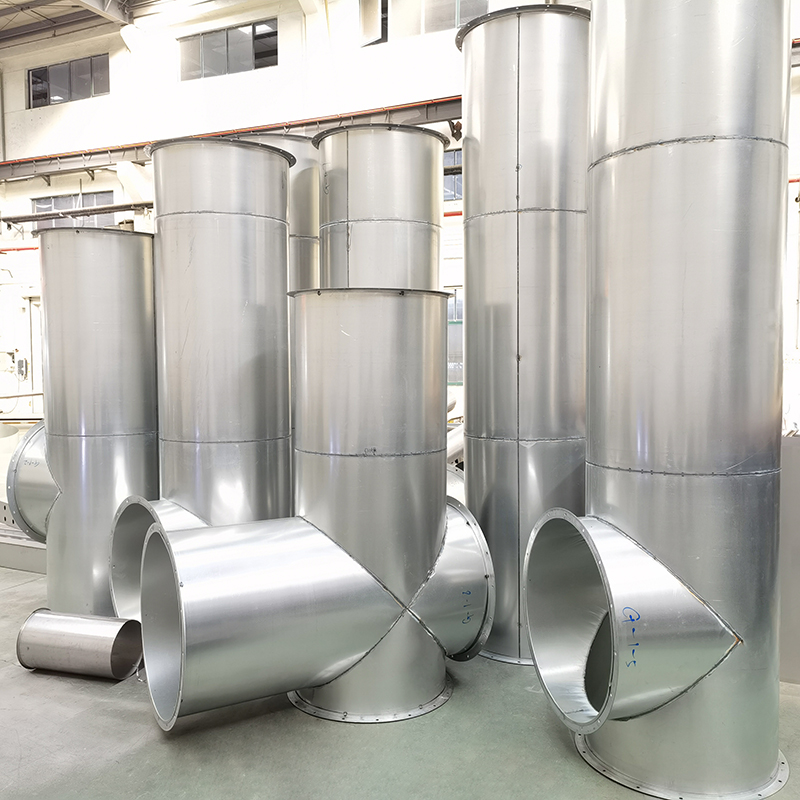



 Current
location:Home >news
>Industry news
>Key Points And Specification Guidelines For Design And Construction Of Building Fire Smoke Exhaust Ducts
Current
location:Home >news
>Industry news
>Key Points And Specification Guidelines For Design And Construction Of Building Fire Smoke Exhaust Ducts