1. Introduction
In modern ventilation and air conditioning engineering, air ducts serve as the core carrier for air transmission and distribution, and their material performance and quality directly affect the operational efficiency of the system, indoor air quality, and long-term operational costs. Compared with traditional duct materials (such as galvanized steel, fiberglass), stainless steel air ducts have unique advantages: they are resistant to corrosion from humid air, chemical gases, and corrosive media, maintain structural integrity in harsh environments, have a smooth inner surface that reduces air resistance and avoids dust accumulation, and meet the strict hygiene requirements of food, pharmaceutical, and healthcare industries. These characteristics make stainless steel air ducts widely used in various high-demand scenarios.
However, the application effect of stainless steel air ducts is closely related to material selection, fabrication, and installation. Improper material selection will lead to premature corrosion and failure of ducts; non-standard fabrication will affect the structural strength, air tightness, and appearance quality of ducts; non-compliant installation will cause air leakage, noise pollution, and even structural damage, which seriously affects the operational reliability of the ventilation system. At present, in practical engineering applications, there are still problems such as inconsistent material selection standards, non-uniform fabrication processes, and inadequate installation quality control, which restrict the popularization and application of stainless steel air ducts.
Against this background, this paper focuses on the three core links of stainless steel air ducts—material selection, fabrication, and installation—systematically sorts out and analyzes their technical specifications, integrates relevant standards and engineering practice experience, and provides targeted solutions for common technical problems. This paper aims to promote the standardization, refinement, and professionalization of stainless steel air duct application, help relevant practitioners grasp the core technical points, and provide technical support for the construction of high-performance, durable, and compliant ventilation systems.
2. Core Technical Specifications for Material Selection of Stainless Steel Air Ducts
The material selection of
stainless steel air ducts is the foundation to ensure their corrosion resistance, mechanical strength, and service life. The selection must be based on the application environment, conveying medium, operating pressure, and hygiene requirements, and strictly comply with relevant standards. The core technical specifications mainly involve the selection of stainless steel grades, material performance requirements, and quality inspection standards.
2.1 Selection of Stainless Steel Grades
Different grades of stainless steel have significant differences in corrosion resistance, mechanical strength, and cost, and their application scenarios are also different. The key to material selection is to match the grade with the actual working conditions. The commonly used stainless steel grades for air ducts and their technical characteristics and application scenarios are as follows:
- Austenitic Stainless Steel (304 Series): As the most widely used stainless steel grade for air ducts, 304 stainless steel contains 18% chromium and 8% nickel, with excellent corrosion resistance to atmospheric air, humid environments, and weak corrosive media (such as weak acids, weak alkalis). It has good ductility and weldability, and is suitable for general ventilation and air conditioning systems in commercial buildings, residential buildings, and general industrial workshops. The tensile strength of 304 stainless steel is 515~655MPa, the yield strength is ≥205MPa, and the elongation is ≥40%, which can meet the mechanical requirements of most air duct applications. It should be noted that 304 stainless steel is not suitable for environments with high chloride ion concentration (such as coastal areas, chemical workshops with chlorine-containing gases), to avoid pitting corrosion.
- Austenitic Stainless Steel (316/316L Series): 316 stainless steel adds molybdenum (2~3%) on the basis of 304 stainless steel, which significantly improves the corrosion resistance to chloride ions and strong corrosive media (such as sulfuric acid, phosphoric acid, and salt spray). 316L stainless steel is a low-carbon version of 316 (carbon content ≤0.03%), which has better weldability and corrosion resistance after welding, and is suitable for harsh environments such as coastal areas, chemical plants, food processing plants (with high salt or acid content), and pharmaceutical workshops. The tensile strength of 316L stainless steel is 485~620MPa, the yield strength is ≥170MPa, and the elongation is ≥40%, which is slightly lower than 304 but has better corrosion resistance.
- Ferritic Stainless Steel (430 Series): 430 stainless steel contains 16~18% chromium, no nickel, and has good corrosion resistance to atmospheric air and dry environments. It has the advantages of low cost and good thermal conductivity, but its ductility and weldability are worse than austenitic stainless steel. It is suitable for low-cost, non-corrosive, and low-pressure ventilation systems, such as ordinary indoor ventilation ducts in dry areas.
- Special Stainless Steel Grades: For extreme environments (such as high-temperature flue gas exhaust, strong corrosive gas conveying), special stainless steel grades such as 2205 duplex stainless steel and 904L super austenitic stainless steel can be selected. 2205 duplex stainless steel has excellent corrosion resistance and high mechanical strength, suitable for high-pressure, high-corrosion scenarios; 904L stainless steel has strong resistance to strong acids and high chloride ion corrosion, suitable for chemical and pharmaceutical industries with extremely strict corrosion resistance requirements.
2.2 Material Performance Requirements
Regardless of the selected stainless steel grade, the material must meet the following core performance requirements to ensure the quality and service life of the air duct:
- Corrosion Resistance: The stainless steel material shall pass the corrosion resistance test (such as salt spray test, acid immersion test) in line with ASTM A262 or GB/T 12771. For 304 stainless steel, the salt spray test (neutral salt spray, 48 hours) shall have no obvious corrosion; for 316L stainless steel, the salt spray test (neutral salt spray, 100 hours) shall have no obvious corrosion. In addition, the material shall be resistant to the erosion of the conveying medium, ensuring no rust, pitting, or cracking within the design service life (usually 20~30 years).
- Mechanical Strength: The tensile strength, yield strength, and elongation of the stainless steel plate shall meet the requirements of the selected grade and the design working pressure. For low-pressure air ducts (working pressure ≤500Pa), the thickness of the stainless steel plate shall not be less than 0.6mm; for medium-pressure air ducts (500Pa < working pressure ≤1500Pa), the thickness shall not be less than 0.8mm; for high-pressure air ducts (working pressure >1500Pa), the thickness shall not be less than 1.0mm. The plate shall be free of defects such as cracks, scratches, and uneven thickness.
- Hygiene Performance: For air ducts used in food, pharmaceutical, and healthcare industries, the stainless steel material shall meet the hygiene requirements of GB 4806.9 (food contact materials) or ISO 11135 (sterilization of medical devices). The surface of the material shall be smooth, free of burrs, and easy to clean, avoiding dust accumulation and bacterial growth.
- Weldability and Ductility: The stainless steel material shall have good weldability and ductility to meet the fabrication requirements of bending, welding, and forming. The weld seam after welding shall have no cracks, pores, or incomplete fusion, and the mechanical strength of the weld seam shall not be lower than 90% of the base material.
2.3 Material Quality Inspection Specifications
Before the stainless steel plate is put into use, strict quality inspection shall be carried out to ensure that the material meets the design requirements and relevant standards. The core inspection items are as follows:
- Certificate Inspection: Check the quality certificate, material test report, and production batch number of the stainless steel plate to confirm that the grade, specification, and performance of the material are consistent with the design requirements. The certificate shall include information such as chemical composition, mechanical performance, and corrosion resistance test results.
- Visual Inspection: Check the surface of the stainless steel plate for defects such as scratches, dents, rust, and burrs. The surface shall be smooth, uniform in color, and free of obvious defects. For air ducts with high hygiene requirements, the surface roughness Ra shall not exceed 0.8μm.
- Thickness Inspection: Use a thickness gauge to measure the thickness of the stainless steel plate at multiple points (at least 5 points per square meter), and the thickness deviation shall not exceed ±0.05mm. The minimum thickness shall not be less than the design thickness.
- Chemical Composition and Mechanical Performance Inspection: For key projects or large-batch materials, sampling inspection shall be carried out to test the chemical composition (chromium, nickel, molybdenum content) and mechanical performance (tensile strength, yield strength, elongation) of the material, which shall meet the requirements of the selected grade (such as ASTM A240, GB/T 12771).
3. Core Technical Specifications for Fabrication of Stainless Steel Air Ducts
The fabrication quality of stainless steel air ducts directly affects their structural stability, air tightness, and operational efficiency. The fabrication process must be standardized, and the precision and quality control must be strictly implemented. The core technical specifications mainly involve cutting, bending, welding, forming, and surface treatment of stainless steel plates.
3.1 Cutting Technical Specifications
The cutting of stainless steel plates shall ensure accurate size, smooth cut surface, and no damage to the material surface, to avoid affecting the subsequent bending and welding quality. The key technical specifications are as follows:
- Cutting Method Selection: Common cutting methods for stainless steel plates include plasma cutting, laser cutting, and shearing. Laser cutting is suitable for high-precision, small-size duct cutting, with smooth cut surface and high cutting accuracy (error ≤±0.1mm); plasma cutting is suitable for large-size, thick-plate cutting, with high efficiency but slightly lower precision (error ≤±0.2mm); shearing is suitable for thin-plate cutting (thickness ≤1.2mm), with simple operation but requires strict control of shearing force to avoid plate deformation.
- Size Precision Control: Before cutting, the stainless steel plate shall be marked according to the design drawing, and the marking shall be accurate and clear. The cutting size error shall not exceed ±0.5mm for the length and width of the duct, and the diagonal error of the rectangular duct shall not exceed ±1.0mm. After cutting, the cut surface shall be checked for flatness and perpendicularity, and the burrs and slag on the cut surface shall be removed with a grinder.
- Material Protection: During cutting, protective measures shall be taken to avoid damage to the surface of the stainless steel plate. For example, a protective film shall be attached to the surface of the plate before cutting, and the cutting area shall be cleaned to avoid metal chips adhering to the surface, which may cause corrosion.
3.2 Bending Technical Specifications
Bending is an important link in the fabrication of stainless steel air ducts, which determines the shape and structural strength of the duct. The key technical specifications are as follows:
- Bending Equipment and Mold Selection: Bending shall be carried out using a hydraulic bending machine or a press brake, and the mold shall be matched with the thickness and grade of the stainless steel plate. The mold surface shall be smooth, free of scratches, to avoid damaging the surface of the plate. For austenitic stainless steel (304, 316L), the bending radius shall not be less than 1.5 times the plate thickness to avoid cracks at the bending part.
- Bending Precision Control: The bending angle shall be accurate, and the error shall not exceed ±1°. The bending position shall be consistent with the design drawing, and the distance between the bending line and the edge of the plate shall be accurate (error ≤±0.3mm). After bending, the duct shall be checked for deformation, and the straightness of the duct shall not exceed 3mm/m.
- Heat Treatment After Bending: For thick-plate stainless steel (thickness >2.0mm) or ducts used in high-temperature environments, heat treatment (annealing) shall be carried out after bending to eliminate internal stress, avoid deformation and cracking of the duct during use. The annealing temperature shall be 1050~1100℃, and the cooling method shall be water cooling or air cooling according to the material grade.
3.3 Welding Technical Specifications
Welding is the core link to ensure the structural integrity and air tightness of stainless steel air ducts. The welding quality directly affects the corrosion resistance and service life of the duct. The key technical specifications are as follows:
- Welding Method Selection: Common welding methods for stainless steel air ducts include TIG welding (tungsten inert gas welding), MIG welding (metal inert gas welding), and spot welding. TIG welding is suitable for thin-plate welding (thickness ≤1.5mm) and has good welding quality, smooth weld seam, and no spatter, which is suitable for air ducts with high hygiene requirements; MIG welding is suitable for thick-plate welding (thickness >1.5mm) and has high welding efficiency; spot welding is suitable for the connection of duct flanges and panels, requiring uniform spot welding spacing and sufficient welding strength.
- Welding Material Selection: The welding material shall be matched with the stainless steel grade. For 304 stainless steel, ER308 welding wire shall be used; for 316L stainless steel, ER316L welding wire shall be used. The chemical composition and mechanical performance of the welding wire shall be consistent with the base material, and the welding wire shall be free of rust, oil, and other impurities.
- Welding Quality Requirements: The weld seam shall be continuous, uniform, and free of defects such as cracks, pores, incomplete fusion, and slag inclusion. The width of the weld seam shall be 1.5~2 times the thickness of the plate, and the height of the weld seam shall not be less than the thickness of the plate. The inner surface of the weld seam shall be smooth, and the protrusion height shall not exceed 2mm to avoid increasing air resistance. After welding, the weld seam shall be inspected by visual inspection and non-destructive testing (such as X-ray inspection, ultrasonic inspection) for key projects.
- Post-Welding Treatment: After welding, the welding slag, spatter, and oxide scale on the weld seam and its surrounding area shall be removed. For air ducts used in corrosive environments or with high hygiene requirements, the weld seam shall be pickled and passivated to improve corrosion resistance. The pickling solution shall be a mixed solution of nitric acid and hydrofluoric acid, and the passivation solution shall be a nitric acid solution. After pickling and passivation, the surface shall be cleaned with clean water and dried.
3.4 Forming and Assembly Technical Specifications
The forming and assembly of stainless steel air ducts shall ensure structural stability, accurate size, and good air tightness. The key technical specifications are as follows:
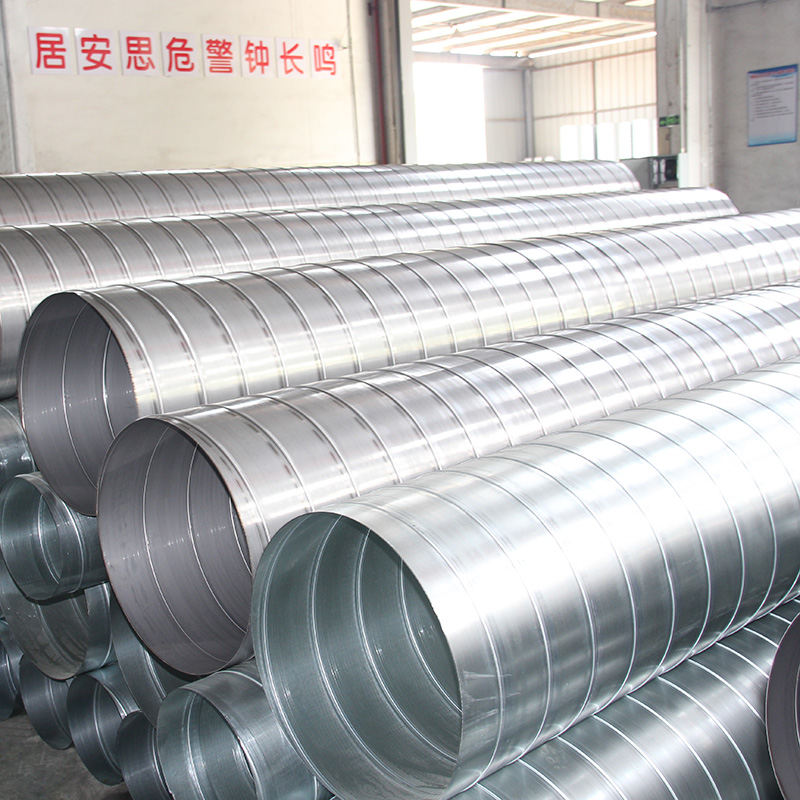
- Duct Forming: The cross-sectional shape of stainless steel air ducts is usually circular or rectangular. Circular ducts have better air flow performance and higher structural strength, suitable for large-air-volume, high-pressure ventilation systems; rectangular ducts are more flexible in layout, suitable for narrow spaces. The forming of the duct shall be smooth, and the surface shall be free of obvious wrinkles and deformation. The roundness error of circular ducts shall not exceed 3mm/m, and the flatness error of rectangular ducts shall not exceed 2mm/m.
- Flange Assembly: The flange of the stainless steel air duct shall be made of the same grade of stainless steel as the duct. The flange shall be flat, and the bolt holes shall be evenly distributed (spacing 120~150mm). The connection between the flange and the duct shall be firm, and the weld seam shall be continuous and sealed. The thickness of the flange shall not be less than the thickness of the duct plate, and the flange shall be reinforced with ribs if necessary to improve rigidity.
- Sealing Treatment: The joint between the duct and the flange, and between the duct sections shall be sealed with stainless steel gaskets or high-temperature resistant sealants. The gasket shall be made of non-toxic, corrosion-resistant materials (such as silicone rubber, PTFE), and the thickness of the gasket shall be 3~5mm. The sealant shall be evenly applied, covering the entire joint, to ensure air tightness. The air leakage rate of the fabricated duct shall meet the requirements of Class B or above (in line with GB 50243-2016).
3.5 Surface Treatment Technical Specifications
The surface treatment of stainless steel air ducts is an important measure to improve their corrosion resistance and hygiene performance. The key technical specifications are as follows:
- Polishing Treatment: For air ducts used in food, pharmaceutical, and healthcare industries, the inner and outer surfaces shall be polished. The polishing grade shall reach No. 4 or above, and the surface roughness Ra shall not exceed 0.8μm. The polished surface shall be smooth, uniform, and free of scratches and burrs, which is convenient for cleaning and avoids bacterial growth.
- Pickling and Passivation Treatment: For air ducts used in corrosive environments, pickling and passivation treatment shall be carried out after welding and forming. The pickling shall remove the oxide scale and welding slag on the surface, and the passivation shall form a dense oxide film on the surface to improve corrosion resistance. After treatment, the surface shall be neutral (pH 6~8) and free of acid residue.
- Protective Treatment: During the storage and transportation of the fabricated air ducts, protective measures shall be taken to avoid surface damage and corrosion. A protective film shall be attached to the surface, and the ducts shall be stored in a dry, well-ventilated place, away from corrosive media and sharp objects.
4. Core Technical Specifications for Installation of Stainless Steel Air Ducts
The installation of stainless steel air ducts must be carried out in strict accordance with the design drawings and technical specifications, ensuring installation accuracy, connection tightness, and structural stability. The core technical specifications mainly involve pre-installation preparation, support and hanger installation, duct connection, air tightness testing, and post-installation inspection.
4.1 Pre-Installation Preparation Specifications
- Design Review and On-Site Survey: Before installation, the construction team shall review the design drawings, clarify the technical requirements, and conduct an on-site survey to check whether the installation space, reserved holes, and structural size are consistent with the design. If there are inconsistencies, they shall communicate with the design unit in a timely manner for modification.
- Duct Inspection: Check the fabricated stainless steel air ducts for deformation, damage, and welding defects. Check the size, flange flatness, and sealing performance of the ducts to ensure they meet the design requirements. Unqualified ducts shall not be installed.
- Equipment and Tool Preparation: Prepare the required installation equipment and tools, such as lifting equipment, welding equipment, measuring tools, and cleaning tools. The measuring tools (such as tape measures, spirit levels, and pressure gauges) shall be calibrated to ensure measurement accuracy. The welding equipment shall be inspected and to ensure normal operation.
- On-Site Cleaning: Clean the installation site to remove obstacles, dust, and debris. Clean the inner surface of the duct to remove dust, oil, and other impurities, ensuring the cleanliness of the duct and avoiding pollution to the ventilation system.
4.2 Support and Hanger Installation Specifications
The support and hanger of stainless steel air ducts are responsible for bearing the weight of the duct and ensuring structural stability. The key technical specifications are as follows:
- Material and Specification: The support and hanger shall be made of the same grade of stainless steel as the duct to avoid galvanic corrosion caused by different metals. The cross-sectional size of the support and hanger shall be calculated according to the weight of the duct, the air pressure, and the installation span, ensuring sufficient load-bearing capacity. For horizontal ducts, the span of the support and hanger shall not exceed 3m for circular ducts (diameter ≤1000mm) and 2.5m for rectangular ducts (side length ≤800mm). For vertical ducts, the hanger shall be installed at each floor, and the distance between hangers shall not exceed 3m.
- Installation Position: The support and hanger shall be installed on the building structure (such as beams, columns) to avoid installation on non-load-bearing walls. The hanger shall be perpendicular to the duct, and the contact surface between the hanger and the duct shall be provided with a buffer pad (such as rubber pad, PTFE pad) to reduce vibration and prevent damage to the duct surface. The support and hanger shall be installed firmly, and the verticality error shall not exceed 2mm/m.
- Anti-Seismic Installation: In earthquake-prone areas (seismic intensity ≥7 degrees), anti-seismic brackets shall be installed for stainless steel air ducts. The anti-seismic brackets shall be connected to the building structure firmly, with a horizontal anti-seismic force-bearing capacity not less than 1.2 times the weight of the duct and the air inside. The spacing of anti-seismic brackets shall not exceed 6m.
4.3 Duct Connection Specifications
The connection of stainless steel air ducts must be tight, firm, and sealed to avoid air leakage and noise. The key technical specifications are as follows:
- Connection Mode: The connection between stainless steel air duct sections shall adopt flange connection. The flange shall be aligned, and the bolt shall be tightened evenly (torque 40~60N·m) to ensure uniform force. The bolt shall be made of stainless steel, and the washer shall be installed between the bolt and the flange to prevent damage to the flange surface. For small-diameter ducts (diameter ≤500mm), snap connection can be adopted, but the connection shall be tight and sealed.
- Sealing Treatment: The joint between the flanges shall be sealed with a stainless steel gasket or high-temperature resistant sealant. The gasket shall be placed flat, covering the entire flange surface, and shall not be folded or damaged. The sealant shall be evenly applied around the flange, and the thickness shall be 3~5mm. After the connection is completed, check the sealing performance to ensure no air leakage.
- Connection with Equipment: The connection between the stainless steel air duct and the fan, valve, and other equipment shall be provided with a flexible joint (such as stainless steel bellows) to reduce vibration and noise transmission. The flexible joint shall be of appropriate length (150~200mm), and the connection shall be tight and sealed. The flexible joint shall not be used as a support point for the duct.
4.4 Air Tightness Testing Specifications
Air tightness testing is an important link to ensure the performance of stainless steel air ducts. The key technical specifications are as follows:
- Testing Time: Air tightness testing shall be carried out after the installation of the air duct is completed and the sealant is fully cured (usually 24~48 hours after installation).
- Testing Method: The duct system shall be divided into test sections according to the design, and each test section shall be sealed at both ends. Air shall be injected into the duct to reach the design pressure (low pressure: ≤500Pa; medium pressure: 500~1500Pa; high pressure: 1500~2500Pa). The pressure shall be maintained for 30 minutes, and the pressure drop shall be measured. The leakage rate shall be calculated according to the pressure drop and duct volume.
- Acceptance Standard: The air leakage rate of low-pressure stainless steel air ducts shall not exceed 8%, medium-pressure ducts shall not exceed 5%, and high-pressure ducts shall not exceed 3%, in line with GB 50243-2016. If the leakage rate exceeds the standard, the leakage points shall be found and repaired (such as re-sealing the joint, repairing the weld seam), and the test shall be re-conducted until it meets the requirements.
4.5 Post-Installation Inspection and Protection
- Post-Installation Inspection: After the installation is completed, conduct a comprehensive inspection of the duct system, including installation accuracy, connection firmness, sealing performance, and support and hanger installation. Check the straightness, verticality, and flange flatness of the duct, and ensure that all components are installed in place. For ducts used in food, pharmaceutical, and healthcare industries, the inner surface of the duct shall be cleaned and disinfected, and the cleanliness shall meet the relevant standards.
- Post-Installation Protection: After the installation and inspection are completed, take protective measures to avoid damage to the duct. For example, cover the air inlet and outlet of the duct to prevent dust and debris from entering; avoid collision with the duct during the subsequent construction process; for outdoor ducts, take rainproof and sunshade measures to extend the service life.
5. Common Technical Problems and Solutions in Material Selection, Fabrication, and Installation
In the process of material selection, fabrication, and installation of stainless steel air ducts, there are many common technical problems that affect the quality and performance of the duct. This section summarizes the common problems and provides corresponding solutions to guide engineering practice.
5.1 Common Problems in Material Selection and Solutions
- Problem 1: Improper Grade Selection: Selecting 304 stainless steel in environments with high chloride ion concentration (such as coastal areas) leads to pitting corrosion of the duct. Solution: According to the working environment, select the appropriate stainless steel grade. For high-chloride environments, select 316L or 2205 duplex stainless steel; for general environments, select 304 stainless steel.
- Problem 2: Unqualified Material Quality: The stainless steel plate has defects such as uneven thickness, scratches, and insufficient corrosion resistance, leading to premature failure of the duct. Solution: Strictly inspect the material quality, check the quality certificate and test report, and conduct sampling inspection if necessary. Unqualified materials shall not be put into use.
5.2 Common Problems in Fabrication and Solutions
- Problem 1: Welding Defects: The weld seam has cracks, pores, or incomplete fusion, leading to air leakage and corrosion. Solution: Improve the welding process, select the appropriate welding method and welding material, and strengthen the training of welders. After welding, conduct strict inspection, and repair the unqualified weld seam in time.
- Problem 2: Duct Deformation: The duct is deformed during cutting, bending, or forming, affecting the air flow and structural stability. Solution: Strictly control the cutting and bending precision, use appropriate equipment and molds, and take anti-deformation measures during fabrication. For deformed ducts, correct them in time or scrap them.
- Problem 3: Poor Surface Treatment: The polished surface has scratches, or the pickling and passivation are not in place, leading to corrosion. Solution: Improve the surface treatment process, ensure the polishing grade meets the requirements, and strictly follow the pickling and passivation procedures. After treatment, check the surface quality.
5.3 Common Problems in Installation and Solutions
- Problem 1: Air Leakage at Joints: The flange connection is not tight, or the gasket is damaged, leading to air leakage. Solution: Re-tighten the bolts, replace the damaged gasket, and re-apply sealant. After repair, conduct air tightness testing to ensure no air leakage.
- Problem 2: Unstable Support and Hanger: The support and hanger are not installed on the load-bearing structure, or the load-bearing capacity is insufficient, leading to duct deformation. Solution: Reinstall the support and hanger on the building load-bearing structure, and replace the support and hanger with sufficient load-bearing capacity.
- Problem 3: Galvanic Corrosion: The support and hanger are made of different metals from the duct, leading to galvanic corrosion. Solution: Use the same grade of stainless steel for the support and hanger as the duct, or use insulating gaskets to isolate different metals.
6. Compliance with Relevant Standards and Codes
The material selection, fabrication, and installation of stainless steel air ducts must comply with relevant international standards, national codes, and industry specifications to ensure quality, safety, and compliance. The main relevant standards and codes are as follows:
- International Standards: ASTM A240 (Standard Specification for Chromium and Chromium-Nickel Stainless Steel Plate, Sheet, and Strip for Pressure Vessels and for General Applications), ASTM A480 (Standard Specification for General Requirements for Flat-Rolled Stainless and Heat-Resisting Steel Plate, Sheet, and Strip), ISO 16975 (Ventilation for Buildings - Performance Requirements for Ventilation Systems), EN 10088 (Stainless Steels).
- National Codes: GB/T 12771 (Stainless Steel Tubes for Fluid Conveyance), GB 50243-2016 (Code for Construction and Acceptance of Ventilation and Air Conditioning Engineering), GB 4806.9 (National Food Safety Standard - Food Contact Materials and Articles - Stainless Steel Products), GB/T 30077 (Stainless Steel Plates for Building).
- Industry Specifications: JGJ/T 141-2017 (Technical Specification for Installation of Ventilation and Air Conditioning Ducts), CECS 207-2006 (Technical Specification for FRP Ventilation Ducts in Buildings), HG/T 20696 (Code for Construction and Acceptance of Stainless Steel Piping Engineering).
In engineering practice, the material selection, fabrication, and installation of stainless steel air ducts shall be based on the above standards and codes, combined with the specific conditions of the project, to ensure that all technical indicators meet the requirements. At the same time, regular inspection and acceptance shall be carried out to ensure the quality of the project.
 +85247166614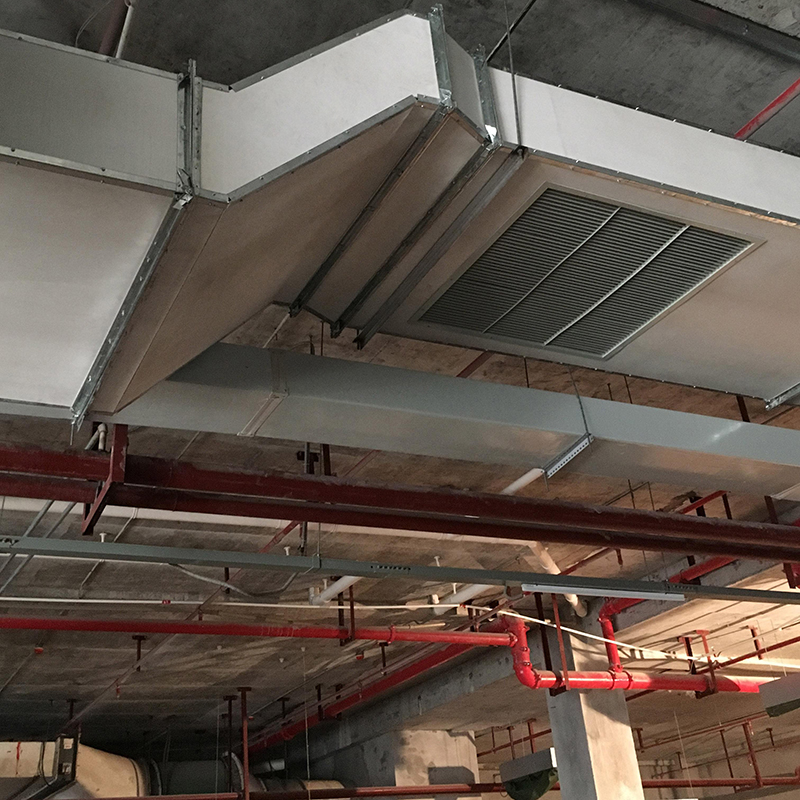



 Current
location:Home >news
>Industry news
>Comprehensive Analysis Of Material Selection, Fabrication, And Installation Technical Specifications For Stainless Steel Air Ducts: Ensuring Durability, Corrosion Resistance, And Operational Efficiency
Current
location:Home >news
>Industry news
>Comprehensive Analysis Of Material Selection, Fabrication, And Installation Technical Specifications For Stainless Steel Air Ducts: Ensuring Durability, Corrosion Resistance, And Operational Efficiency