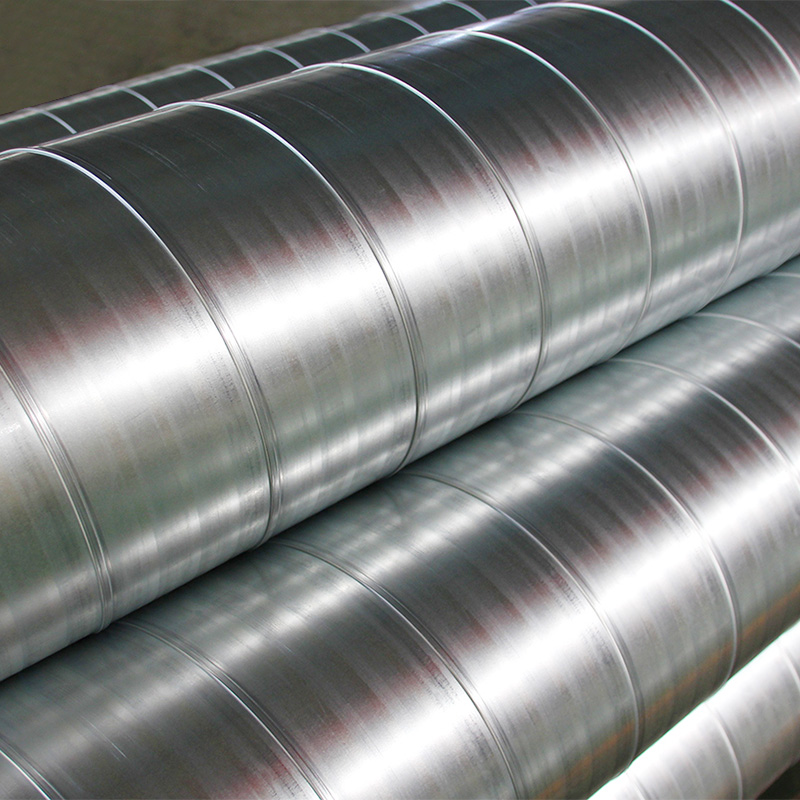
Galvanized Iron Sheet Ducts: Professional Specifications, Applications And Installation Guidelines
Release time:2026-07-20 Visits:613
Galvanized iron sheet ducts are the most widely used metal ventilation components in HVAC systems, fabricated by galvanizing cold-rolled steel sheets to enhance corrosion resistance. As a cost-effective and durable solution, they are widely applied in commercial, residential, and light industrial air conditioning and ventilation systems. This article concisely elaborates on their core characteristics, design key points, typical applications, and installation/maintenance requirements, providing a professional and concise reference.
1. Core Characteristics and Advantages
Galvanized iron sheet ducts feature a zinc coating on the steel surface, which forms a protective layer to prevent rust and corrosion, extending service life to 15-20 years in normal environments. Their key advantages include high structural strength, good airtightness, easy fabrication and installation, and cost-effectiveness. Compared with other metal ducts, they balance performance and economy, making them the preferred choice for general ventilation scenarios.
2. Design and Fabrication Standards
Primarily designed for low to medium-pressure HVAC systems (static pressure ≤1500 Pa), key design parameters include airflow velocity (3-8 m/s for commercial/residential use) and cross-sectional size (rectangular or circular), determined by air volume and installation space. The galvanized layer thickness should be no less than 80μm to ensure corrosion resistance.
Fabrication relies on precision cutting, bending, and locking/seaming processes. The inner surface must be smooth to minimize pressure loss, and seams should be tight to ensure airtightness. Standard wall thickness ranges from 0.6mm to 1.2mm, depending on duct size and operating pressure.
3. Typical Applications
Galvanized iron sheet ducts are widely used in various scenarios: commercial buildings (offices, malls, hotels) for central air conditioning supply/return air systems; residential buildings (apartments, villas) for home ventilation; light industrial workshops for general ventilation and exhaust; and public facilities (schools, stations) for air distribution.
4. Installation and Maintenance Essentials
Installation requires level hanging brackets (spaced 1.5-2.0m) to avoid duct sagging. Joints use flange connections with gaskets and sealants to prevent air leakage; fireproof sleeves are required for ducts passing through firewalls.
Maintenance focuses on regular inspection of the galvanized layer (for rust or peeling), periodic cleaning of the inner surface, and timely repair of seams or damage to maintain airtightness and service life.
Conclusion
As a versatile and cost-effective ventilation solution, galvanized iron sheet ducts play an irreplaceable role in modern HVAC systems. Adhering to professional design, fabrication, and installation standards ensures their stable, efficient, and long-term operation in various general ventilation scenarios.
 +85247166614



 Current
location:Home >news
>Industry news
>Galvanized Iron Sheet Ducts: Professional Specifications, Applications And Installation Guidelines
Current
location:Home >news
>Industry news
>Galvanized Iron Sheet Ducts: Professional Specifications, Applications And Installation Guidelines