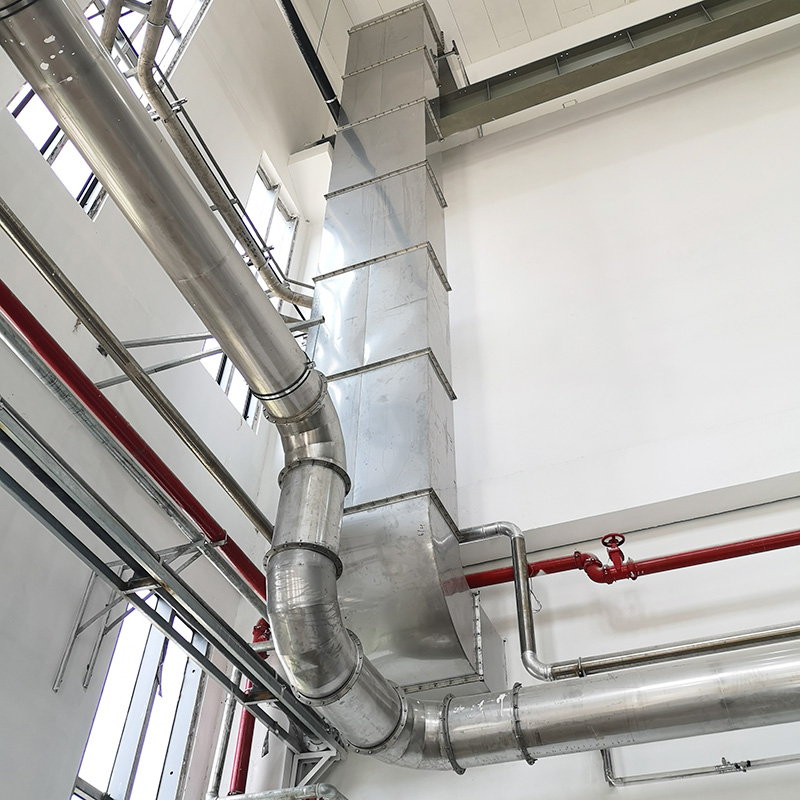
304 & 316 Stainless Steel Rectangular Ducts And Fittings: Features, Applications And Benefits
Release time:2026-08-03 Visits:340
Introduction to 304 and 316 Stainless Steel Rectangular Ducts
304 and 316 stainless steel rectangular ducts are premium welded ventilation ducting solutions designed with square and rectangular cross-sectional structures. Unlike traditional galvanized steel or plastic ducts, these stainless steel duct systems are engineered for long-term ventilation, exhaust, and air circulation projects across commercial, industrial, and hospitality sectors. Fabricated with precision welding technology, the ducts deliver seamless structural integrity, stable airflow performance, and outstanding adaptability to complex ventilation system layouts. As core components of modern HVAC and exhaust systems, they are widely recognized for overcoming the defects of ordinary ducts, such as easy rusting, short service life, and poor temperature resistance.
The two most mainstream stainless steel grades for rectangular duct manufacturing are 304 and 316 stainless steel. Each grade features unique alloy compositions that tailor their performance for different working environments. Both grades belong to austenitic stainless steel series, boasting excellent formability, weldability, and mechanical stability, making them ideal materials for customized rectangular duct production and matching fitting fabrication.
Core Material Properties of 304 and 316 Stainless Steel
304 stainless steel is the most versatile and cost-effective option for rectangular duct production, composed of 18% chromium and 8% nickel alloy elements. This classic formula enables 304 stainless steel ducts to form a dense protective passivation film on the surface, providing excellent oxidation resistance and general corrosion resistance. It effectively resists rust and damage caused by daily humidity, indoor air, weak acid, and weak alkali substances, ensuring stable operation in conventional indoor ventilation environments. In addition, 304 stainless steel maintains stable mechanical strength at normal and medium-high temperatures, with strong tensile and compression resistance to avoid duct deformation and air leakage under long-term air pressure impact.
316 stainless steel is an upgraded high-performance grade optimized on the basis of 304 stainless steel, with added 2-3% molybdenum element and higher nickel content. The addition of molybdenum fundamentally enhances the material’s resistance to pitting corrosion, crevice corrosion, and chloride corrosion. This allows 316 stainless steel rectangular ducts to withstand harsh environments that 304 ducts cannot adapt to, including salt fog, marine humidity, chemical volatile gases, and high-salinity industrial exhaust. Meanwhile, 316 stainless steel retains all the advantages of 304 grade, with better high-temperature resistance and structural stability, suitable for continuous operation in extreme working conditions.
Key Advantages of Welded Stainless Steel Rectangular Ducts
Precision welded manufacturing technology is a core advantage of stainless steel rectangular ducts. Professional full-weld and seamless welding processes eliminate gaps on the duct surface and joints, effectively preventing air leakage, dust accumulation, and oil residue deposition. Compared with spiral ducts and riveted ducts, welded rectangular ducts have smoother inner walls, lower air resistance, and higher ventilation efficiency, which reduces fan energy consumption and lowers long-term operation costs for ventilation systems. The tight welding structure also enhances the overall rigidity of the duct, avoiding vibration and noise during air circulation.
Superior environmental and durability performance further highlights the value of stainless steel rectangular ducts. The material is non-toxic, odorless, and non-release of harmful substances, meeting industrial environmental protection and food-grade hygiene standards. It is easy to clean and maintain, resistant to oil, smoke, and dust adhesion, which is crucial for kitchen exhaust, pharmaceutical workshop ventilation, and food processing plant air circulation. Different from carbon steel ducts that require regular anti-rust painting and maintenance, 304 and 316 stainless steel ducts are maintenance-free in most conventional environments, with a service life more than 3 times longer than ordinary metal ducts.
Strong temperature adaptability is another prominent feature of these duct systems. Stainless steel materials can withstand continuous high-temperature airflow and hot exhaust without deformation, aging, or cracking. They also maintain stable performance in low-temperature and humid environments, free from frost damage and brittle fracture. This wide temperature tolerance makes the ducts applicable for both high-temperature industrial exhaust and constant-temperature fresh air supply systems.
Complete Range of Stainless Steel Duct Fittings
A complete ventilation system cannot operate efficiently without matching stainless steel duct fittings. Supporting 304 and 316 stainless steel fittings are fully customized to match rectangular duct specifications, ensuring perfect system connectivity, airtightness, and operational stability. Common fitting types include rectangular elbows, tees, reducers, end caps, flanges, flexible connectors, and air dampers. All fittings adopt the same stainless steel grade and welding process as the main ducts, ensuring consistent material performance and coordinated service life.
Stainless steel duct flanges are essential connecting accessories, featuring flat and smooth surfaces, high fitting accuracy, and strong fastening performance. They realize stable connection between duct sections, effectively preventing air leakage and loose joints caused by long-term vibration. Rectangular elbows and tees are designed with optimized airflow angles to reduce airflow resistance and turbulence, avoiding wind pressure loss and noise generation during air diversion and turning. Reducer fittings are used for seamless transition of different duct calibers, ensuring uniform and stable airflow in variable-diameter ventilation pipelines.
Specialized fittings such as flexible connectors and air dampers further improve the practicality of the duct system. Flexible connectors buffer pipeline vibration and offset installation errors, protecting the main ducts from structural damage. Air dampers support precise adjustment of airflow and wind speed, realizing intelligent control of ventilation volume for different functional areas. All stainless steel fittings have the same corrosion resistance and high-temperature resistance as the main ducts, avoiding local corrosion and damage that affects the overall system operation.
Typical Application Scenarios for 304 and 316 Duct Systems
304 stainless steel rectangular ducts and fittings are the preferred choice for conventional commercial and general industrial ventilation projects. They are widely used in hotel and restaurant kitchen smoke exhaust systems, office building fresh air systems, shopping mall ventilation projects, and indoor factory air circulation systems. With balanced cost performance and stable performance, 304 grade products fully meet the daily ventilation and exhaust needs of ordinary environments, achieving energy-saving, hygienic, and durable operation.
316 stainless steel rectangular ducts and supporting fittings are targeted at harsh and high-standard working environments. They are extensively applied in chemical plants, pharmaceutical factories, marine engineering, offshore platforms, sewage treatment plants, and coastal industrial facilities. These scenarios involve corrosive gas, salt fog, chemical vapor, and high-humidity environments, where 316’s superior chloride and chemical corrosion resistance can effectively prevent pipeline rust, perforation, and failure. In addition, 316 stainless steel duct systems are also used for high-standard clean workshop ventilation and high-temperature industrial exhaust projects.
Installation and Matching Features of Rectangular Duct Systems
Stainless steel rectangular ducts feature standardized and modular design, supporting flexible cutting, splicing, and customized processing according to on-site construction conditions. The rectangular structure is more suitable for wall-mounted and ceiling concealed installation compared with circular ducts, making full use of building space and avoiding space waste. The unified specification design of ducts and fittings simplifies on-site installation procedures, shortens construction cycles, and reduces installation labor costs.
The fully welded structure and high-precision matching fittings ensure excellent system airtightness. The whole ventilation pipeline has no air leakage points, which improves the overall ventilation efficiency and avoids energy waste caused by air leakage. Meanwhile, the smooth all-metal surface of stainless steel ducts does not breed bacteria and mold, which is more in line with modern building hygiene requirements compared with wooden and plastic ducts.
 +85247166614



 Current
location:Home >news
>Industry news
>304 & 316 Stainless Steel Rectangular Ducts And Fittings: Features, Applications And Benefits
Current
location:Home >news
>Industry news
>304 & 316 Stainless Steel Rectangular Ducts And Fittings: Features, Applications And Benefits