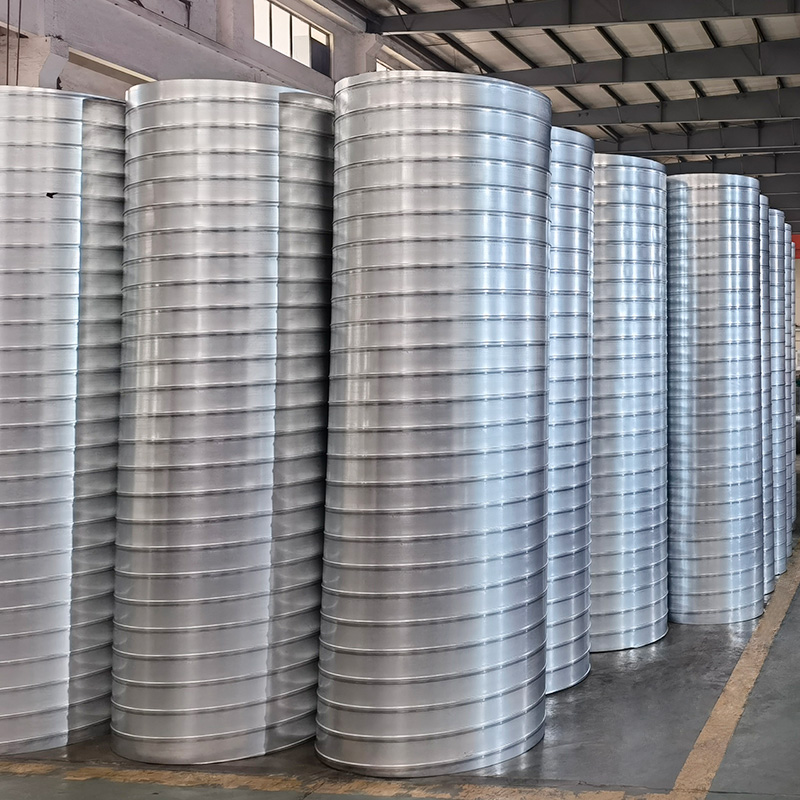
What Is HVAC Noise?
HVAC noise is airborne sound generated by:
Fans: the dominant noise source in most HVAC systems.
Airflow: turbulence at fittings, dampers, grilles, and diffusers.
Equipment: motors, chillers, air handlers, compressors.
Vibration: structure-borne vibration transmitted to the duct.
Noise is measured in decibels (dB) using the A-weighted scale (dBA) for environmental noise. The frequency content matters for selection of silencers.
Typical HVAC noise sources:
|
Source |
Typical dBA at 3 ft |
|
Small fan (1,000 CFM) |
55–65 |
|
Medium fan (10,000 CFM) |
65–75 |
|
Large fan (50,000 CFM) |
75–85 |
|
Air handler |
70–85 |
|
Diffuser |
30–45 (NC 25–35) |
The Wuxi Weishan muffler and silencer-series product lines cover standard and high-temperature silencers.
What Is an HVAC Silencer?
An HVAC silencer is a device installed in a duct to reduce the airborne noise transmitted through the duct. The silencer uses one or more of the following mechanisms:
Absorption: sound-absorbing material (fiberglass, mineral wool, acoustic foam) converts sound energy to heat.
Reflection: chamber expansion or contraction reflects sound back to the source.
Resonance: tuned chamber absorbs specific frequencies.
The most common HVAC silencers are absorptive (use fiberglass or mineral wool).
What Are the Types of HVAC Silencers?
|
Type |
Mechanism |
Best For |
Frequency Range |
|
Absorptive |
Fiberglass lining |
Broadband noise, fans |
Mid to high frequency (500–4,000 Hz) |
|
Reactive |
Chamber expansion |
Low-frequency rumble |
Low frequency (63–250 Hz) |
|
Combined absorptive-reactive |
Both |
Broadband + low-frequency |
Full spectrum |
|
Active |
Anti-noise |
Low-frequency, specialty |
Low frequency |
|
Packless (dissipative) |
Membrane or perforated |
Clean applications |
Mid to high frequency |
For most HVAC applications, absorptive or combined silencers are used. Active silencers are used for specialty applications (low-frequency, quiet spaces).
When Is an Absorptive Silencer the Right Choice?
Absorptive silencers are the right choice when:
The noise is broadband: fan noise, equipment noise.
The target is mid to high frequency: typical HVAC noise.
The space is limited: absorptive silencers are compact.
The cost is moderate: absorptive silencers are economical.
Common applications: supply air silencers, return air silencers, exhaust silencers, equipment discharge silencers.
When Is a Reactive Silencer the Right Choice?
Reactive silencers are the right choice when:
The noise is low-frequency: rumble, exhaust noise.
Space is not constrained: reactive silencers are larger.
Fire-rated material is required: some reactive silencers are non-fibrous.
Clean application: hospitals, cleanrooms, food.
Common applications: low-frequency exhaust silencers, generator exhaust silencers, large low-frequency applications.
What Are the Key Selection Parameters?
The key parameters for silencer selection:
Insertion loss (dB): the noise reduction at each octave band (63 Hz, 125 Hz, 250 Hz, 500 Hz, 1,000 Hz, 2,000 Hz, 4,000 Hz, 8,000 Hz).
Self-noise (dB): the noise generated by the silencer itself due to airflow.
Pressure drop (in. w.c. or Pa): the static pressure loss across the silencer at the design airflow.
Face velocity (fpm or m/s): the air velocity at the silencer face. Typical max 2,000–4,000 fpm.
Length (ft or m): the silencer length. Longer silencers have higher insertion loss.
Duct size: the silencer must match the duct size.
Material: galvanized, stainless, aluminum. Match to duct material.
The Wuxi Weishan silencer-series product line includes standard and high-temperature variants.
What Is the NC Criterion?
The Noise Criterion (NC) is a single-number rating of the ambient noise in a space. It is based on the octave band sound pressure levels and is used to specify the maximum acceptable noise in occupied spaces.
Typical NC criteria:
|
Space |
NC Criterion |
|
Concert halls |
NC 15–20 |
|
Hospitals (patient rooms) |
NC 25–30 |
|
Offices |
NC 30–35 |
|
Restaurants |
NC 35–40 |
|
Retail stores |
NC 40–45 |
|
Lobbies |
NC 40–45 |
|
Mechanical rooms |
NC 50–55 |
|
Industrial (general) |
NC 50–60 |
|
Industrial (heavy) |
NC 60+ |
For each space, the NC criterion defines the target noise level. The silencer is selected to achieve the criterion at the diffuser or grille.
What Is Insertion Loss?
Insertion loss is the reduction in noise level at a point downstream of the silencer, compared to the same point without the silencer. It is measured at each octave band and is plotted as an insertion loss spectrum.
Typical insertion loss for absorptive silencers:
|
Silencer Length |
125 Hz |
250 Hz |
500 Hz |
1,000 Hz |
2,000 Hz |
4,000 Hz |
|
3 ft |
5 |
10 |
20 |
30 |
35 |
30 |
|
5 ft |
8 |
15 |
28 |
40 |
45 |
35 |
|
7 ft |
10 |
20 |
35 |
45 |
50 |
40 |
Longer silencers provide higher insertion loss, especially at lower frequencies. For low-frequency rumble, longer silencers or reactive silencers are required.
How Is the Silencer Sized?
Silencer sizing:
Determine the duct size: width × height (rectangular) or diameter (round).
Determine the airflow: CFM or m³/h.
Calculate the face velocity: CFM / duct area. Limit to 2,000–4,000 fpm.
Determine the target insertion loss: from the NC criterion and the upstream noise.
Select the silencer: from the manufacturer's catalog based on the size and insertion loss.
Verify the pressure drop: per the manufacturer's data at the design airflow.
Verify the self-noise: per the manufacturer's data at the design airflow.
For each octave band, the insertion loss must reduce the upstream noise to below the NC criterion.
What Are High-Temperature Silencers?
High-temperature silencers are used for:
Exhaust silencers: engine exhaust, boiler exhaust, oven exhaust.
Process exhaust: industrial dryers, kilns, incinerators.
Generator exhaust: diesel generators, gas turbines.
High-temperature silencers use:
Stainless steel construction: for temperatures up to 800–1,000°F.
Mineral wool insulation: instead of fiberglass for higher temperature.
Ceramic fiber: for very high temperature (above 1,000°F).
The Wuxi Weishan high temperature resistant type product line covers high-temperature silencers.
What Are Soft Connections?
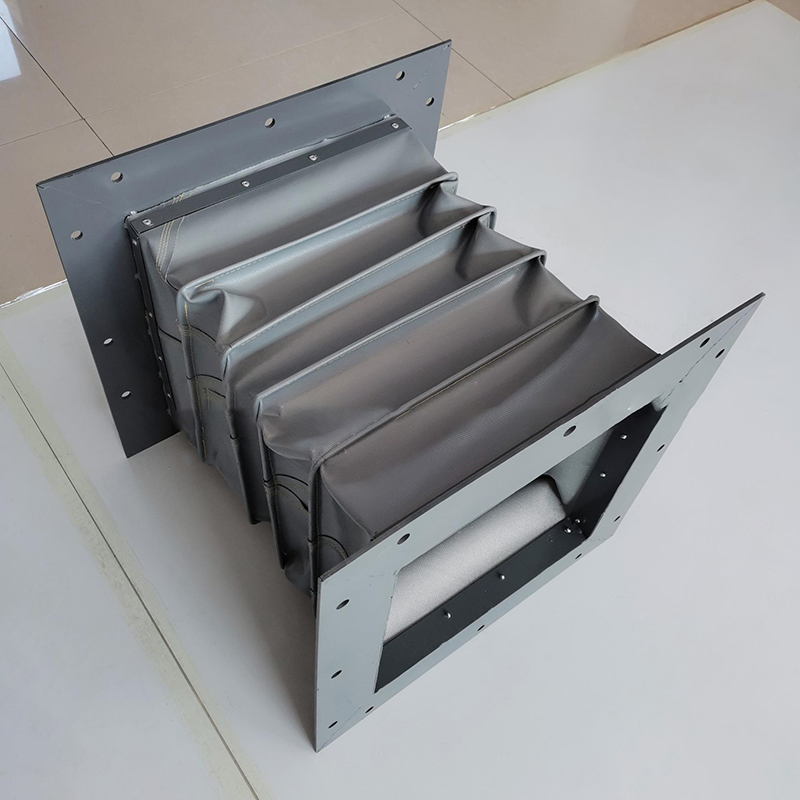
Soft connections (also called flexible connections or canvas connections) are flexible sections of duct that connect the fan outlet to the rigid ductwork. They prevent vibration transmission from the fan to the duct and allow for thermal expansion.
Soft connection materials:
Canvas: cotton or polyester fabric, coated with PVC or neoprene.
Neoprene-coated fabric: weather-resistant.
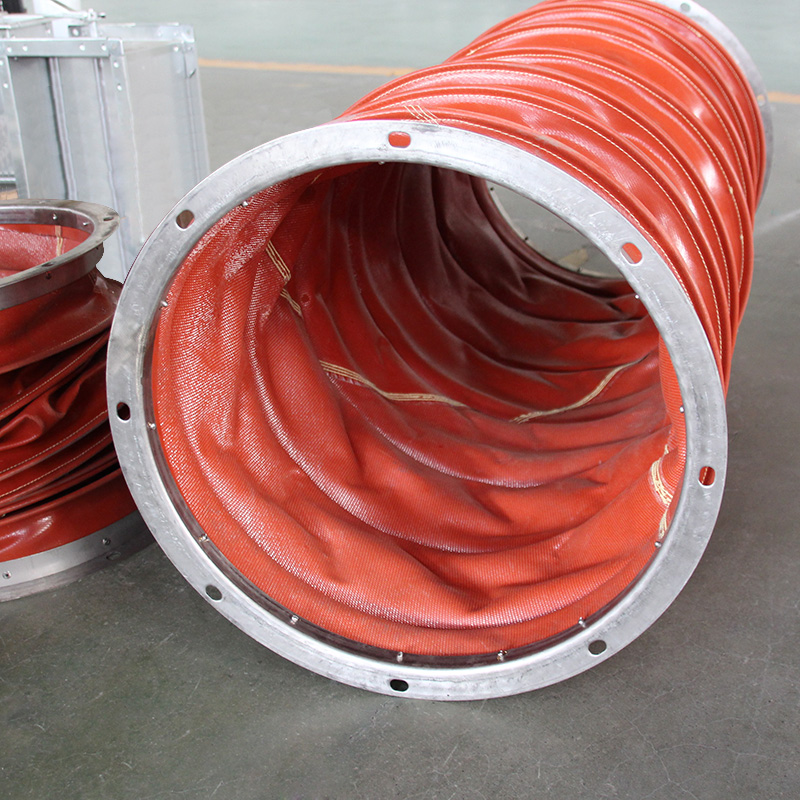
Silicone-coated fabric: high-temperature.
Stainless steel mesh: high-temperature and abrasion-resistant.
The Wuxi Weishan fan duct soft connection product line covers standard and high-temperature soft connections.
What Are the Common Defects in Silencers?
Common defects in silencers:
|
Defect |
Cause |
Prevention |
|
Reduced insertion loss |
Damaged lining, erosion, contamination |
Inspect lining, replace damaged sections |
|
High pressure drop |
Blocked lining, fouling |
Clean lining, prevent fouling |
|
Self-noise |
Excessive velocity |
Limit velocity to design |
|
Lining erosion |
High velocity, abrasive particles |
Limit velocity, use erosion-resistant lining |
|
Fiber release |
Damaged facing, erosion |
Use proper facing, inspect regularly |
|
Corrosion |
Humid environment, dissimilar metals |
Use appropriate material, isolate metals |
|
Rupture |
Overpressure, impact |
Verify pressure class, protect from impact |
Each defect is preventable with discipline. Periodic inspection is recommended for critical silencers.
What Are the Installation Considerations?
Installation considerations for silencers:
Location: silencers are typically installed near the noise source (fan, air handler) for maximum effectiveness.
Orientation: silencers must be installed in the correct orientation (inlet and outlet).
Straight duct upstream: minimum 3 duct diameters of straight duct upstream to ensure uniform flow.
Straight duct downstream: minimum 1–2 duct diameters of straight duct downstream.
Access: silencers must be accessible for inspection and cleaning.
Support: silencers must be supported per the manufacturer's instructions.
For critical applications, silencers are supported independently from the duct to avoid vibration transmission.
What Standards Govern Silencers?
Major standards for silencers:
AMCA 300: test code for sound rating.
AMCA 301: methods for calculating fan sound ratings from sound power levels.
ASTM E477: test method for measuring acoustic performance of duct silencers.
ISO 7235: laboratory measurement of sound attenuation of duct silencers.
EN ISO 11691: measurement of insertion loss of duct silencers in situ.
For each project, the local standard must be consulted.
What Is the Future of Silencer Technology?
Trends in silencer technology:
Improved absorptive materials: higher density, better low-frequency absorption.
Reactive designs: more compact reactive silencers.
Active noise control: anti-noise for low-frequency applications.
Composite materials: lighter, more efficient silencers.
Modular silencers: pre-engineered modular silencers for fast installation.
For a silencer manufacturer, the trend toward improved materials and active noise control is creating new opportunities for value-added products.
Conclusion
HVAC silencers reduce airborne noise from fans, ducts, and equipment. The principal types — absorptive, reactive, combined — each have different frequency characteristics. Wuxi Weishan produces the silencer-series, muffler, high temperature resistant type, and fan duct soft connection product lines for all HVAC noise control applications. The selection depends on the noise source, the target insertion loss, the face velocity, the pressure drop, and the available space.
Frequently Asked Questions
What is the difference between a silencer and a muffler?
The terms are interchangeable. "Silencer" is more common in HVAC; "muffler" is more common in automotive and industrial exhaust.
What is an absorptive silencer?
An absorptive silencer uses sound-absorbing material (fiberglass or mineral wool) to convert sound energy to heat. It is most effective at mid to high frequencies.
What is a reactive silencer?
A reactive silencer uses chamber expansion or resonance to reflect or absorb sound. It is most effective at low frequencies.
What is the typical insertion loss for an absorptive silencer?
Typical insertion loss is 10–30 dB at mid to high frequencies, depending on the silencer length and design. Longer silencers have higher insertion loss.
What is the maximum face velocity for a silencer?
Typical maximum face velocity is 2,000–4,000 fpm. Higher velocity increases self-noise and reduces insertion loss.
What is the typical pressure drop for a silencer?
Typical pressure drop is 0.05–0.30 in. w.c. at the design airflow. Higher pressure drop indicates higher velocity or longer silencer.
What is self-noise?
Self-noise is the noise generated by the silencer itself due to airflow. It depends on the face velocity and the silencer design. Higher velocity = higher self-noise.
What is the NC criterion?
The NC (Noise Criterion) is a single-number rating of ambient noise. Typical NC criteria: offices NC 30–35, hospitals NC 25–30, restaurants NC 35–40, industrial NC 50–60.
What is a soft connection?
A soft connection is a flexible section of duct that connects the fan outlet to the rigid ductwork. It prevents vibration transmission and allows for thermal expansion.
What is a high-temperature silencer?
A high-temperature silencer is designed for exhaust applications with temperatures above 250°F. It uses stainless steel construction and mineral wool or ceramic fiber insulation.
How are silencers installed?
Silencers are installed in the duct, typically near the noise source. They require straight duct upstream and downstream, and must be supported independently.
What is the future of silencer technology?
The future is toward improved absorptive materials, more compact reactive designs, active noise control, composite materials, and modular silencers.
 +85247166614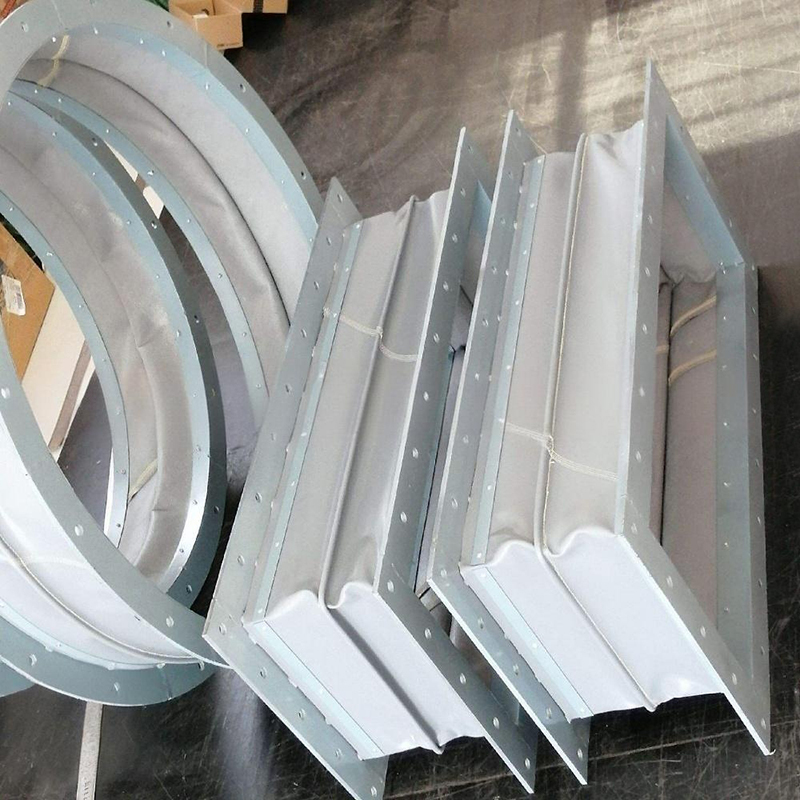



 Current
location:Home >news
>Industry news
>Silencers And Mufflers For HVAC Noise Control: Selection And Engineering
Current
location:Home >news
>Industry news
>Silencers And Mufflers For HVAC Noise Control: Selection And Engineering