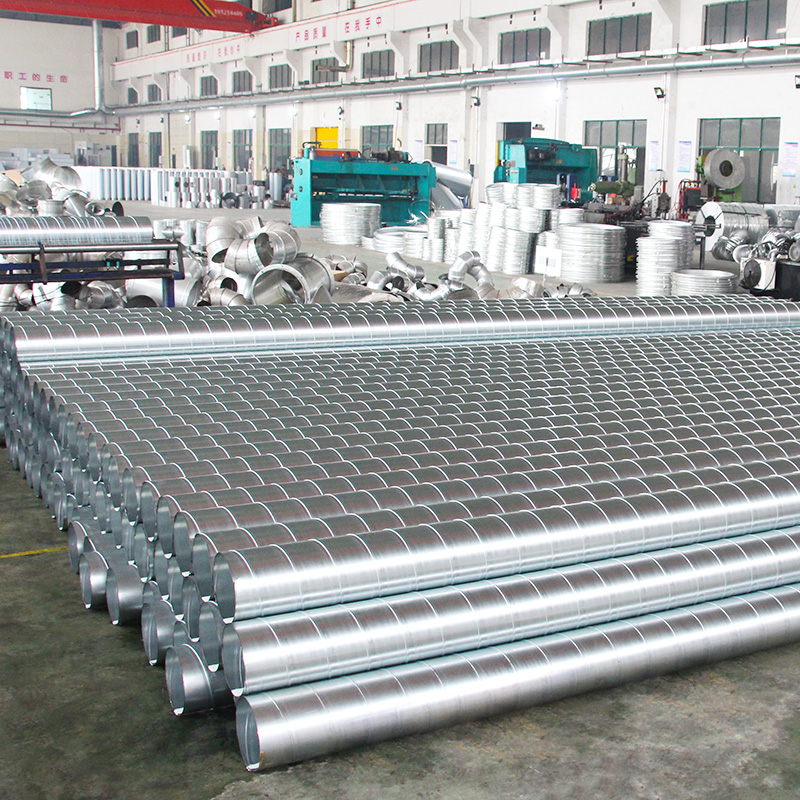
When a fire breaks out in a building, the ventilation system switches from keeping people comfortable to keeping them alive. The smoke exhaust duct is the critical pathway that channels lethal smoke and hot gases out of the structure, giving occupants time to evacuate and firefighters a chance to work. Unlike standard HVAC ductwork, a smoke exhaust duct must perform under conditions that would destroy ordinary duct materials — sustained temperatures of 280°C for at least 30 minutes, sometimes longer.
This isn't a component you can spec casually. Let's dig into what makes smoke exhaust ductwork different, how to get it right, and where projects commonly go wrong.
Why Smoke Exhaust Ducts Are Different from Standard Ventilation Ducts
A normal ventilation duct moves air at room temperature or slightly above. A smoke exhaust duct must move air at 280–300°C while maintaining structural integrity, sealing, and support. The stakes are obvious — failure during a fire event means smoke fills escape routes, and people die.
Fire codes worldwide mandate specific performance criteria:
• GB 50016 (China's Code for Fire Protection of Building Design): Requires smoke exhaust systems in underground buildings, large commercial spaces, and specific industrial facilities
• EN 12101 (European Standard for Smoke and Heat Control Systems): Part 7 specifically addresses smoke duct specifications, including fire resistance classes E30, E60, E90, E120, and E180
• NFPA 92 (US Standard for Smoke Control Systems): Provides guidance on smoke exhaust duct design, construction, and fire resistance requirements
Meeting these standards isn't optional — it's a legal requirement in virtually every jurisdiction, and fire inspectors will check compliance before issuing occupancy permits.
Material Selection for Smoke Exhaust Ducts
Carbon Steel — The Default Choice
Carbon steel welded duct is the most widely used material for smoke exhaust systems. Here's why:
• At 280°C, carbon steel retains approximately 85% of its room-temperature yield strength. It won't soften or deform under standard fire exhaust conditions.
• Welded seams provide superior sealing compared to snap-lock or Pittsburgh lock seams found in standard HVAC ducts.
• Material cost is significantly lower than stainless steel — typically 60-70% savings.
• Standard plate thickness of 1.0–1.5mm provides adequate rigidity for most duct dimensions.
The caveat: carbon steel corrodes. In humid environments or coastal installations, you need protective coatings (high-temperature silicone paint or intumescent coating) applied after fabrication. These coatings serve a dual purpose — corrosion protection during normal operation and additional fire resistance during an emergency.
Stainless Steel — For Demanding Environments
When the exhaust environment includes corrosive chemicals (kitchen grease exhaust, chemical plant fumes, marine environments), stainless steel becomes the practical choice:
• Grade 304 stainless maintains structural integrity well above 300°C
• Grade 316 adds molybdenum for enhanced corrosion resistance in chloride-rich environments
• The welded construction eliminates crevice corrosion points that plague mechanically-joined alternatives
The cost premium (3-4x over carbon steel) is justified only when corrosion is a genuine concern. For a typical underground parking garage exhaust, carbon steel with appropriate coating is more than adequate.
Fire-Rated Board Encasement
Some designs wrap the steel duct in fire-rated boards (calcium silicate, vermiculite, or magnesium oxide board) to achieve higher fire resistance ratings. This approach is common when the duct passes through fire compartments and needs to maintain integrity beyond what bare steel alone provides. A typical assembly — 1.0mm carbon steel duct wrapped in 25mm calcium silicate board — can achieve E90 (90-minute) fire resistance.
Thickness and Structural Requirements
The minimum plate thickness for smoke exhaust ducts is generally 1.0mm for carbon steel and 0.8mm for stainless steel, but real-world designs often go thicker:
• Small ducts (< 500mm width): 1.0mm carbon steel is typically adequate
• Medium ducts (500–1000mm): 1.2mm provides the rigidity needed to resist deformation under high-temperature operation
• Large ducts (> 1000mm): 1.5mm or external reinforcement (angle iron stiffeners or flat bar bracing) becomes necessary
Thickness affects more than just structural performance. Thicker plate holds welds better, resists vibration from high-velocity exhaust, and provides a longer service life under cyclic thermal loading.
Welding and Sealing Requirements
This is where smoke exhaust ducts genuinely differ from standard HVAC work.
Weld Seam Quality
Every longitudinal seam and every transverse joint must be continuously welded — not tack-welded, not spot-welded. The weld must be gas-tight. In practice, this means:
• Full-penetration welding for plate thickness ≥ 1.2mm
• Consistent weld bead with no pinholes, undercut, or incomplete fusion
• Post-weld grinding of internal surfaces to reduce turbulence (important for maintaining design airflow rates)
At Wuxi Weishan, we use automated submerged arc welding for straight seams on our carbon steel welded ducts — this produces consistent, full-penetration welds at travel speeds that manual welding can't match. The result is a duct with measurably lower air leakage.
Joint Sealing
Where duct sections connect, the flange joint must maintain the same fire resistance as the duct body. Standard approaches include:
• Welded flanges: The most robust option. The flange is welded to the duct body, and the mating surfaces are sealed with high-temperature gasket material (ceramic fiber rope or intumescent tape rated for 300°C+)
• Bolted flanges with fire-rated gaskets: Allows for disassembly during maintenance. The gasket must maintain sealing integrity at 280°C — standard neoprene or EPDM gaskets will fail
Integration with Fire Dampers and Smoke Valves
A smoke exhaust duct doesn't operate in isolation. It's part of an integrated smoke control system that includes:
Fire Dampers
These close automatically when fusible links detect elevated temperatures (typically at 70°C for normal fire dampers, 280°C for smoke exhaust fire dampers). The 280°C fire damper is the critical component — it prevents fire from spreading through the exhaust duct system to other fire compartments.
Smoke Exhaust Valves
Normally closed, these valves open when the fire alarm system activates, creating exhaust pathways from the affected zone. They must be interlocked with the exhaust fan — the fan starts only when at least one valve opens, preventing the system from dead-heading.
Control Logic
The sequence of operation matters: fire detected → alarm activates → smoke exhaust valves in the affected zone open → exhaust fan starts → supply air fans in adjacent zones pressurize stairwells and corridors. The entire sequence must complete within 30 seconds of fire detection.
Application Scenarios
Underground Parking Garages
The most common application. Vehicles in a confined space generate CO during normal operation (requiring continuous ventilation) and produce dense, toxic smoke during fire events. Smoke exhaust ducts in parking garages are typically large rectangular carbon steel ducts (600×400mm to 1200×600mm), routed along the ceiling at 20-30 meter intervals. The design target: maintain visibility above 10 meters and temperature below 60°C at occupant head height for at least 30 minutes.
Commercial Malls and Atriums
Large open spaces create complex smoke dynamics. The exhaust system must work in concert with natural ventilation (roof vents) and mechanical pressurization. Ducts in these applications are often visible — making appearance a secondary consideration alongside performance. Spiral ducts or painted rectangular ducts are common choices.
Industrial Facilities
Chemical plants, foundries, and warehouses storing combustible materials require smoke exhaust systems sized for specific hazard scenarios. The ducts must often handle both normal process ventilation and emergency smoke extraction — a dual-function design that requires careful velocity and pressure calculations for both operating modes.
Tunnels
Tunnel smoke extraction is one of the most demanding applications. The ducts are enormous (often exceeding 1m diameter), must support jet fan thrust loads, and need to perform in environments with heavy vehicle exhaust corrosion. Spiral-wound carbon steel ducts with marine-grade epoxy coating are the typical specification.
Installation Considerations
Support Spacing
Smoke exhaust duct supports must maintain integrity at 280°C. Standard painted carbon steel hanger rods will lose significant strength at elevated temperatures. The solution: use hanger rods sized for the elevated temperature condition (typically one gauge larger than standard HVAC spacing calculations would suggest), or use fire-rated hanger assemblies with intumescent wrapping.
Support spacing for horizontal runs:
• Rectangular ducts: maximum 2.4m for ducts ≤ 600mm wide, 1.8m for wider sections
• Round/spiral ducts: maximum 3.0m for diameters up to 630mm
Penetration Sealing
Where smoke exhaust ducts penetrate fire-rated walls or floors, the penetration must be fire-stopped to the same rating as the barrier. Intumescent sealant, mineral wool packing, and fire-rated collars are standard approaches. The key requirement: the fire-stop must accommodate thermal expansion of the steel duct (approximately 1.2mm per meter at 280°C temperature rise) without cracking or losing integrity.
Testing and Commissioning
Before handover, every smoke exhaust system must be tested:
• Airflow measurement: Verify that each exhaust point delivers the design volume (typically ±10% tolerance)
• Fan performance: Confirm the fan operates at its design point on the system curve
• Control sequence: Test the complete fire-to-exhaust sequence, including valve opening, fan starting, and interlocks
• Smoke test: In some jurisdictions, a practical smoke test is required — igniting a smoke pellet in the protected zone and verifying extraction within the required timeframe
Maintenance and Inspection
Smoke exhaust ducts sit idle for years and then must perform perfectly during an emergency. This makes regular inspection non-negotiable:
• Annual inspection: Check all dampers and valves for free operation, verify actuator function, inspect duct interior for corrosion or obstruction
• Functional testing: Every 6 months, activate the system in test mode and verify fan operation, valve response, and control logic
• Duct cleaning: Accumulated grease or dust in exhaust ducts is a fire hazard in itself. Clean schedules depend on the application — kitchen exhaust may need quarterly cleaning, while parking garage exhaust may only need attention every 2-3 years
 +85247166614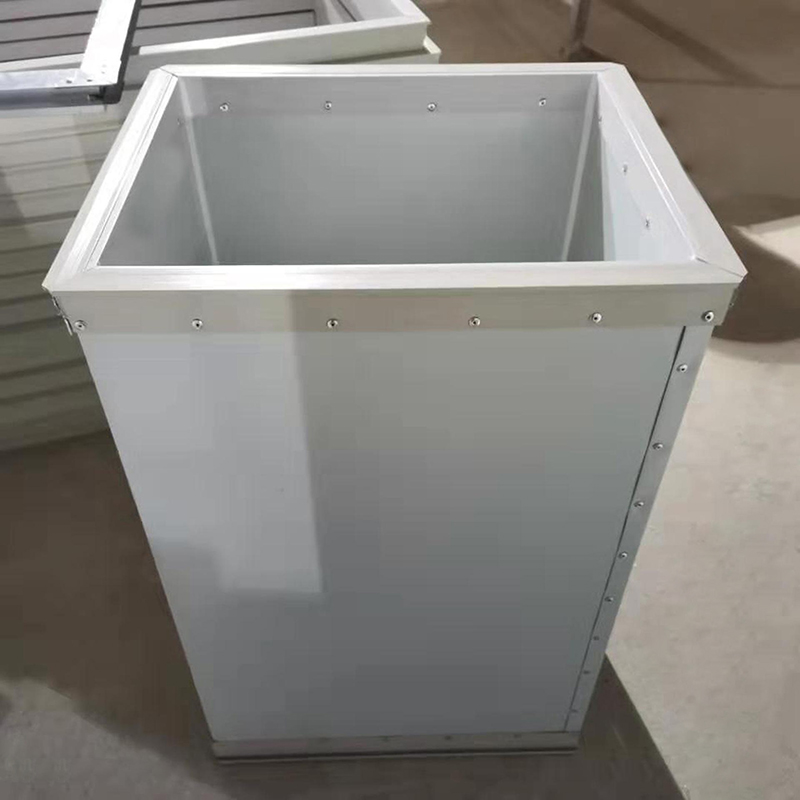



 Current
location:Home >news
>Industry news
>Smoke Exhaust Duct: Engineering Fire-Rated Ductwork That Actually Works When It Matters
Current
location:Home >news
>Industry news
>Smoke Exhaust Duct: Engineering Fire-Rated Ductwork That Actually Works When It Matters