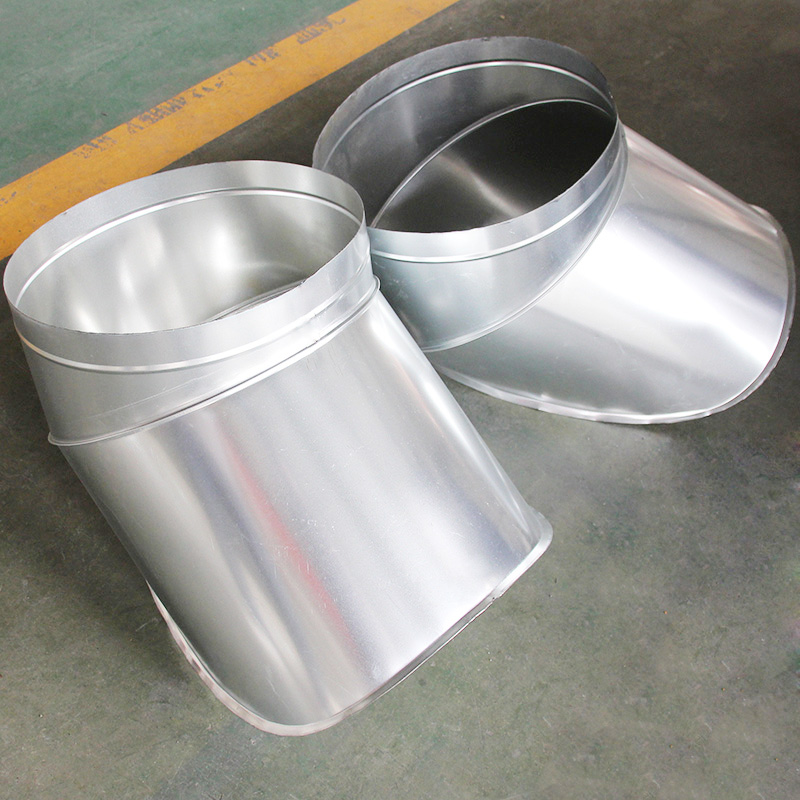
Traditional HVAC ductwork means sheet metal wrapped in fiberglass blankets — two separate trades, two material layers, and a lot of field labor bolted onto a ceiling grid. Composite duct systems flip that model. They combine the air passage wall and thermal insulation into a single factory-manufactured panel, cutting weight, eliminating secondary insulation work, and shrinking installation timelines.
This article breaks down the types of composite duct available today, their thermal and fire performance characteristics, and the practical trade-offs engineers need to know before specifying them.
What Makes a Composite Duct "Composite"
A composite duct gets its name from the layered construction: two rigid face sheets bonded to a core insulation material. The face sheets carry structural loads and provide the air-contact surface; the core delivers thermal resistance. The three layers act together as a structural sandwich — stiff, lightweight, and thermally efficient.
The specific performance depends entirely on which materials form each layer. That's why "composite duct" covers a wide range of products with very different characteristics.
The Five Main Types of Composite Duct
Color Steel Composite Duct
Face sheets: pre-painted galvanized steel (0.2–0.5mm thick)
Core: polyurethane (PU), phenolic foam, or extruded polystyrene (XPS)
This is the workhorse of commercial HVAC. The color steel exterior handles mechanical abuse during and after installation — bumped by ladders, scraped by ceiling grid wires — without the damage that destroys foil-faced insulation. Phenolic-core variants achieve Class A fire rating (GB 8624), while PU-core typically rates B1.
Typical thermal conductivity of the core layer: 0.020–0.028 W/(m·K) for PU, 0.018–0.023 W/(m·K) for phenolic foam.
Single-side and double-side configurations both exist. Single-side color steel composite duct has the steel exterior with an aluminum foil or coated inner surface. Double-side wraps the insulation core in steel on both faces for maximum durability.
Fiberglass Composite Duct
Face sheets: fiberglass-reinforced aluminum foil or glass fiber board
Core: ultra-fine glass wool board (density 48–80 kg/m³)
Fiberglass composite
duct targets applications where noise control matters as much as insulation. The porous glass wool core absorbs sound energy — typically delivering 10–15 dB noise reduction across common HVAC frequency bands (125–2000 Hz). That's a meaningful difference in open-plan offices, recording studios, and hospital patient corridors.
The layered structure typically runs: inner non-combustible glass wool → aluminum foil vapor barrier → outer fiberglass or color steel facing. This configuration blocks moisture migration while maintaining fire performance at Class A.
Phenolic Composite Duct
Face sheets: aluminum foil or coated aluminum sheet
Core: phenolic foam (density 40–60 kg/m³)
Phenolic foam has one standout advantage: fire resistance. It achieves Class A rating with minimal smoke generation — a critical requirement for subway stations, underground parking garages, and tunnel ventilation. The closed-cell structure keeps water absorption below 3%, which prevents insulation degradation in humid environments.
Thermal conductivity sits at 0.018–0.023 W/(m·K), among the lowest of any duct insulation core material.
PIR (Polyisocyanurate) Composite Duct
Face sheets: aluminum foil or glass fiber reinforced aluminum
Core: PIR foam (density 30–45 kg/m³)
PIR is polyurethane's fire-resistant cousin. The isocyanurate ring structure gives it better thermal stability than standard PU — continuous service up to 120°C vs. 80°C for PU — while maintaining similar insulation performance (0.022–0.027 W/(m·K)). PIR composite duct appears frequently in industrial HVAC and kitchen exhaust make-up air systems where elevated temperatures are routine.
Magnesium Oxide (MgO) Composite Duct
Face sheets: magnesium oxide board
Core: insulation material (varies)
MgO composite duct targets fire-critical applications in Asian and Middle Eastern markets. Magnesium oxide board is non-combustible (Class A1), moisture-resistant, and mold-proof. The board itself provides structural rigidity, so the composite panel stands up well during handling and installation.
Composite Duct vs. Metal Duct + Separate Insulation
The traditional approach: install galvanized steel duct, then wrap it in fiberglass or mineral wool blanket insulation, secured with pins and tape. Two materials, two installations, two inspection points.
Here's how composite systems compare:
Weight: A 600×400mm composite duct panel (color steel + phenolic, 25mm core) weighs approximately 4.5 kg/m² of panel area. The equivalent galvanized duct (0.8mm) plus 25mm fiberglass wrap weighs 11.2 kg/m². That's a 60% weight reduction, which directly reduces the number of hangers needed and the structural load on long-span ceiling supports.
Installation time: Factory-prefabricated composite duct sections arrive with flanges already formed. Two workers can install 20–30 meters of 600×400 duct per shift. Traditional metal-plus-insulation requires the duct fitters first, then the insulation crew — stretching the same run across 2–3 days of labor.
Thermal bridges: Separate insulation relies on field workmanship for complete coverage. Miss a hanger bracket, compress the blanket at a support point, or leave a gap at a fitting, and you create a thermal bridge that causes condensation and energy loss. Composite duct has continuous insulation as an integral part of the panel — no field-installed gaps.
Space: Composite duct walls are thinner than metal duct + insulation for equivalent thermal performance. A 600×400mm composite duct with 25mm phenolic core occupies roughly the same ceiling plenum space as a 600×400mm galvanized duct with 40mm fiberglass wrap. In tight mechanical rooms and low-ceiling corridors, those 15mm savings per side add up.
Fire Performance: Understanding the Ratings
Composite duct fire ratings vary significantly by type. The relevant classifications (per GB 8624 and equivalent EN 13501-1):
• Class A1/A2 (non-combustible): Phenolic composite, MgO composite, some fiberglass composite variants. Required for underground facilities, hospitals, and high-occupancy public buildings in most jurisdictions.
• Class B1 (flame retardant): Color steel composite with PU or XPS core. Acceptable for standard commercial buildings, offices, and retail.
• Class B2 (normal flammability): Lower-grade composite panels without flame-retardant additives. Rarely specified for occupied buildings; limited to agricultural and warehouse applications.
Always verify the fire rating applies to the complete assembly (face sheets + core + adhesive), not just the core material in isolation. Some suppliers quote the core's Class A rating while the assembled panel only achieves B1 because of the adhesive layer or facing material.
Joint Sealing and Air Leakage
Composite duct panels connect using either:
1. TDF/DC flange system: Aluminum flange profiles clipped or adhered to panel edges, sealed with butyl tape or silicone. Fast, standardized, works for rectangular duct up to 1200mm on the longest side.
2. PVC or aluminum plug connectors: Push-in connectors for circular and small rectangular duct. The connector body slides into the panel edge, and a gasket provides the seal.
3. Adhesive-bonded joints: Panel edges glued with structural adhesive (typical for fiberglass composite duct where the facing material bonds well).
Air leakage targets depend on the system pressure class. Per SMACNA and EN 1507:
• Low-pressure systems (≤500 Pa): acceptable leakage ≤ 0.5 L/s per m² of duct surface
• Medium-pressure systems (500–1000 Pa): acceptable leakage ≤ 0.3 L/s per m²
Composite duct systems with properly sealed TDF flanges consistently meet Class B (medium pressure) leakage requirements. For high-pressure systems above 1,000 Pa, metal duct remains the safer specification — composite panel joints tend to develop micro-leaks under sustained high static pressure.
Design Limitations
Composite duct isn't a universal replacement for metal. Honest constraints:
Working pressure: Most composite duct systems are rated for ±1,500 Pa maximum static pressure. High-velocity VAV systems or long-run supply ducts that exceed this need metal construction.
Temperature limits: Phenolic and PU core composites typically handle -20°C to +80°C continuous service. PIR extends to +120°C. Beyond that, the foam core degrades. Kitchen exhaust ducts, boiler flue connections, and industrial process exhaust above 120°C require bare metal.
Moisture exposure: While phenolic and PIR cores have low water absorption, prolonged submersion or constant condensation will degrade any foam-core composite. Indoor HVAC applications with proper vapor barriers are fine. Outdoor condensate-prone locations need careful detailing.
On-site modification: You can cut composite panels in the field with a utility knife or fine-tooth saw. But you can't weld branch connections, punch holes for sensors, or add reinforcement plates the way you can with metal duct. Plan your penetrations and branches in the shop.
Selecting the Right Composite Type
A quick decision framework:
• Office buildings, retail, hotels: Color steel composite (phenolic or PU core) — cost-effective, durable exterior, adequate fire rating.
• Subway stations, tunnels, underground parking: Phenolic composite or MgO composite — Class A fire rating mandatory.
• Hospitals, labs, recording studios: Fiberglass composite — noise absorption matters.
• Kitchen make-up air, moderate-temp industrial: PIR composite — higher temperature tolerance.
• Clean rooms, food processing: Color steel composite with smooth antimicrobial inner facing.
Final Thoughts
Composite duct systems have matured past their early reputation as "cheap alternatives." Modern phenolic and PIR cores match or exceed traditional insulation performance in a fraction of the thickness. Color steel facing eliminates the maintenance headaches of exposed insulation wraps. And for the majority of commercial HVAC applications operating within their pressure and temperature limits, composite duct delivers lower installed cost, faster project timelines, and comparable — sometimes better — long-term performance than traditional metal-plus-insulation construction.
The key is matching the composite type to the application. Phenolic for fire-critical underground work, fiberglass for noise-sensitive spaces, color steel for general commercial duty, PIR for elevated temperatures. Get that selection right, and composite duct earns its place in the specification.
 +85247166614



 Current
location:Home >news
>Industry news
>Beyond Metal And Insulation: How Composite Ducts Changed HVAC Ductwork Design
Current
location:Home >news
>Industry news
>Beyond Metal And Insulation: How Composite Ducts Changed HVAC Ductwork Design