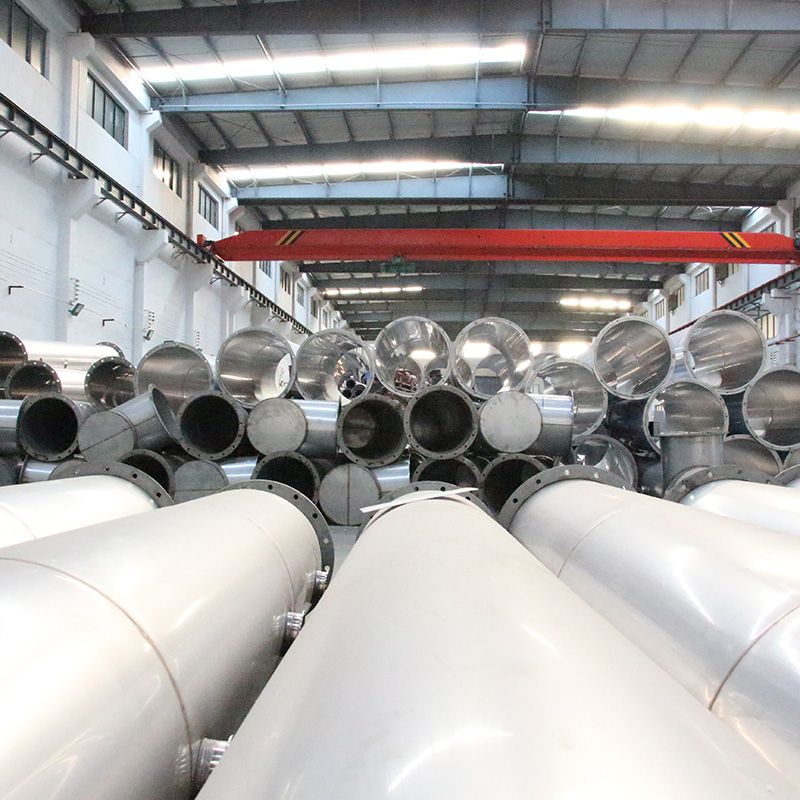
What Are Duct Supports?
Duct supports are the structural elements that carry the weight of the duct and transfer the load to the building structure. Supports include:
Hangers: rods or straps suspended from the structure above.
Brackets: angle or channel supports mounted to walls or columns.
Floor mounts: saddles or legs that support the duct from below.
Risers: vertical supports for duct that runs vertically.
The Wuxi Weishan duct flange product line includes angle steel, flat, and steel strip flanges that combine flange and support functions.
What Are Duct Hangers?
Duct hangers are rods, straps, or cables that suspend the duct from the structure above. Common hanger types:
Rod hangers: threaded rod with duct strap or trapeze.
Strap hangers: metal strap wrapped around the duct and suspended from the structure.
Trapeze hangers: channel or angle suspended from the structure with the duct resting on top.
Wire hangers: galvanized wire for small flexible duct (residential).
Clevis hangers: prefabricated hanger with clevis pin.
For round duct, strap hangers or clevis hangers are common. For rectangular duct, trapeze hangers are common.
How Are Hangers Sized?
Hanger sizing depends on:
Duct weight: the weight of the duct per unit length.
Duct size: larger duct weighs more per unit length.
Hanger spacing: typical 8–12 ft (2.4–3.7 m) for round duct; 6–10 ft (1.8–3.0 m) for rectangular duct.
Load per hanger: the duct weight × hanger spacing.
For galvanized steel duct, typical weights:
|
Duct Size (in.) |
Weight per ft (lb) |
|
8 round |
2.5 |
|
12 round |
4 |
|
18 round |
6 |
|
24 round |
9 |
|
36 round |
14 |
|
48 round |
22 |
|
12×8 rectangular |
5 |
|
24×12 rectangular |
10 |
|
36×16 rectangular |
16 |
|
48×24 rectangular |
24
|
For stainless steel, multiply by 1.05 (similar density). For aluminum, multiply by 0.35.
What Are the Hanger Spacing Standards?
Standard hanger spacing per SMACNA:
|
Duct Type |
Maximum Spacing (ft) |
Notes |
|
Round duct, ≤ 12 in. |
10 |
Strap hanger |
|
Round duct, 14–36 in. |
8 |
Strap or trapeze |
|
Round duct, > 36 in. |
6 |
Trapeze required |
|
Rectangular duct, ≤ 24 in. side |
8 |
Trapeze |
|
Rectangular duct, 24–48 in. side |
6 |
Trapeze |
|
Rectangular duct, > 48 in. side |
4 |
Trapeze with stiffener |
For high-pressure or high-temperature service, the spacing may need to be reduced.
What Are Duct Flanges?
Duct flanges are the connection elements that join two duct sections together. Flanges provide:
Mechanical connection: bolted joint for strength and rigidity.
Sealing surface: gasket or mastic to prevent leakage.
Disassembly: the joint can be opened for cleaning or modification.
Common flange types for rectangular duct:
|
Flange Type |
Profile |
Best For |
Notes |
|
Angle steel flange (TDF) |
L-shaped angle |
Standard commercial |
Most common |
|
Angle steel rectangular flange (TDC) |
C-shaped channel |
TDC clip connection |
Faster installation |
|
Flat flange (slip-on) |
Flat bar |
Low-pressure |
Easier alignment |
|
Steel strip flange (slide-on) |
Formed steel |
Standard commercial |
Hidden connection |
Common flange types for round duct:
Angle ring flange: angle steel ring with bolt holes.
Slip flange: formed steel ring that slips over the duct end.
Companion flange: formed steel flange for use with Vanstone flange.
The Wuxi Weishan angle steel flange, angle steel rectangular flange, flat flange, and steel strip flange product lines cover all common flange types.
What Is TDF and TDC?
TDF (Transverse Duct Flange) and TDC (Transverse Duct Connector) are the two most common flange systems for rectangular duct:
TDF (Angle Steel Flange): angle steel is mechanically fastened to the duct on all four sides, forming a flanged frame. The two frames are bolted together with a gasket between.
TDC (Angle Steel Rectangular Flange): formed C-channel is mechanically fastened to the duct on all four sides. The two C-channels are connected with TDC clips (special bolts) without the need for separate bolts and nuts.
TDF is the most common for standard commercial HVAC. TDC is faster to install because the clips are inserted from one side. Both systems use gaskets between the flanges for sealing.
How Are Flanges Selected?
Flange selection criteria:
Duct pressure class: low, medium, high. Higher pressure requires stiffer flange.
Leakage class: lower leakage requires tighter flange (e.g., TDC with gasket).
Duct material: galvanized, stainless, aluminum. Match flange material.
Duct size: standard sizes (TDF/TDC) or custom.
Corrosion environment: galvanized for indoor; stainless for corrosive.
Installation labor: TDC is faster than TDF.
For most commercial HVAC, TDF or TDC with butyl gasket is standard.
How Are Flanges Installed?
Flange installation:
Cut the duct: cut the duct to the required length, with square ends.
Attach the flange: mechanically fasten (crimp, Pittsburgh lock, or weld) the flange to the duct.
Apply gasket: apply butyl gasket to the flange face.
Align the joint: align the two flanges and bring them together.
Bolt the joint: insert bolts and tighten to the specified torque.
Inspect: verify the gasket is compressed evenly and the joint is square.
For TDC, the procedure is similar but uses TDC clips instead of bolts and nuts.
What Are the Gasket Materials?
Common gasket materials:
|
Material |
Temperature |
Best For |
|
Butyl rubber |
-40 to 200°F |
General purpose, most common |
|
EPDM |
-60 to 300°F |
Outdoor, UV-resistant |
|
Neoprene |
-40 to 220°F |
Chemical resistance |
|
Silicone |
-100 to 500°F |
High-temperature |
|
Closed-cell foam |
-40 to 180°F |
Low-pressure, residential |
|
Graphite |
-400 to 1,000°F |
High-temperature, fire-rated |
For most HVAC, butyl rubber is the standard. For high-temperature (above 200°F) or fire-rated, silicone or graphite is required.
How Are Ducts Braced for Seismic Loads?
Seismic bracing requirements (per ASCE 7, IBC, EN 1998):
Lateral bracing: prevents horizontal movement during earthquake.
Vertical bracing: prevents vertical movement.
Transverse bracing: prevents side-to-side movement.
Longitudinal bracing: prevents end-to-end movement.
Bracing types:
Cable bracing: steel cable with tensioner.
Rigid bracing: angle or channel with bolted connections.
Snubbers: shock-absorbing devices for vibration isolation.
For hospitals, data centers, and essential facilities, seismic bracing is critical. Wuxi Weishan can fabricate duct with seismic bracing per project specifications.
What Are the Common Defects in Duct Supports?
Common defects in duct supports and flanges:
|
Defect |
Cause |
Prevention |
|
Sagging duct |
Insufficient hangers, overloaded hangers |
Add hangers, reduce spacing |
|
Leaking flange |
Worn gasket, loose bolts, misaligned flange |
Replace gasket, torque bolts, realign |
|
Corroded hanger |
Humid environment, dissimilar metals |
Use stainless hangers, isolate metals |
|
Failed bolt |
Over-torqued, corroded, wrong grade |
Use proper torque, correct bolts |
|
Vibration |
Insufficient bracing |
Add bracing, vibration isolators |
|
Ruptured duct |
Overpressure, inadequate support |
Verify pressure class, add supports |
|
Pull-out hanger |
Inadequate structure, weak anchor |
Use stronger anchor, deeper embedment
|
Each defect is preventable with discipline. Periodic inspection is recommended for critical systems.
What Are the Inspection and Maintenance Requirements?
Inspection and maintenance of duct supports and flanges:
Visual inspection: check for sagging, corrosion, loose bolts.
Tighten bolts: re-torque flange bolts if the gasket has settled.
Replace gaskets: replace gaskets during system renovation or if leaking.
Inspect hangers: check for corrosion, deformation, anchor pull-out.
Document: maintain inspection records for code compliance.
For fire dampers and other life-safety devices, more frequent inspection is required (see Article 05).
What Standards Govern Duct Supports and Flanges?
Major standards:
SMACNA HVAC Duct Construction Standards: hanger spacing, flange construction.
DW143 / DW144 (UK): ductwork construction.
EN 12237 / EN 1507 (Europe): ductwork strength and cleanliness.
ASHRAE Handbook: duct design and installation.
ASCE 7 / IBC: seismic bracing.
NFPA 90A / 90B: installation of air conditioning and ventilating systems.
NFPA 96: kitchen exhaust.
For each project, the local code must be consulted.
What Is the Future of Duct Support and Flange Technology?
Trends:
Pre-insulated duct panels with integrated flanges: factory-fabricated duct panels with insulation and flanges pre-applied.
Quick-connect flanges: faster installation with self-locking mechanisms.
Composite duct supports: corrosion-resistant composite materials for special applications.
Seismic isolation systems: improved snubbers and isolators for seismic protection.
Smart monitoring: sensors that monitor duct support loads and detect failures.
For a duct manufacturer, the trend toward pre-insulated panels and quick-connect flanges is creating new opportunities for value-added products.
Conclusion
Ductwork support, hangers, and flanges are the structural and connection elements that hold the duct system together. Supports carry the duct weight; hangers suspend the duct from above; flanges connect duct sections. Wuxi Weishan produces the duct flange product line including angle steel flange, angle steel rectangular flange, flat flange, and steel strip flange for all duct sizes and pressure classes.
Frequently Asked Questions
What is the maximum hanger spacing for rectangular duct?
Maximum hanger spacing for rectangular duct is 8 ft (≤ 24 in. side), 6 ft (24–48 in. side), or 4 ft (> 48 in. side) per SMACNA.
What is the maximum hanger spacing for round duct?
Maximum hanger spacing for round duct is 10 ft (≤ 12 in.), 8 ft (14–36 in.), or 6 ft (> 36 in.) per SMACNA.
What is TDF flange?
TDF (Transverse Duct Flange) is an L-shaped angle steel flange mechanically fastened to the duct on all four sides. The two flanges are bolted together with a gasket between.
What is TDC flange?
TDC (Transverse Duct Connector) is a C-shaped channel flange connected with TDC clips instead of bolts and nuts. TDC is faster to install than TDF.
What is the standard flange material?
Standard flange material is galvanized steel. Stainless steel is used for corrosive environments.
What gasket is used for duct flanges?
Butyl rubber is the most common gasket. EPDM, neoprene, silicone, and graphite are used for special applications (outdoor, high-temperature, fire-rated).
What is the difference between TDF and TDC?
TDF is L-shaped angle bolted together; TDC is C-shaped channel connected with TDC clips. TDC is faster to install; TDF is more common.
How are ducts braced for seismic loads?
Ducts are braced with cable bracing, rigid bracing (angle or channel), or snubbers. Bracing is required per ASCE 7, IBC, or EN 1998 depending on the project location.
What is the typical bolt torque for duct flanges?
Typical torque is 15–25 ft-lb for 1/4-20 bolts, 30–50 ft-lb for 5/16-18 bolts. The exact torque depends on the bolt grade, gasket material, and flange size.
What is the typical duct weight per foot?
For 8 in. round galvanized: ~2.5 lb/ft. For 24 in. round: ~9 lb/ft. For 24×12 in. rectangular: ~10 lb/ft. Stainless is similar; aluminum is about 35% of galvanized.
What is the fire damper requirement for duct supports?
Fire dampers must be supported per the manufacturer's instructions and the listing. The supports must not impede the damper's closing action.
What is the future of duct support technology?
The future is toward pre-insulated duct panels with integrated flanges, quick-connect flanges, composite duct supports, seismic isolation systems, and smart monitoring.
 +85247166614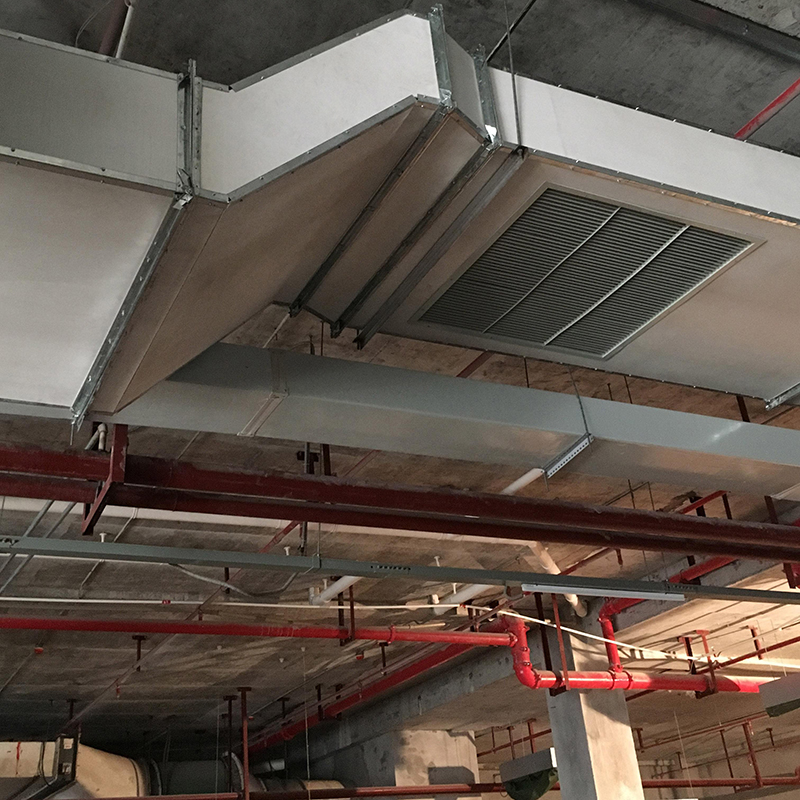



 Current
location:Home >news
>Industry news
>Ductwork Support, Hangers, And Flange Systems: Engineering And Selection
Current
location:Home >news
>Industry news
>Ductwork Support, Hangers, And Flange Systems: Engineering And Selection