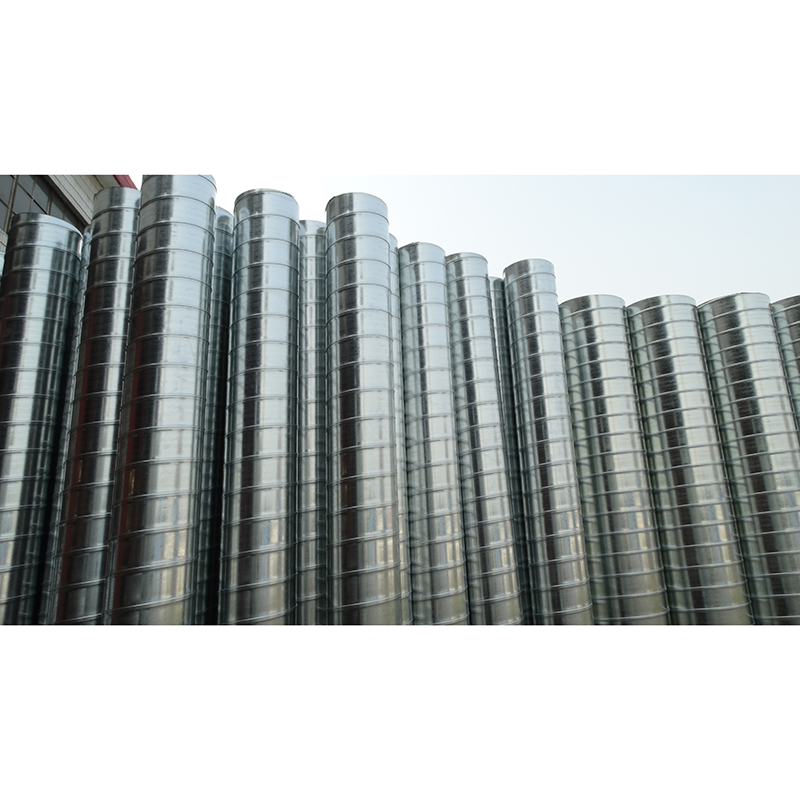
TDC (Together Die Cut) flange ducts, also known as coplanar flange ducts or flange-less ducts, are a specialized type of rectangular ventilation ductwork widely adopted in medium and low-pressure HVAC systems. Characterized by the integral formation of flanges and duct panels, TDC flange ducts eliminate the need for additional angle steel flanges, offering significant advantages in material saving, construction efficiency, and cost control. As a core component in commercial, residential, and light industrial ventilation systems, TDC flange ducts’ structural design, fabrication precision, and installation quality directly determine the operational efficiency, airtightness, and service life of HVAC systems. This article systematically elaborates on the definition, structural characteristics, design principles, fabrication standards, installation specifications, maintenance strategies, and typical applications of TDC flange ducts, providing a comprehensive professional reference for HVAC engineers, fabrication technicians, construction contractors, and facility managers.
1. Definition and Core Structural Characteristics of TDC Flange Ducts
TDC flange ducts are rectangular ventilation ducts where the flanges are integrally formed with the duct wall through specialized die-cutting and pressing processes, without the need for separate angle steel welding or riveting. Unlike traditional angle steel flange ducts, the flange of TDC ducts is a raised edge processed directly on the duct panel, typically with a height of 20-40mm, forming a seamless connection with the duct body. This integral structure not only simplifies the fabrication process but also optimizes the overall rigidity and airtightness of the ductwork.
The core structural components of TDC flange ducts include three parts: the duct panel, integral flanges, and connecting accessories. The duct panel serves as the main body, bearing the air pressure and ensuring air transportation; the integral flanges, distributed on the four edges of the duct cross-section, are the key to connecting adjacent duct sections; the connecting accessories include angle codes, flange clips, bolts, and gaskets, which are used to fix and seal the joint between two duct flanges, ensuring connection reliability and airtightness. Notably, TDC flange ducts are mainly designed for rectangular cross-sections, which makes them more adaptable to limited installation spaces such as ceiling cavities compared to circular ducts.
A distinct structural advantage of TDC flange ducts is their lightweight and compact design. By integrating flanges with the duct panel, they reduce the use of additional materials (such as angle steel and rivets), reducing the overall weight by 20%-30% compared to traditional angle steel flange ducts. This not only lowers material costs but also reduces the load on hanging brackets and the building structure, facilitating on-site transportation and installation.
2. Design Principles and Key Technical Parameters
The design of TDC flange ducts must comply with relevant industry standards, including GB 50243-2016 (Code of Acceptance for Construction Quality of Ventilation and Air Conditioning Works), SMACNA (Sheet Metal and Air Conditioning Contractors’ National Association) standards, and local HVAC design specifications. The core design principles are efficiency, economy, safety, and compatibility, ensuring that the ductwork meets the requirements of airflow transportation, pressure bearing, and airtightness while optimizing cost and construction efficiency.
2.1 Pressure Bearing Capacity: TDC flange ducts are mainly applicable to medium and low-pressure ventilation systems, with a maximum allowable static pressure of ≤1500 Pa. For systems with static pressure exceeding 1500 Pa, additional reinforcement measures (such as reinforcing ribs or angle steel reinforcement) are required to prevent duct deformation or flange damage. They are not suitable for high-pressure systems or occasions requiring frequent disassembly, and are strictly prohibited in civil air defense projects due to safety requirements.
2.2 Duct Size and Aspect Ratio: The standard cross-sectional size of TDC flange ducts ranges from 320mm×200mm to 2000mm×1250mm, with custom sizes available for special projects. The aspect ratio (width/height) should be controlled between 1:1 and 1:4 to avoid excessive pressure loss and ensure structural stability. When the duct side length exceeds 2000mm, additional reinforcement measures must be adopted in accordance with design requirements.
2.3 Airflow and Velocity Control: The airflow rate of TDC flange ducts is determined based on the air change rate, cooling/heating load, and indoor air quality (IAQ) requirements of the target space. For commercial and residential buildings, the recommended airflow velocity in the duct is 3-8 m/s; for light industrial workshops, it can be increased to 8-12 m/s. Excessively high velocity will increase pressure loss and noise, while excessively low velocity will lead to dust accumulation inside the duct.
2.4 Airtightness Requirements: The airtightness of TDC flange ducts is a key design indicator. According to industry standards, the air leakage rate of low-pressure TDC ducts (static pressure ≤500 Pa) should not exceed 10 m³/(h·m²) at 500 Pa; for medium-pressure ducts (500 Pa < static pressure ≤1500 Pa), it should not exceed 6 m³/(h·m²). Proper sealing design (such as using high-quality gaskets and sealants) is required to meet these requirements.
3. Fabrication Process and Material Selection
The fabrication of TDC flange ducts relies on specialized equipment and strict process control to ensure the precision and consistency of the integral flanges and duct panels. The entire fabrication process is highly automated, which significantly improves production efficiency and reduces manual errors compared to traditional angle steel flange ducts.
3.1 Fabrication Process: The standard fabrication workflow includes four key steps: first, material cutting, where flat metal coils are uncoiled and cut into panels of specified size according to the duct cross-section and wall thickness; second, flange forming, where specialized die-cutting and pressing equipment is used to process the edges of the panels into integral flanges, ensuring the flange height, flatness, and angle meet design requirements; third, duct forming, where the cut and flange-formed panels are bent into rectangular ducts and the longitudinal seams are locked or welded; fourth, finishing, where the duct is cut into pre-determined lengths, and connecting accessories (such as angle codes) are installed, followed by surface treatment (such as galvanizing or painting) to enhance corrosion resistance. It should be noted that TDC flange ducts cannot be fabricated manually and must rely on specialized machinery.
3.2 Material Selection: The selection of materials for TDC flange ducts is mainly based on the application environment, operating pressure, and corrosion resistance requirements. The most commonly used materials are: galvanized steel (G235/G350), which is cost-effective, has good corrosion resistance and structural strength, and is suitable for general medium and low-pressure HVAC systems; stainless steel (304/316), which has excellent corrosion resistance and hygiene performance, suitable for corrosive environments (such as food processing facilities and coastal areas) and high-hygiene scenarios (such as hospitals); aluminum, which is lightweight and has good thermal conductivity, suitable for low-temperature ventilation systems and lightweight installation requirements. The wall thickness of the duct panel is typically 0.6-1.2mm, determined by the duct size and operating pressure.
3.3 Fabrication Standards: Strict precision requirements must be followed during fabrication. The allowable deviation of the duct cross-sectional size should not exceed ±5mm; the flatness of the flange surface should not exceed 2mm per meter to ensure tight connection between duct sections. The longitudinal seam gap of the duct should be less than 1mm, and the flange connection holes should be accurately positioned with a spacing of 150-200mm to ensure the compatibility of connecting accessories. For净化 air conditioning systems, the spacing of connection holes should not exceed 100mm.
4. Installation Specifications and Quality Control
Proper installation is crucial to ensure the performance of TDC flange ducts. The installation process must comply with industry standards and design requirements, with strict quality control at each link to avoid problems such as air leakage, vibration, and structural deformation.
4.1 Installation Preparation: Before installation, check the duct’s appearance (no deformation, damage, or rust), size accuracy, and material compliance. Clean the inner surface of the duct to remove dust, debris, and oil stains to avoid affecting indoor air quality. Determine the installation position and hanging bracket layout according to the design drawings, ensuring that the duct is level and vertical. For ducts passing through fireproof or explosion-proof walls/floors, a steel protective sleeve with a thickness of not less than 1.6mm must be installed, and the gap between the duct and the sleeve should be tightly sealed with non-combustible flexible materials.
4.2 Hanging and Fixing: Hanging brackets for TDC flange ducts should be installed at intervals of no more than 3m to prevent duct sagging. The hanging brackets should be made of corrosion-resistant materials (such as galvanized steel) and fixed firmly to the building structure to avoid vibration during operation. For large-size ducts (side length ≥1500mm), additional reinforcement brackets should be installed at the flange joints to enhance structural stability. The hanging brackets should not be directly fixed on the flange to avoid damaging the integral structure of the flange.
4.3 Connection and Sealing: The connection between TDC duct sections adopts flange connection, using angle codes, flange clips, or U-shaped fastening bolts for fixation. The connection spacing should not exceed 150mm, and the bolts should be tightened evenly to ensure the flange surfaces are closely fitted. A gasket (such as rubber gasket or asbestos-free gasket) with a thickness of not less than 3mm should be installed between the flanges to enhance airtightness. After connection, sealant should be applied to the flange joints to fill gaps and prevent air leakage. For non-metal TDC ducts, special connectors and sealants should be used to avoid air leakage and water seepage.
4.4 Quality Inspection: After installation, conduct airtightness testing (such as pressure test and smoke test) to check for air leakage. The air leakage rate must meet the standard requirements for medium and low-pressure ducts. Additionally, check the airflow distribution, vibration, and noise of the duct system to ensure it meets design requirements. For净化 air conditioning systems, additional cleanliness testing of the duct inner surface is required.
5. Maintenance and Troubleshooting
Regular maintenance of TDC flange ducts is essential to extend their service life, ensure system efficiency, and maintain indoor air quality. The maintenance work mainly includes regular inspection, cleaning, and troubleshooting of common problems, focusing on the integrity of the integral flanges and the tightness of connections.
5.1 Regular Inspection: Conduct quarterly inspections of the duct’s appearance, flange connections, and hanging brackets to check for deformation, rust, loose connections, or sealant aging. For ducts in industrial environments or areas with high humidity, the inspection frequency should be increased to monthly. Focus on checking the integrity of the integral flanges, as any damage or deformation may lead to air leakage and structural instability. For ducts in corrosive environments, regularly check for surface corrosion and conduct anti-corrosion treatment in a timely manner.
5.2 Duct Cleaning: The inner surface of the duct should be cleaned regularly to remove dust, bacteria, and other pollutants. For commercial and residential buildings, duct cleaning should be conducted at least once a year; for light industrial workshops with high dust levels, cleaning frequency should be increased to once every 3-6 months. Professional cleaning equipment (such as high-pressure air cleaners and brush cleaners) should be used to ensure cleaning effect, and the cleaned dust should be collected and disposed of properly to avoid secondary pollution. The smooth inner surface of TDC ducts facilitates cleaning compared to traditional angle steel flange ducts with more joints.
5.3 Troubleshooting: Common problems of TDC flange ducts include air leakage, flange deformation, uneven airflow, and excessive noise. For air leakage, check the flange joints and sealant, reapply sealant or replace gaskets, and ensure the bolts are tightened evenly. For flange deformation, use specialized tools to correct the flange or replace the damaged duct section. For uneven airflow, adjust the dampers in the duct or optimize the duct layout to balance airflow distribution. For excessive noise, check for loose hanging brackets, excessive air velocity, or fan vibration, and take measures such as reinforcing brackets, reducing air velocity, or installing silencers. It should be noted that flange deformation is a common problem of TDC ducts, which is mainly caused by improper installation or excessive pressure, and timely treatment is required to avoid further damage.
6. Typical Applications and Comparative Advantages
Due to their advantages of material saving, high construction efficiency, lightweight, and cost-effectiveness, TDC flange ducts are widely used in medium and low-pressure ventilation systems in various fields, with clear application boundaries and comparative advantages compared to traditional angle steel flange ducts.
6.1 Typical Applications: TDC flange ducts are mainly applicable to commercial buildings (such as office buildings, shopping malls, and hotels), residential buildings (such as high-end villas and apartment complexes), and light industrial workshops (such as electronic factories and packaging factories). They are particularly suitable for projects sensitive to construction period and cost, as their fast fabrication and installation speed can significantly shorten the construction cycle. They are commonly used in air conditioning supply and return air systems, fresh air systems, and general exhaust systems, but are not suitable for high-pressure systems, frequent disassembly occasions, and civil air defense projects.
6.2 Comparative Advantages vs. Angle Steel Flange Ducts: Compared to traditional angle steel flange ducts, TDC flange ducts have obvious advantages: first, material saving, reducing 30%-50% of material costs by eliminating the need for angle steel and rivets; second, high construction efficiency, shortening the fabrication and installation cycle by 30% due to automated fabrication and simple connection; third, lightweight, reducing the load on the building structure and facilitating transportation and installation; fourth, better aesthetics, with the integral flange design making the duct surface flat and tidy, suitable for exposed ductwork in open-ceiling spaces. However, TDC flange ducts also have limitations: their pressure-bearing capacity is lower than that of angle steel flange ducts, and their airtightness is slightly poor if the sealing is not in place, and they require specialized fabrication equipment.
7. Industry Development Trends
With the continuous development of the HVAC industry and the increasing emphasis on energy conservation, environmental protection, and construction efficiency, TDC flange ducts are developing towards precision, greenization, and intelligence, gradually expanding their application scope while optimizing their performance.
7.1 Precision Fabrication: The adoption of advanced CNC die-cutting and pressing equipment improves the precision of integral flanges, reducing the deviation of flange flatness and hole position, and enhancing the connection tightness and structural stability of duct sections. The application of automated production lines further improves fabrication efficiency and product consistency, reducing manual errors.
7.2 Green and Energy-Saving Optimization: The use of environmentally friendly, recyclable materials (such as recycled galvanized steel and low-VOC surface coatings) reduces environmental pollution. The optimization of flange design and sealing technology reduces air leakage, improving the energy efficiency of the HVAC system. Additionally, the lightweight design of TDC ducts reduces the energy consumption of transportation and installation, complying with the requirements of green building standards.
7.3 Intelligent Integration: The integration of smart sensors (such as airflow sensors and pressure sensors) into TDC flange ducts allows real-time monitoring of duct operation parameters (such as airflow rate, pressure, and air leakage). Through the connection with the building management system (BMS), the duct system can be automatically adjusted to optimize airflow distribution and reduce energy consumption. The application of digital design and BIM technology also facilitates the accurate design and installation of TDC flange ducts, reducing construction errors.
8. Conclusion
TDC flange ducts, as a high-efficiency, cost-effective rectangular ventilation duct solution, have become an important choice for medium and low-pressure HVAC systems due to their integral flange design, material-saving advantage, and high construction efficiency. Their structural characteristics, design principles, fabrication standards, and installation requirements are closely related to the operational efficiency, airtightness, and service life of HVAC systems. By following scientific design principles, selecting appropriate materials, complying with fabrication and installation specifications, and conducting regular maintenance, TDC flange ducts can fully exert their advantages, providing a safe, comfortable, and energy-efficient indoor environment for commercial, residential, and light industrial buildings. With the development of precision fabrication, green energy conservation, and intelligent integration, TDC flange ducts will continue to innovate and improve, adapting to the changing needs of the HVAC industry and sustainable building development, and further expanding their application scope in medium and low-pressure ventilation fields.
 +85247166614



 Current
location:Home >news
>Industry news
>TDC Flange Ducts: Design, Fabrication, Installation And Application In Modern HVAC Systems
Current
location:Home >news
>Industry news
>TDC Flange Ducts: Design, Fabrication, Installation And Application In Modern HVAC Systems