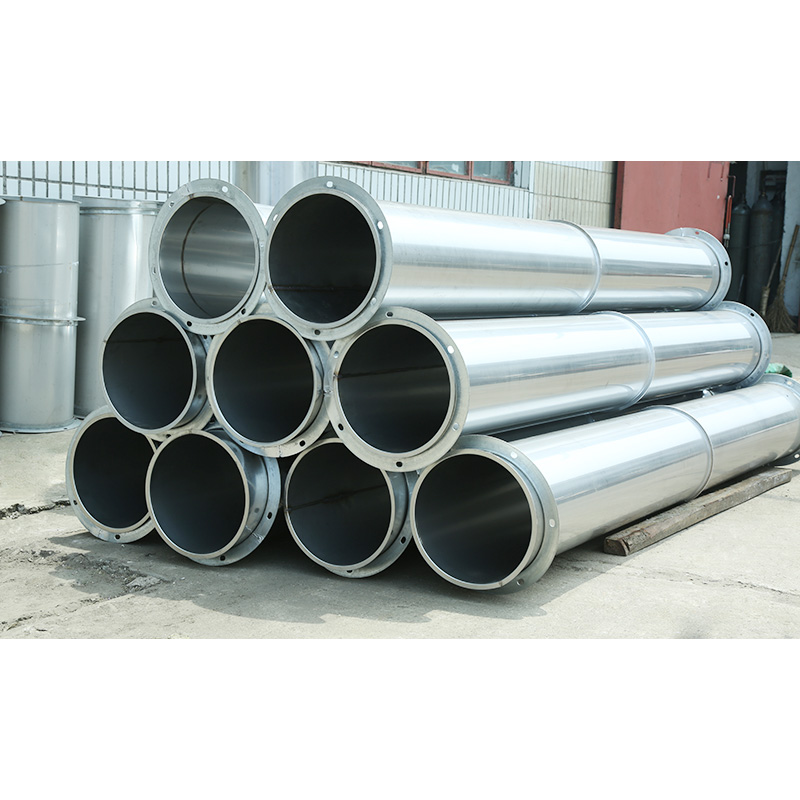
What Is an HVAC Air Valve?
An HVAC air valve is a device installed in a duct system to control airflow by obstructing the cross-section. Air valves are similar to dampers but are typically used in round ductwork where the geometry requires a different construction or where the function is different from a damper.
Common functions of air valves:
Isolation: gate valve for on/off service.
Backflow prevention: check valve to prevent reverse flow.
Balancing: balancing valve with flow measurement.
The Wuxi Weishan gate valve, check valve, manual air valve, electric air valve, and pneumatic air valve product lines cover all common air valve types.
What Is a Gate Valve?
A gate valve is an on/off isolation valve with a sliding gate that moves perpendicular to the flow. When open, the gate is fully retracted from the flow path, providing minimal pressure drop. When closed, the gate fully blocks the flow.
Gate valves are used for:
Equipment isolation: shut off airflow to equipment for maintenance.
Branch isolation: shut off airflow to a branch for service or modification.
System isolation: shut off airflow to a section of duct for inspection or repair.
Gate valves are not intended for modulation (throttling); the gate is either fully open or fully closed. Throttling causes vibration and wear on the gate.
What Is a Check Valve?
A check valve is a backflow prevention valve that allows flow in one direction only. The valve opens when the differential pressure is in the forward direction and closes automatically when the differential pressure reverses.
Check valves are used for:
Backdraft prevention: prevent reverse flow when the fan stops.
Parallel fan operation: prevent backflow through a stopped fan when multiple fans share a manifold.
Exhaust system protection: prevent outdoor air from entering the building when the exhaust fan is off.
Common check valve types:
|
Type |
Mechanism |
Best For |
|
Swing check |
Hinged disc that swings open |
Low velocity, large ducts |
|
Lift check |
Disc that lifts off seat |
Medium velocity, clean air |
|
Butterfly check |
Disc on shaft that rotates |
Medium velocity, low pressure drop |
|
Diaphragm check |
Flexible diaphragm |
Low pressure, no noise |
The Wuxi Weishan check valve product line includes swing, lift, and butterfly check valves.
What Is a Balancing Valve?
A balancing valve is a flow control valve with a built-in flow measurement device (orifice, venturi, or pitot tube). The valve is set to the design flow rate based on the measured pressure drop across the valve, and locked in position.
Balancing valves are used for:
System balancing: trim airflow at each branch to achieve design distribution.
Flow measurement: verify the airflow at each branch.
Proportional balancing: balance multiple branches in proportion to their design flow.
Balancing valves are typically used in conjunction with manual balancing dampers or as a replacement for dampers.
What Is the Difference Between a Valve and a Damper?
The terms "valve" and "damper" are sometimes used interchangeably, but there are distinctions:
|
Aspect |
Damper |
Valve |
|
Geometry |
Typically rectangular |
Typically round |
|
Construction |
Blade(s) inside a frame |
Disc, gate, or ball |
|
Function |
Modulation, isolation, fire safety |
Isolation, backflow, balancing |
|
Standards |
SMACNA, AMCA |
EN 12237, manufacturer |
|
Actuation |
Manual, electric, pneumatic |
Manual, electric, pneumatic |
In practice, both terms describe devices that control airflow in ducts. The selection depends on the duct geometry, the function, and the local convention.
When Is a Manual Air Valve the Right Choice?
Manual air valves are the right choice when:
The valve is operated infrequently: balancing, isolation for maintenance.
No remote control is needed: the operator can access the valve directly.
Cost is a constraint: manual valves are less expensive.
Common applications:
Branch balancing valves.
Equipment isolation valves.
Manual flow control.
The Wuxi Weishan manual air valve product line covers gate, globe, and butterfly configurations.
When Is an Electric Air Valve the Right Choice?
Electric air valves are the right choice when:
Remote control is required: BMS integration.
Modulation is needed: VAV control.
Fast response is needed: < 30 seconds open/close.
Compressed air is not available: standard electric infrastructure.
Common applications:
VAV terminal units.
Zone control valves.
Automated isolation valves.
The Wuxi Weishan electric air valve product line covers motorized ball, butterfly, and globe valves with 24V and 230V actuators.
When Is a Pneumatic Air Valve the Right Choice?
Pneumatic air valves are the right choice when:
Fast response is critical: < 5 seconds full stroke.
Hazardous area: no electric spark risk.
Compressed air is readily available: industrial plant with pneumatic infrastructure.
Modulation is needed: continuous control.
Common applications:
Process control valves (refineries, chemical plants).
High-cycle valves (> 100 cycles per day).
Hazardous area valves.
The Wuxi Weishan pneumatic air valve product line includes pneumatic actuators for industrial applications.
How Are Air Valves Sized?
Air valve sizing is based on the duct size and the airflow:
Determine the duct size: diameter (round) or equivalent diameter (rectangular).
Determine the airflow: CFM or m³/h through the valve.
Calculate the face velocity: CFM / valve area (fpm).
Check the pressure drop: per the manufacturer's data at the design airflow.
Verify the leakage class: per the manufacturer's data at the design pressure.
For balancing valves, the design pressure drop across the valve is typically 0.05–0.20 in. w.c. to provide adequate flow measurement accuracy.
What Are the Leakage Classes?
Air valve leakage is classified per AMCA 500-D and similar standards:
|
Class |
Leakage Rate (cfm/ft² @ 1 in. w.c.) |
Best For |
|
Class I |
< 4 |
Low-pressure commercial |
|
Class II |
< 8 |
Low-pressure commercial |
|
Class III |
< 16 |
Medium-pressure commercial |
|
Class IV |
< 40 |
High-pressure industrial |
For low-leakage applications (isolation, VAV terminals), Class I or II is required. For high-pressure industrial service, Class III or IV is required.
What Are the Common Materials of Construction?
Common air valve materials:
|
Component |
Material |
Notes |
|
Body |
Cast iron, cast steel, stainless steel |
Standard is cast iron |
|
Disc/gate |
Cast iron, stainless steel, bronze |
Standard is cast iron |
|
Seat |
Bronze, stainless steel, EPDM |
Bronze for general purpose |
|
Stem |
Stainless steel, brass |
Standard is stainless |
|
Packing |
PTFE, graphite, asbestos-free |
PTFE most common |
|
Actuator |
Manual, electric, pneumatic |
Per specification |
For corrosive environments (coastal, chemical), stainless steel body and trim are recommended.
What Are the Common Operating Issues?
Common operating issues in air valves:
|
Issue |
Cause |
Prevention |
|
High leakage |
Worn seat, debris in seat |
Clean seat, replace valve |
|
Stuck valve |
Corrosion, debris, packing failure |
Inspect and lubricate |
|
Actuator failure |
Electrical fault, mechanical wear |
Inspect and test actuator |
|
Noise |
High velocity, vibration |
Limit velocity, add silencer |
|
Vibration |
Loose mounting, worn bearings |
Tighten mounting, replace bearings |
|
Failure to close |
Debris in seat, packing too tight |
Clean seat, adjust packing |
|
Leakage through stem |
Worn packing |
Replace packing |
Each issue is preventable with discipline. Periodic inspection is recommended for critical valves.
What Are the Code and Standard Requirements?
Major code requirements for air valves:
SMACNA: damper and valve standards.
AMCA 500-D: leakage testing for dampers and valves.
EN 12237: European ductwork airtightness.
UL 555: fire damper standard (where applicable).
CE marking: required for European projects.
For each project, the local code must be consulted for specific valve requirements.
What Is the Future of Air Valve Technology?
Trends in air valve technology:
Smart actuators: actuators with built-in position feedback and diagnostics.
IoT integration: valves connected to BMS with real-time monitoring.
Self-testing: valves that automatically cycle and report status.
Improved seals: lower-leakage seals for energy-efficient buildings.
Composite materials: lighter, corrosion-resistant materials.
For a valve manufacturer, the trend toward smart actuators and IoT integration is creating new opportunities for value-added products.
Conclusion
HVAC air valves control airflow where dampers are not suitable. The principal types — gate, check, balancing — each have specific functions. Wuxi Weishan produces the full range: gate valve, check valve, manual air valve, electric air valve, and pneumatic air valve. The selection depends on the control function, the actuation, the leakage class, and the system requirements.
Frequently Asked Questions
What is the difference between an air valve and an air damper?
The terms are sometimes used interchangeably. In practice, "valve" often refers to round duct devices (gate, check, butterfly); "damper" often refers to rectangular duct devices (single blade, multi-blade).
What is a gate valve?
A gate valve is an on/off isolation valve with a sliding gate. When open, the gate is fully retracted from the flow path. When closed, the gate fully blocks the flow.
What is a check valve?
A check valve is a backflow prevention valve that allows flow in one direction only. The valve opens when the differential pressure is in the forward direction and closes automatically when the differential pressure reverses.
What is a balancing valve?
A balancing valve is a flow control valve with a built-in flow measurement device. The valve is set to the design flow rate based on the measured pressure drop.
Can a gate valve be used for modulation?
No. Gate valves are not intended for modulation (throttling). Throttling causes vibration and wear on the gate.
Can a check valve be used for isolation?
No. Check valves are not positive shutoff devices. For isolation, a gate valve or ball valve is required.
What is the leakage class for air valves?
Air valves are typically Class I, II, or III per AMCA 500-D. Class I is the lowest leakage; Class III is higher.
How are air valves actuated?
Air valves can be manual (hand-operated), electric (motorized), or pneumatic (compressed air). The selection depends on the control function and the available infrastructure.
What is the typical pressure drop for an open air valve?
Typical pressure drop is 0.05–0.15 in. w.c. for an open valve at the design airflow. For balancing valves, the design pressure drop is typically 0.05–0.20 in. w.c. for flow measurement accuracy.
What materials are used for air valves?
Standard materials are cast iron body and disc with bronze seat and stainless stem. For corrosive environments, stainless steel body and trim are recommended.
What is the future of air valve technology?
The future is toward smart actuators, IoT integration, self-testing, improved seals, and composite materials.
What is the difference between a butterfly valve and a gate valve?
A butterfly valve has a disc that rotates 90° in the flow path. A gate valve has a gate that slides perpendicular to the flow. Butterfly valves are smaller and lighter; gate valves provide tighter shutoff.
 +85247166614



 Current
location:Home >news
>Industry news
>HVAC Air Valves: Gate, Check, And Balancing Valve Selection
Current
location:Home >news
>Industry news
>HVAC Air Valves: Gate, Check, And Balancing Valve Selection