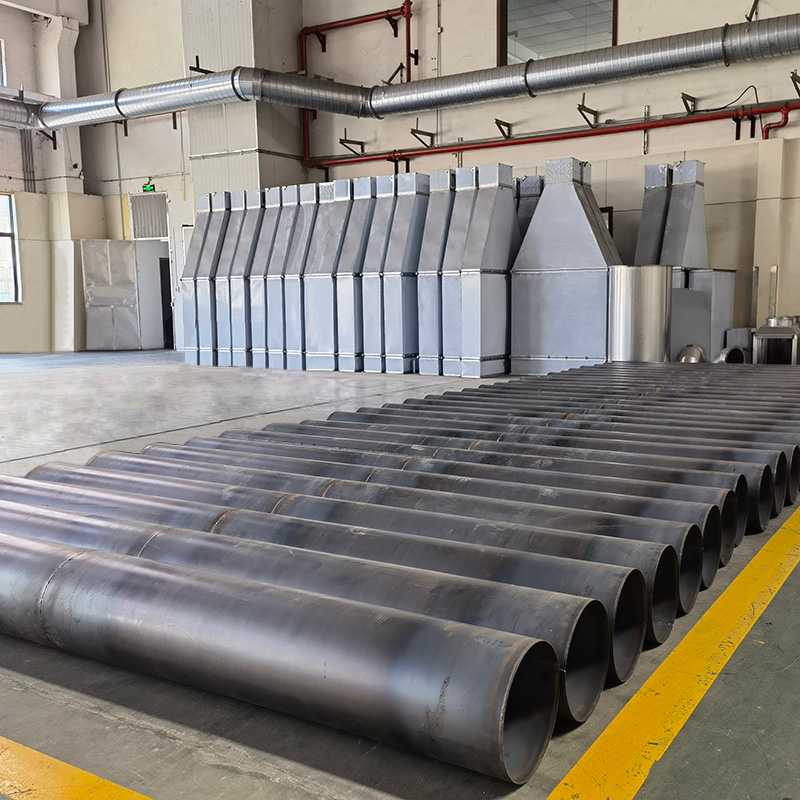
What Are the Three Main Duct Materials?
Welded industrial air ducts are made from three main families of carbon and alloy steel sheet and plate:
|
Material |
Common Grade |
Typical Thickness |
Best For |
|
Galvanized steel |
G60 / G90 (ASTM A653) |
0.5–1.5 mm |
Commercial HVAC, standard industrial ventilation |
|
Carbon steel (black steel) |
ASTM A36 / A1011 / A1008 |
0.6–3.0 mm |
Heavy-duty industrial ducts, high-pressure systems |
|
Stainless steel |
304 / 316 / 316L (ASTM A240) |
0.5–2.0 mm |
Hygienic, corrosive, high-temperature, food/pharma |
Wuxi Weishan produces all three families: galvanized welded air duct, carbon steel welded air duct, stainless steel welded duct, and stainless steel spiral air duct for clean, hygienic, and high-temperature applications.
What Is Galvanized Steel Duct?
Galvanized steel duct is carbon steel sheet coated with a layer of zinc for corrosion resistance. The zinc coating is applied by hot-dip galvanizing (most common) or electro-galvanizing. The coating thickness is classified by the zinc mass per unit area (e.g., G60 = 60 g/m² per side, G90 = 90 g/m² per side).
Properties of galvanized steel duct:
Corrosion resistance: good for indoor and mildly humid environments; poor for marine, chemical, or highly humid environments.
Strength: similar to the underlying carbon steel; adequate for most HVAC and industrial ventilation.
Weldability: good, but welding burns off the zinc coating near the weld, exposing bare steel. The bare steel must be protected with cold galvanizing paint or epoxy.
Temperature limit: typically 200–230°C (zinc melts at 420°C and vaporizes at 905°C; zinc fumes are hazardous above 200°C).
Cost: lowest of the three materials.
Galvanized steel is the default material for commercial HVAC ductwork and most industrial ventilation. It is widely available, easy to fabricate, and economical.
What Is Carbon Steel (Black Steel) Duct?
Carbon steel duct is plain carbon steel sheet (often called "black steel" because of the dark mill scale on the surface) without any metallic coating. It is used where:
Higher strength or thicker gauges are required.
The duct will be painted, coated, or lined for corrosion protection.
Higher temperatures exceed the limit of galvanized steel.
The duct is used for non-corrosive exhaust (e.g., dust collection, sawdust, welding fumes).
Properties of carbon steel duct:
Corrosion resistance: poor without protective coating. Must be painted or coated for humid or outdoor service.
Strength: highest of the three materials; available in thicker gauges.
Weldability: excellent; carbon steel is the easiest to weld.
Temperature limit: typically 400–540°C depending on grade; higher than galvanized.
Cost: moderate; higher than galvanized, lower than stainless.
Carbon steel duct is common in heavy industry: power plants, cement, steel mills, foundries, and large-scale dust collection.
What Is Stainless Steel Duct?
Stainless steel duct is austenitic stainless steel (typically 304 or 316) sheet with high chromium and nickel content for corrosion resistance. The most common grades are:
304 (1.4301): general purpose; good corrosion resistance in most indoor and outdoor environments.
316 (1.4401): better corrosion resistance, especially in chloride-rich environments (marine, coastal, de-icing salt exposure).
316L (1.4404): low-carbon variant of 316; preferred for welded fabrications to avoid intergranular corrosion.
Properties of stainless steel duct:
Corrosion resistance: excellent, especially 316 and 316L in chloride-rich or chemical environments.
Strength: comparable to carbon steel at room temperature; lower at elevated temperature.
Weldability: good; austenitic stainless is easy to weld but requires proper technique to avoid sensitization and corrosion at welds.
Temperature limit: 800–900°C for intermittent service; 600–700°C for continuous.
Hygiene: excellent; smooth surface, no coating, easy to clean.
Cost: highest of the three materials; 3–8× the cost of galvanized.
Stainless steel duct is required for hygienic applications (food, pharma, semiconductor, biotechnology), corrosive exhaust (chemical fumes, marine air), and high-temperature exhaust (engine exhaust, boiler flue, kitchen exhaust).
How Do the Three Materials Compare?
|
Property |
Galvanized |
Carbon Steel |
Stainless (304/316) |
|
Corrosion resistance |
Good (indoor) |
Poor (needs coating) |
Excellent |
|
Strength |
Adequate |
High |
High |
|
Weldability |
Good (zinc burn-off) |
Excellent |
Good (proper technique) |
|
Max temperature (continuous) |
200°C |
400–500°C |
600–700°C |
|
Surface finish |
Spangled / smooth |
Mill scale |
Smooth, hygienic |
|
Hygiene |
Adequate |
Needs coating |
Excellent |
|
Cost (relative) |
1× |
1.2–1.5× |
3–8× |
|
Typical thickness |
0.5–1.5 mm |
0.6–3.0 mm |
0.5–2.0 mm |
|
Painting requirement |
Touch-up at welds |
Full coating often required |
Not required |
The selection is driven primarily by the operating environment and the regulatory requirements.
When Is Galvanized Steel the Right Choice?
Galvanized steel is the right choice when:
The environment is non-corrosive: typical commercial HVAC, office buildings, hospitals, schools.
The temperature is below 200°C: standard HVAC air, dust collection, paint spray exhaust.
Cost is a constraint: galvanized is the most economical material.
The duct is for general ventilation: supply, return, exhaust, mixed-air plenums.
For most projects, galvanized steel is the default starting point. If the project has special requirements, the material is upgraded to carbon steel or stainless.
When Is Carbon Steel the Right Choice?
Carbon steel is the right choice when:
Higher temperature: exhaust above the galvanized limit (200°C).
Higher pressure or vacuum: thicker gauges for structural integrity.
Abrasive media: dust, grit, shot, sand (with appropriate lining).
Welding is extensive: carbon steel is easier to weld than galvanized.
Custom protective coating: the duct will be painted, epoxy-coated, rubber-lined, or ceramic-lined.
Common applications: foundries, steel mills, cement plants, power plants, mining, large dust collectors, abrasive media transport.
When Is Stainless Steel the Right Choice?
Stainless steel is the right choice when:
Hygiene is critical: food processing, dairy, beverage, pharmaceutical, biotech, semiconductor, hospital operating rooms, cleanrooms.
Corrosive media: chemical fumes, marine air, coastal environments, swimming pool halls, wastewater treatment.
High temperature: continuous service above 400°C; engine exhaust, boiler flue, kitchen exhaust, oven exhaust.
Aesthetic requirement: visible ductwork in commercial spaces (restaurants, hotels, retail).
Long service life with minimal maintenance: stainless has the lowest lifecycle cost in harsh environments.
Stainless steel duct is more expensive upfront but is often the most economical choice over the lifecycle due to its corrosion resistance and durability.
How Does Welding Affect Material Selection?
Welding affects material selection in several ways:
Galvanized steel: welding burns off the zinc near the weld, exposing bare steel. The bare steel must be protected with cold galvanizing paint (zinc-rich paint) or epoxy to restore corrosion resistance. Without protection, the welds will rust first.
Carbon steel: welding is straightforward. The welded duct may need to be painted or coated for corrosion protection.
Stainless steel: welding requires proper technique (TIG or MIG with proper shielding gas, interpass temperature control, post-weld cleaning) to avoid sensitization, oxidation, and contamination. Pickling and passivation may be required after welding to restore corrosion resistance.
The Wuxi Weishan stainless steel welded duct line uses proper welding technique and post-weld passivation for corrosion resistance.
How Are Seams and Joints Made?
Welded ducts use several seam and joint types:
Pittsburgh lock: folded seam for rectangular duct, lock-formed and snapped together; can be sealed with sealant and/or welded for higher-pressure service.
Drive cleat: folded seam secured with a cleat; used for low-pressure rectangular duct.
Grooved seam: for spiral duct, formed by a four-roll machine that locks the edges together.
Welded seam: full-penetration welds for high-pressure, high-temperature, or hygienic service.
Flanged joint: angle steel or flat steel flanges bolted together; standard for rectangular duct connections.
For high-pressure or hygienic applications, welded seams are preferred because they are leak-free and easy to clean.
What Are the Cost Trade-Offs?
Cost trade-offs:
|
Material |
Material Cost |
Fabrication Cost |
Lifecycle Cost (mild environment) |
Lifecycle Cost (corrosive environment) |
|
Galvanized |
1× |
1× |
1× |
3–5× (premature failure) |
|
Carbon steel |
1.2–1.5× |
1× |
1.2–1.5× |
4–8× (premature failure) |
|
Stainless (304) |
3–5× |
1.3× |
0.8–1.2× (long life) |
1–1.5× (long life) |
|
Stainless (316) |
4–8× |
1.5× |
1× |
1–1.5× (long life) |
In mild environments, galvanized is most economical. In corrosive or high-temperature environments, stainless has the lowest lifecycle cost despite the higher upfront cost.
What Are the Common Defects?
Common defects in welded ducts:
|
Defect |
Cause |
Prevention |
|
Weld porosity |
Contamination, wrong shielding gas |
Clean joint, use proper gas |
|
Weld burn-through |
Excessive heat input on thin material |
Use pulsed welding, reduce current |
|
Zinc burn-off (galvanized) |
Welding heat |
Use cold galvanizing paint after welding |
|
Stress corrosion cracking (stainless) |
Chloride exposure, residual stress |
Use 316L, avoid chloride exposure |
|
Galvanic corrosion |
Dissimilar metals in contact |
Use dielectric isolators or compatible metals |
|
Poor fit-up |
Incorrect dimensions, tolerance stack-up |
Verify dimensions before welding |
|
Inadequate bracing |
Under-sized reinforcement |
Reinforce per SMACNA or DW144 |
Each defect is preventable with discipline. Wuxi Weishan's workshop and equipment pages document the production capability.
What Standards Govern Duct Materials?
Major standards for duct materials and fabrication:
SMACNA HVAC Duct Construction Standards (North America): metal and flexible duct construction standards.
DW143 / DW144 (UK): ductwork construction and installation standards.
EN 12237 / EN 1507 (Europe): ductwork cleanliness and strength standards.
ASHRAE Handbook—HVAC Applications: duct design, leakage, and insulation.
ASTM A653, A36, A240, A1011: material specifications for galvanized, carbon, and stainless steel sheet.
AWS D9.1: sheet metal welding code.
NFPA 90A / 90B: installation of air conditioning and ventilating systems (fire safety).
For European projects, DW143 / DW144 and EN 12237 are typical. For North American projects, SMACNA and ASHRAE are typical. Wuxi Weishan fabricates per both standards.
What Is the Future of Duct Materials?
Trends in duct materials:
Higher-grade stainless: increased use of 316L for chloride resistance.
Duplex stainless: for highly corrosive environments (chemical, marine).
Aluminum ducts: for lightweight applications and corrosive environments (less common in industrial).
Composite ducts: pre-insulated composite panels (e.g., PIR, phenolic) for cleanrooms and hygienic applications.
Recycled content: increased recycled content in galvanized and stainless steel.
For a duct manufacturer, the trend toward higher-grade stainless and composite ducts reflects the demand for longer service life and lower lifecycle cost.
Conclusion
Galvanized,
carbon steel, and stainless steel are the three dominant materials for welded industrial air ducts. Galvanized is the default for most HVAC and standard industrial ventilation; carbon steel for high-temperature, high-pressure, and abrasive service; stainless for hygienic, corrosive, and high-temperature service. Wuxi Weishan produces all three families: galvanized welded air duct, carbon steel welded air duct, stainless steel welded duct, and stainless steel spiral air duct — plus rectangular welded duct and composite air duct variants. The selection depends on the operating environment, the regulatory environment, and the lifecycle cost.
Frequently Asked Questions
What is the most common duct material?
Galvanized steel is the most common duct material for commercial HVAC and most industrial ventilation. It is economical, widely available, and easy to fabricate.
When is carbon steel preferred over galvanized?
Carbon steel is preferred when the temperature exceeds the galvanized limit (~200°C), when higher strength or thicker gauges are required, or when extensive welding is involved (galvanized requires touch-up after welding).
When is stainless steel required?
Stainless steel is required for hygienic applications (food, pharma, semiconductor), corrosive media (chemicals, marine), and high-temperature exhaust above 400°C.
What is the difference between 304 and 316 stainless?
304 is general purpose austenitic stainless with good corrosion resistance in most environments. 316 has molybdenum for better corrosion resistance in chloride-rich environments (coastal, de-icing salt, chemical).
What is 316L stainless?
316L is the low-carbon variant of 316. The lower carbon content reduces the risk of intergranular corrosion after welding. 316L is the preferred grade for welded ductwork in corrosive service.
Can galvanized duct be welded?
Yes, but the welding burns off the zinc coating near the weld. The exposed steel must be protected with cold galvanizing paint (zinc-rich paint) or epoxy to restore corrosion resistance.
Can galvanized duct be used for kitchen exhaust?
Galvanized duct is acceptable for some kitchen exhaust but is limited to lower temperatures. Stainless steel (typically 304 or 430) is required for hoods, grease ducts, and high-temperature kitchen exhaust per NFPA 96.
What is the maximum temperature for galvanized duct?
The maximum continuous temperature for galvanized duct is approximately 200°C (zinc coating degrades above this temperature). For higher temperatures, use carbon steel or stainless steel.
How is the duct seam sealed?
The seam can be sealed with butyl rubber sealant, mastic, or weld. For high-pressure service, welded seams with mastic over the weld are preferred.
What is the typical thickness of galvanized duct?
The typical thickness of galvanized duct is 0.5–1.5 mm (26–18 gauge). Thicker gauges are used for higher pressure classes.
What is the typical thickness of stainless duct?
The typical thickness of stainless duct is 0.5–2.0 mm (24–14 gauge). Thicker gauges are used for higher pressure classes or larger rectangular ducts.
What is the cost difference between galvanized and stainless duct?
Stainless duct is typically 3–8× the cost of galvanized duct, depending on the grade (304 vs 316) and the thickness. The lifecycle cost difference is much smaller in corrosive environments due to the longer service life of stainless.
 +85247166614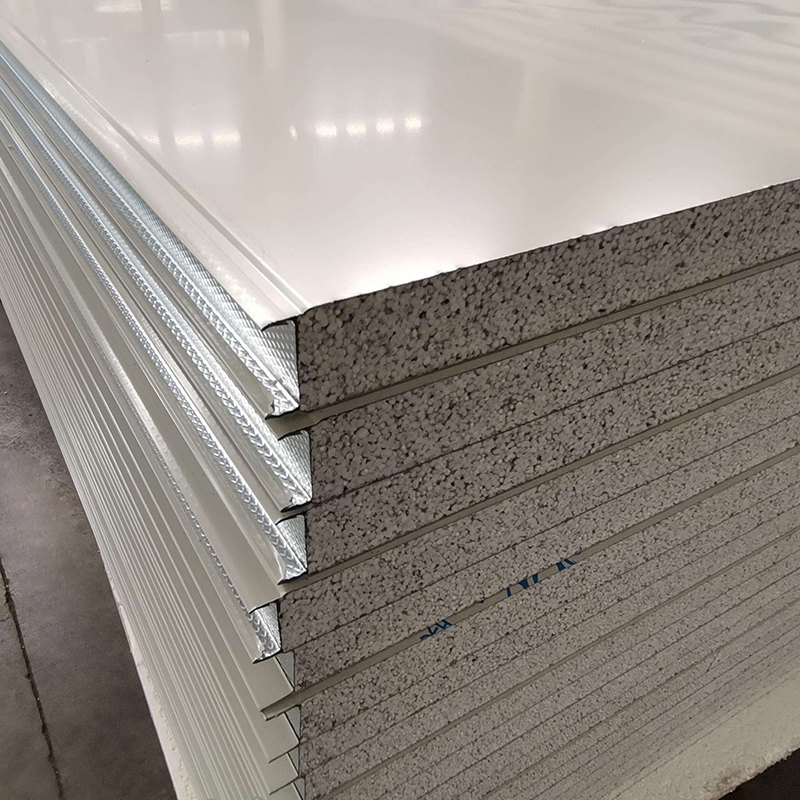



 Current
location:Home >news
>Industry news
>Galvanized Vs Carbon Steel Vs Stainless Steel Welded Ducts: Material Selection Guide
Current
location:Home >news
>Industry news
>Galvanized Vs Carbon Steel Vs Stainless Steel Welded Ducts: Material Selection Guide